 EN
How Solar Pumps for Irrigation Support Remote Farm Water Supply
For a remote farm, water is often available somewhere on the property but not where crops need it. A well may sit below the fields, a pond may be distant from the growing area, or grid electricity may be unreliable or unavailable. Solar pumps for irrigation give farmers a way to turn daylight into water movement: lifting water, transferring it to storage, and supplying an irrigation network without depending on a fuel-powered pump for every operating hour.
A more useful question is whether the whole system can deliver enough water at the needed pressure and elevation during the farm’s actual irrigation window. A well-planned solar water pump irrigation system begins with the water source and crop demand, then works backward to pump type, pipe size, solar array, storage, and controls.
Why remote farms use solar pumps for irrigation
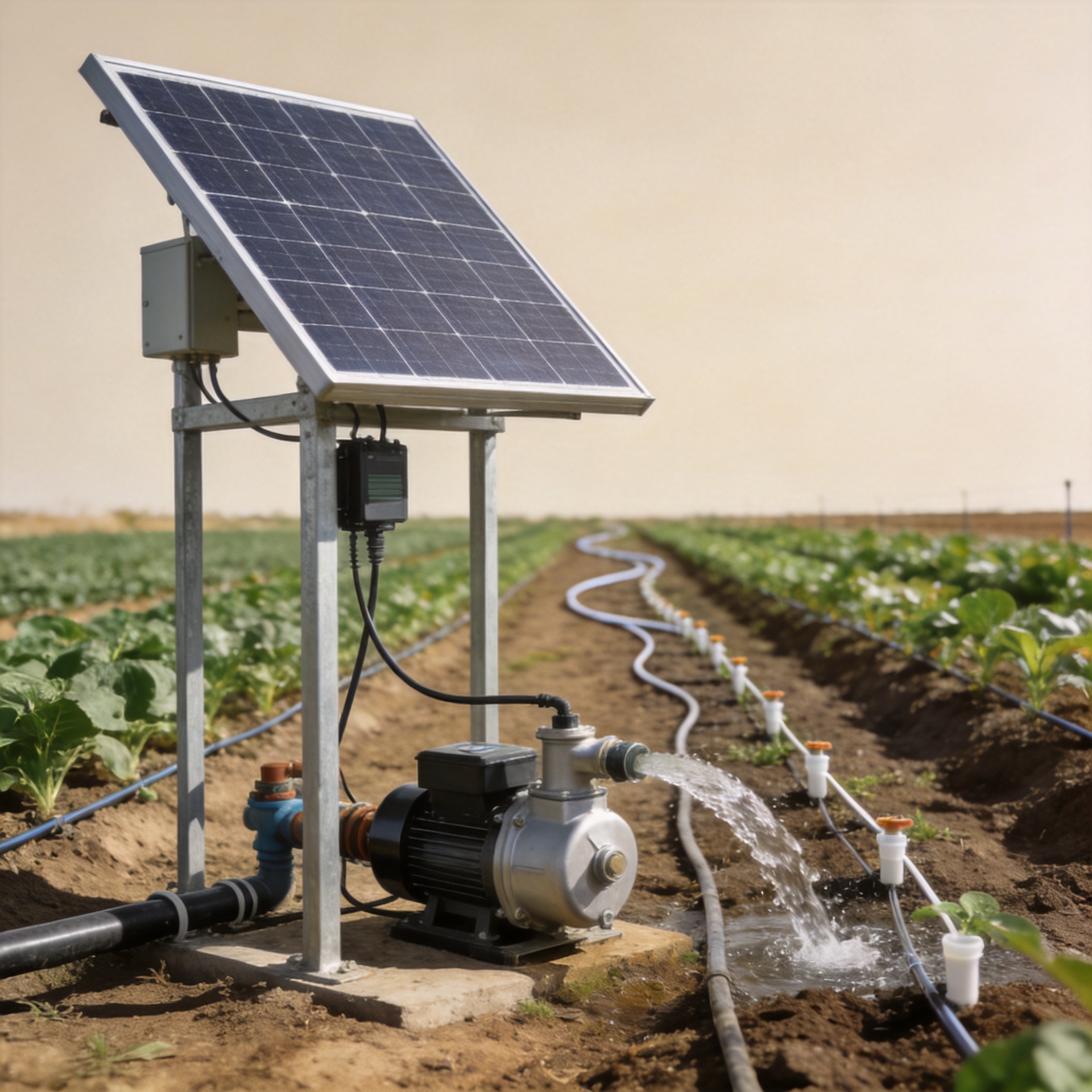
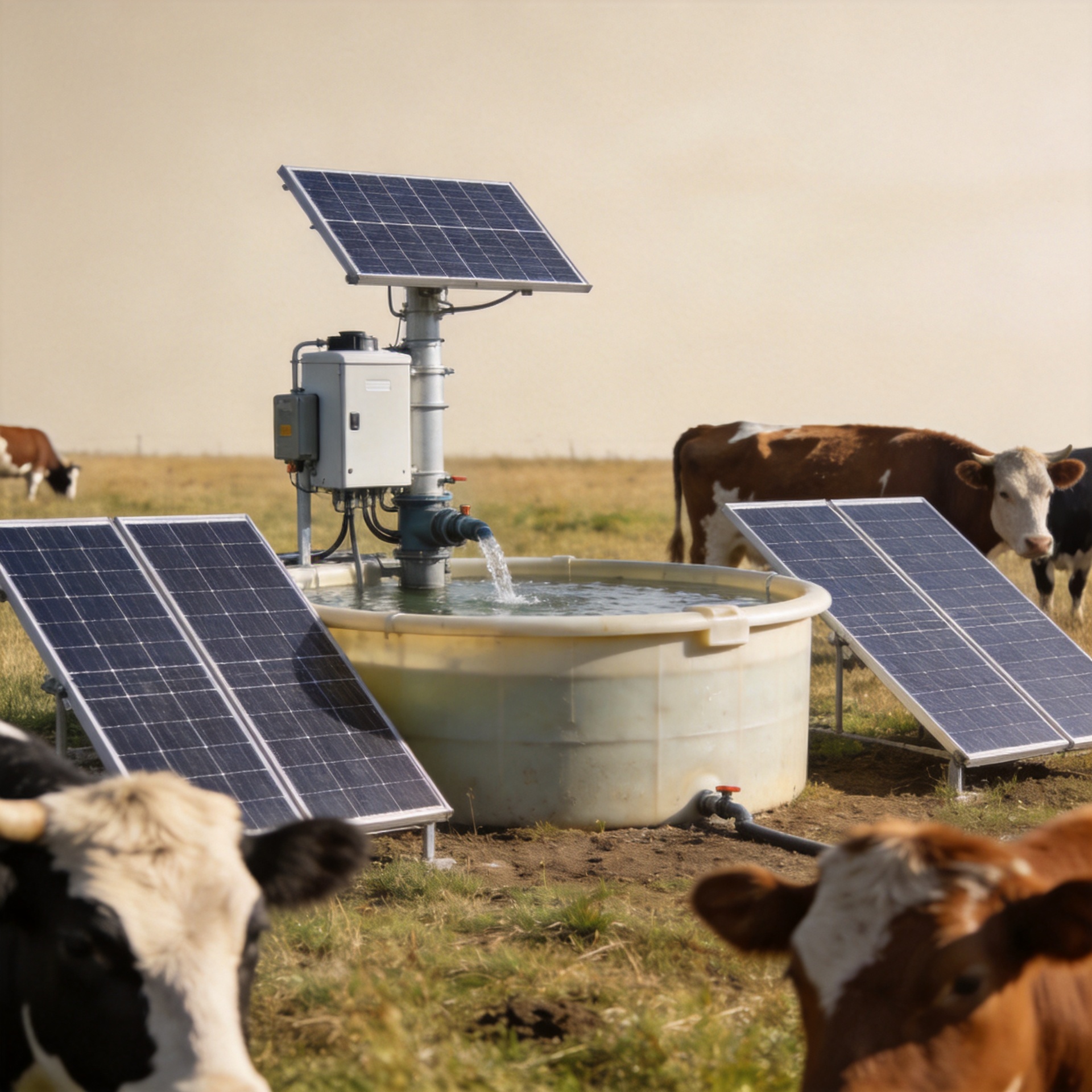
Remote operations commonly face three linked constraints: long distances to grid connections, volatile fuel logistics, and a mismatch between the location of water and the location of crops. Solar pumps for irrigation can address the pumping part of that problem during daylight hours. They are used for deep-well lifting, surface-water transfer, reservoir filling, livestock water transfer, and feeding drip or sprinkler systems through a tank or pressure arrangement.
The wider benefit is access. FAO has noted that solar-powered irrigation can improve farmers’ access to water and may support agricultural productivity when it is managed responsibly. That does not mean every site will see the same outcome. Crop area, seasonal water availability, local weather, and distribution losses still determine what a system can deliver. The practical value is that the energy source can be located at the pump site instead of at a distant utility connection.
Start with the water path, not the panel count
At the planning stage, map the entire water path first. For solar pumps for irrigation, record where water begins, where it must end up, and what happens in between. This avoids selecting a pump from a flow-rate label alone.
- Water source: Identify whether the source is a borehole, shallow well, pond, river, canal, or storage reservoir. Check seasonal drawdown, debris, sand, and permitted withdrawal conditions.
- Vertical lift: Measure the height from the working water level to the tank inlet or highest irrigation point. A deep well and an uphill field create very different requirements.
- Pipe route: Include horizontal distance, bends, filters, valves, and pipe diameter. These create friction losses that affect the total dynamic head.
- Daily demand: Estimate how many litres or cubic metres the crop blocks need per day during peak demand, then divide that need across the realistic solar pumping window.
- Distribution method: Decide whether the system fills a tank for gravity flow, supplies a low-pressure drip zone, or needs a separate pressure pump and controls.
That water-path view keeps solar pumps for irrigation focused on what matters: usable water at the field, not merely water leaving the source.
Match pump type to the source and the lift
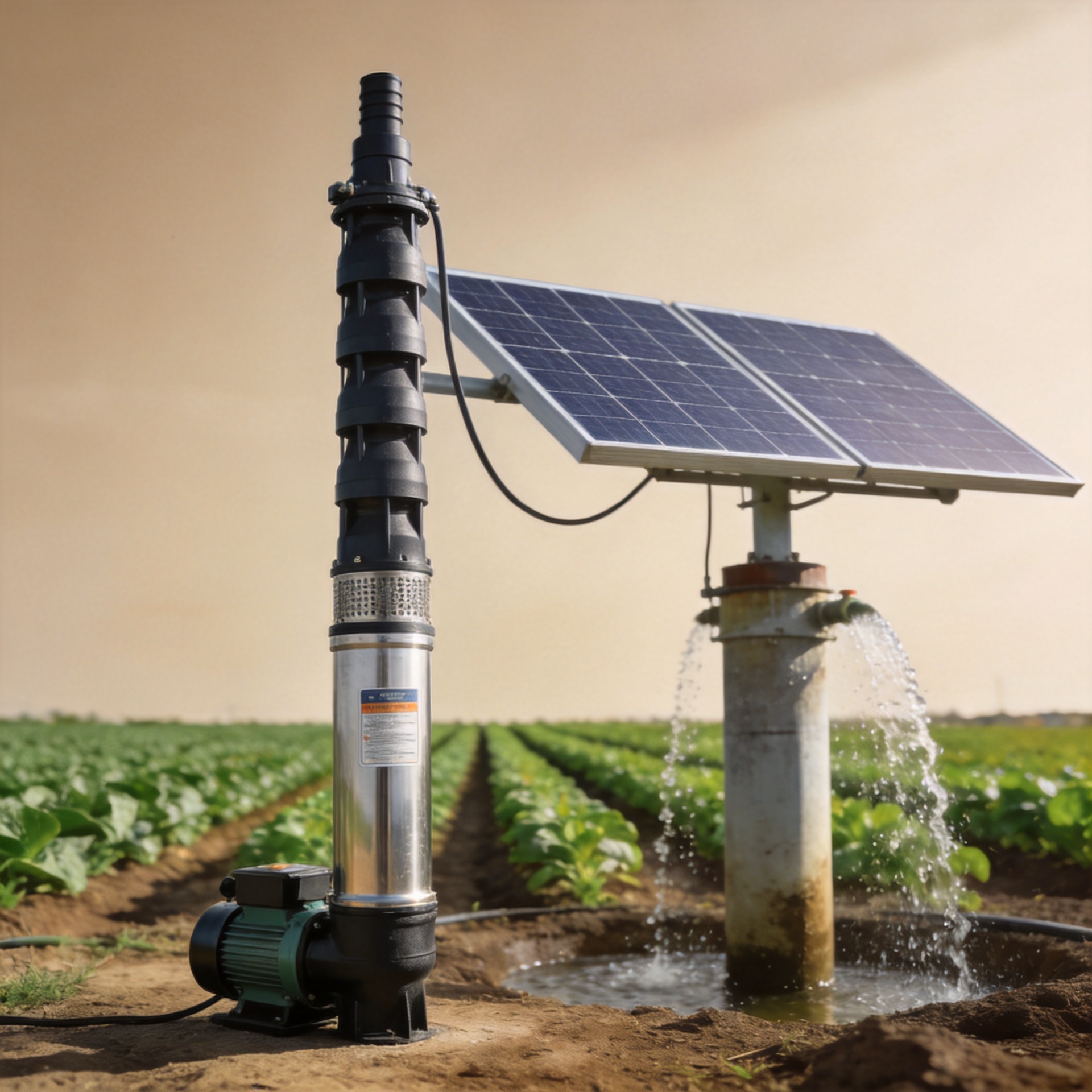
Solar pumps for irrigation are not a single product category. A submersible pump is often considered when water must be lifted from a deep borehole or well. A surface pump may suit a pond, canal, or shallow source when suction conditions are appropriate. The final choice should be based on verified head, required flow, source conditions, and the duty cycle rather than on an assumed horsepower figure.
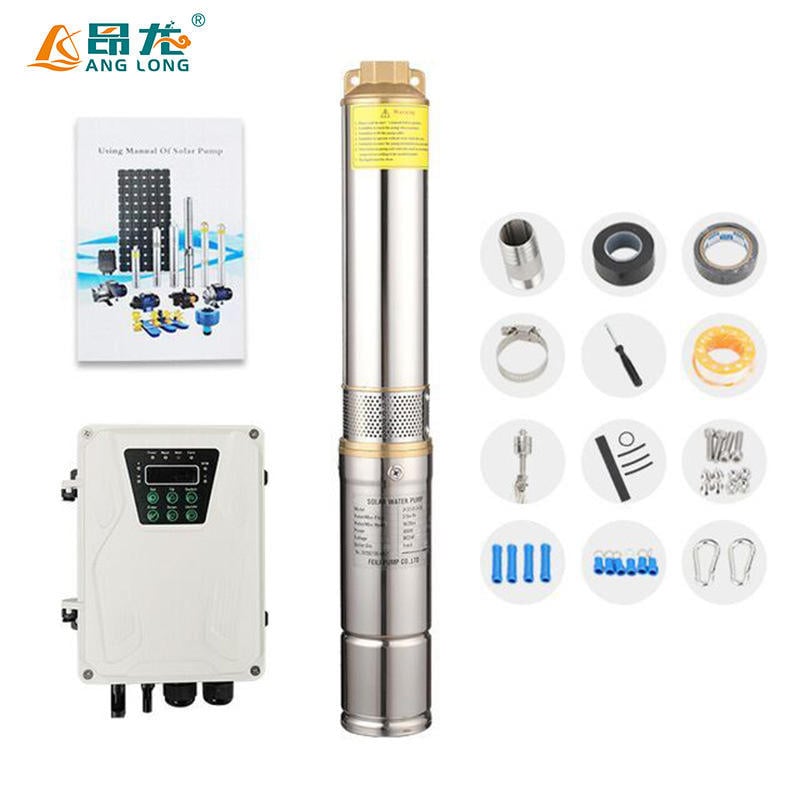
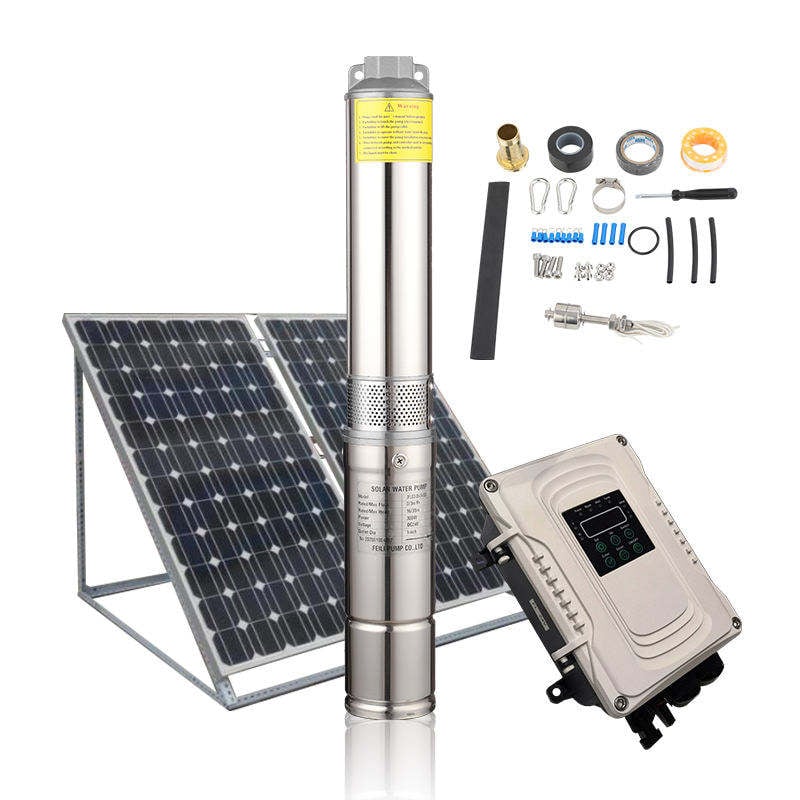
For farms evaluating a deep-well configuration, an Anglong Factory Solar Submersible Pump Large Flow Agricultural Irrigation DC Deep Well Pump is one example of a product category to review alongside the site’s pump curve, bore diameter, source level, and distribution design. For a system that includes stored energy in the plan, farms can also review a Solar Water Pumps Farm Irrigation System DC Solar Submersible Pump With Battery against their actual nighttime or cloudy-period requirements. Product selection should follow technical confirmation, not replace it.
Use water storage to make daylight pumping more useful
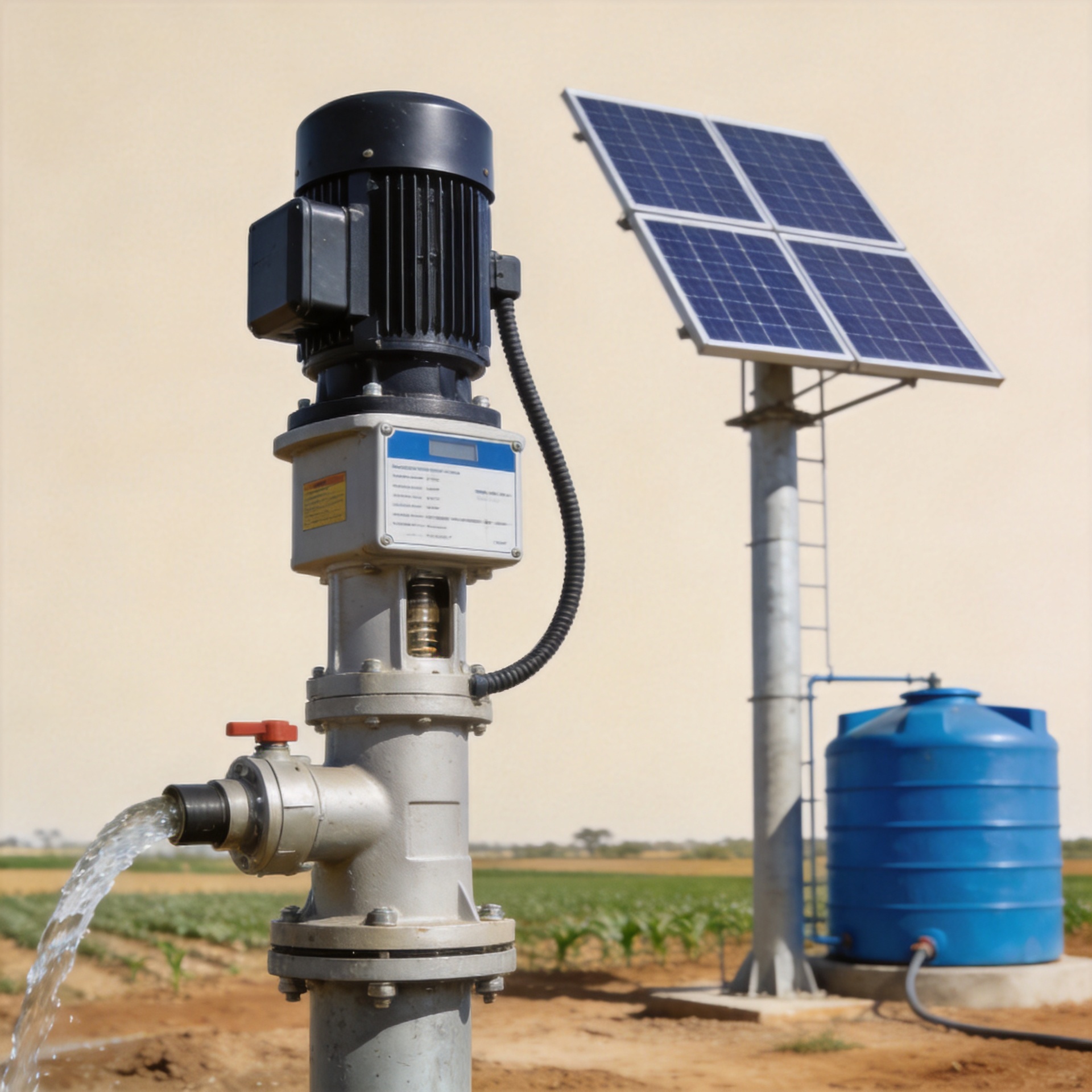
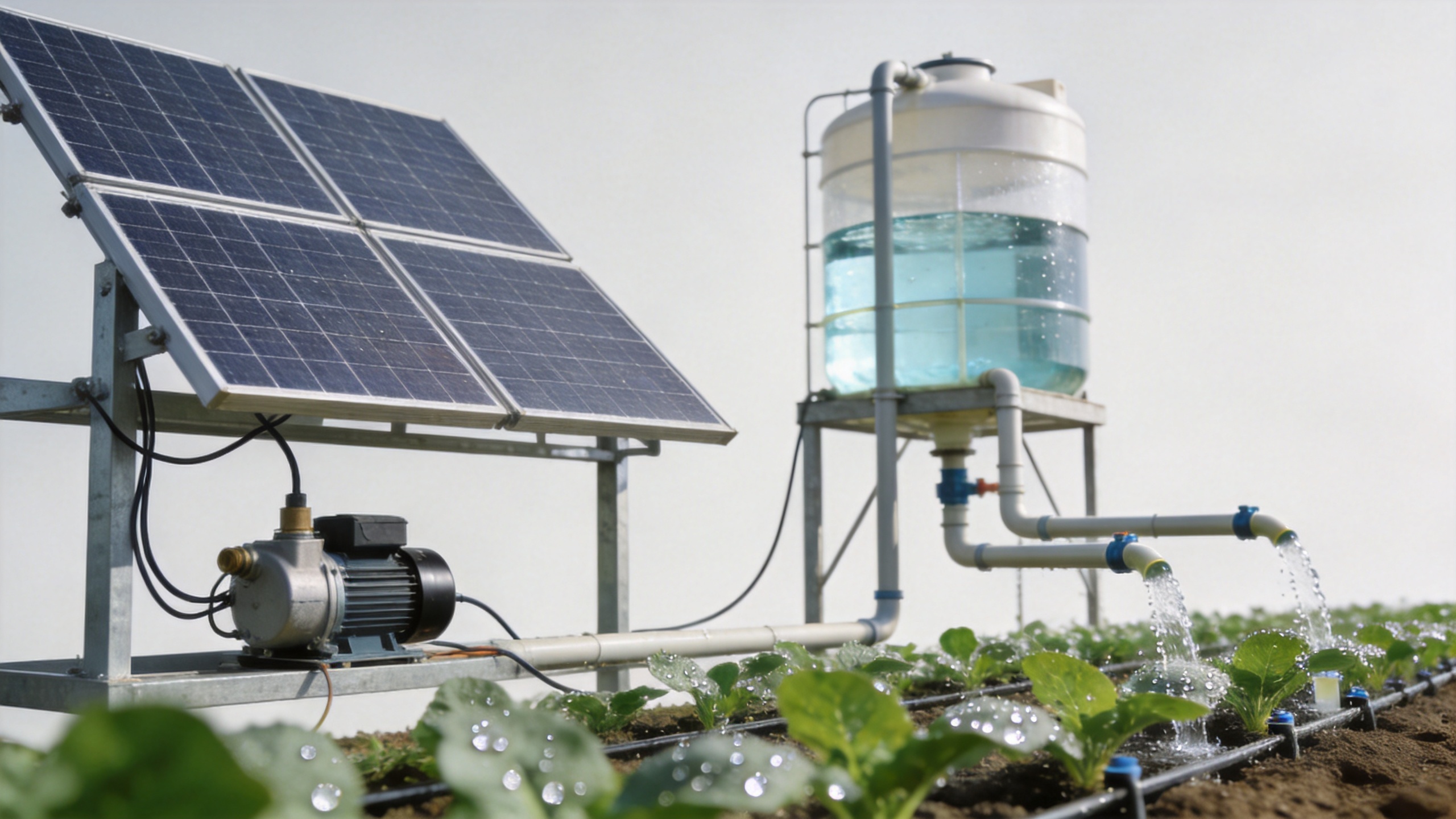
A standalone solar water pump irrigation system often produces its strongest pumping output when sunlight is available, while irrigation may be needed in early morning, late afternoon, or in short scheduled cycles. That timing difference is why storage is often central to remote-farm planning. Pumping into a correctly sized tank or reservoir during the day can decouple energy collection from field distribution.
Technical guidance on solar water pumping emphasizes that standalone systems are limited to daylight pumping hours. In many applications, storing water is simpler than storing electricity. An elevated tank may allow gravity-fed distribution where pressure needs are modest. Batteries can still have a role when continuous flow, supplemental pressure, or delivery outside the pumping window is essential, but they should be assessed as a specific design choice rather than treated as an automatic requirement.
Before choosing tank capacity, calculate the buffer needed for a cloudy day, irrigation-zone sequencing, and the farm’s peak demand. Also plan tank siting, overflow routing, filtration, float control, and safe access for cleaning. These details help a solar water pump irrigation system work as a system rather than as disconnected equipment.
Plan the solar array, controller, and protection around actual operating conditions
Solar pumps for irrigation depend on more than a pump and a few panels. The array must match the controller and pump’s electrical requirements, while mounting, cable runs, and protection devices must fit the site. Panel output changes with irradiance, temperature, dust, shading, and season. A design that assumes ideal midday conditions can underperform during the hours that matter most for daily water delivery.
Ask the supplier or technical team to confirm the operating point at the planned head and flow, the expected daily water volume under local solar conditions, controller compatibility, dry-run protection, and low-water cut-off options. In dusty or agricultural environments, include cleaning access, surge protection, cable protection, and a maintenance plan. If the water source contains sediment, select and maintain appropriate intake screening or filtration to protect the pump and irrigation emitters.
A practical remote-farm assessment checklist
Before committing to solar pumps for irrigation, gather these inputs in one site sheet:
- Working water level and seasonal variation at the source.
- Vertical lift, pipe length, pipe diameter, and the highest delivery point.
- Daily water requirement by crop block and irrigation method.
- Required flow rate and pressure at the field or storage inlet.
- Available unshaded area and typical solar hours by season.
- Water quality, sediment risk, and filtration needs.
- Preferred storage volume and whether gravity flow is feasible.
- Access for installation, maintenance, and future service.
These notes turn a broad request for a solar water pump irrigation system into a measurable design brief. It also makes comparisons between suppliers more meaningful because each proposal can be checked against the same duty point.
Build for reliable water delivery, not just pump operation
The most successful solar pumps for irrigation are designed around a complete water-delivery chain: a sustainable source, a pump sized to real head and flow, enough solar generation for the expected pumping window, storage where it adds resilience, and an irrigation layout that uses water efficiently. For remote farms, this approach can reduce dependence on fuel runs and distant electrical infrastructure while keeping the planning grounded in site conditions.
Begin with accurate measurements and a clear daily water target. Then review pump options, storage strategy, and controls together. That sequence gives a remote farm a stronger basis for converting available sunlight into dependable irrigation water.