 EN
Solar Powered Borehole Pump Sizing: Flow, Head and Well Depth
A solar powered borehole pump is not selected by well depth alone. The useful starting point is the duty point: how much water must be delivered, from the pumping water level, to the final outlet, during the solar window available at the site. For wholesalers and project buyers, that distinction prevents a common mismatch: a pump may fit through the borehole yet fail to provide the required flow after drawdown, pipe losses, and tank elevation are considered.
For a solar water pump for deep well application, treat the pump, controller, PV array, pipework, and storage tank as one system. A larger motor is not automatically the better answer. More accurately, the selected unit must operate at the required flow and total dynamic head (TDH) under the site’s expected solar conditions.
Set the water duty for a solar powered borehole pump before comparing labels
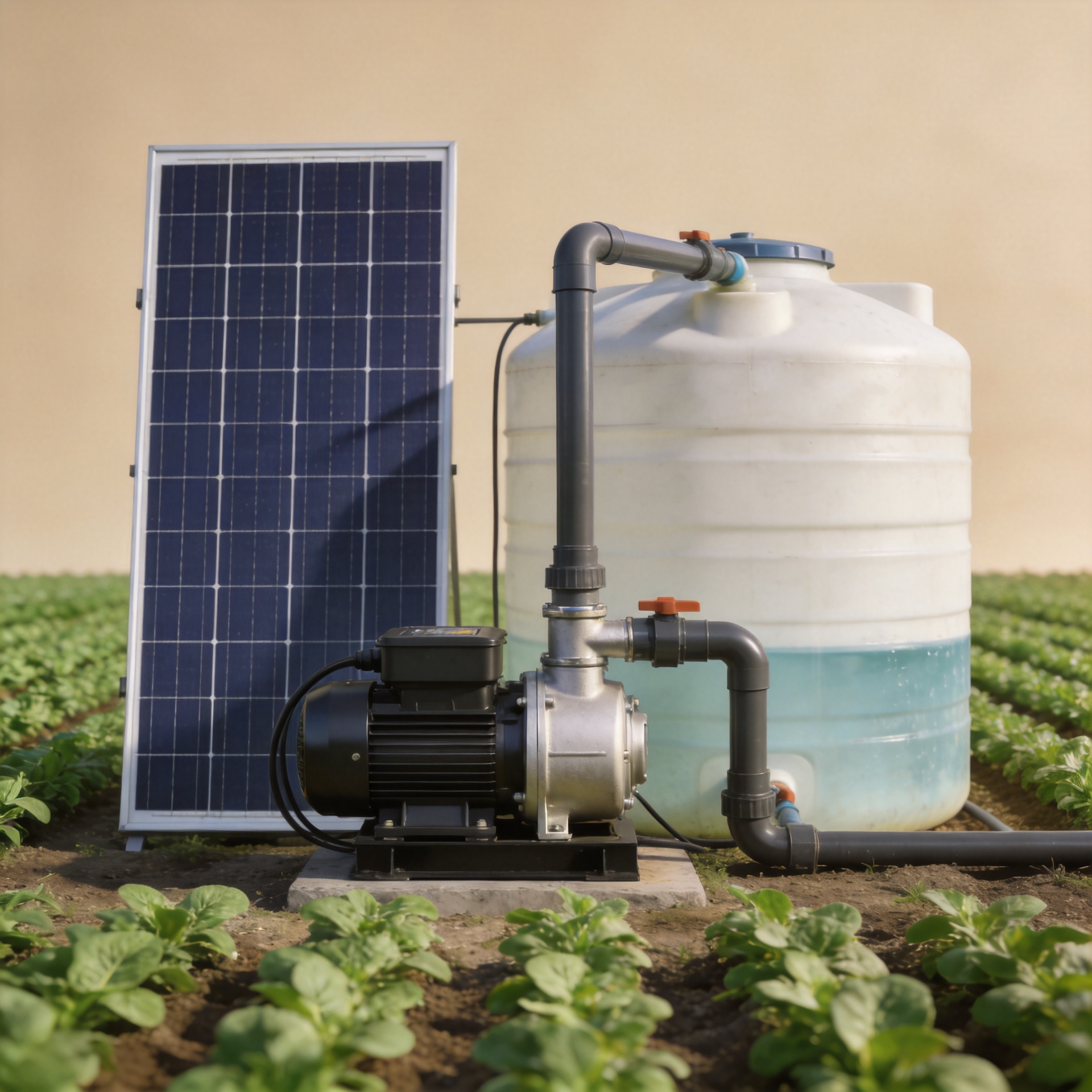
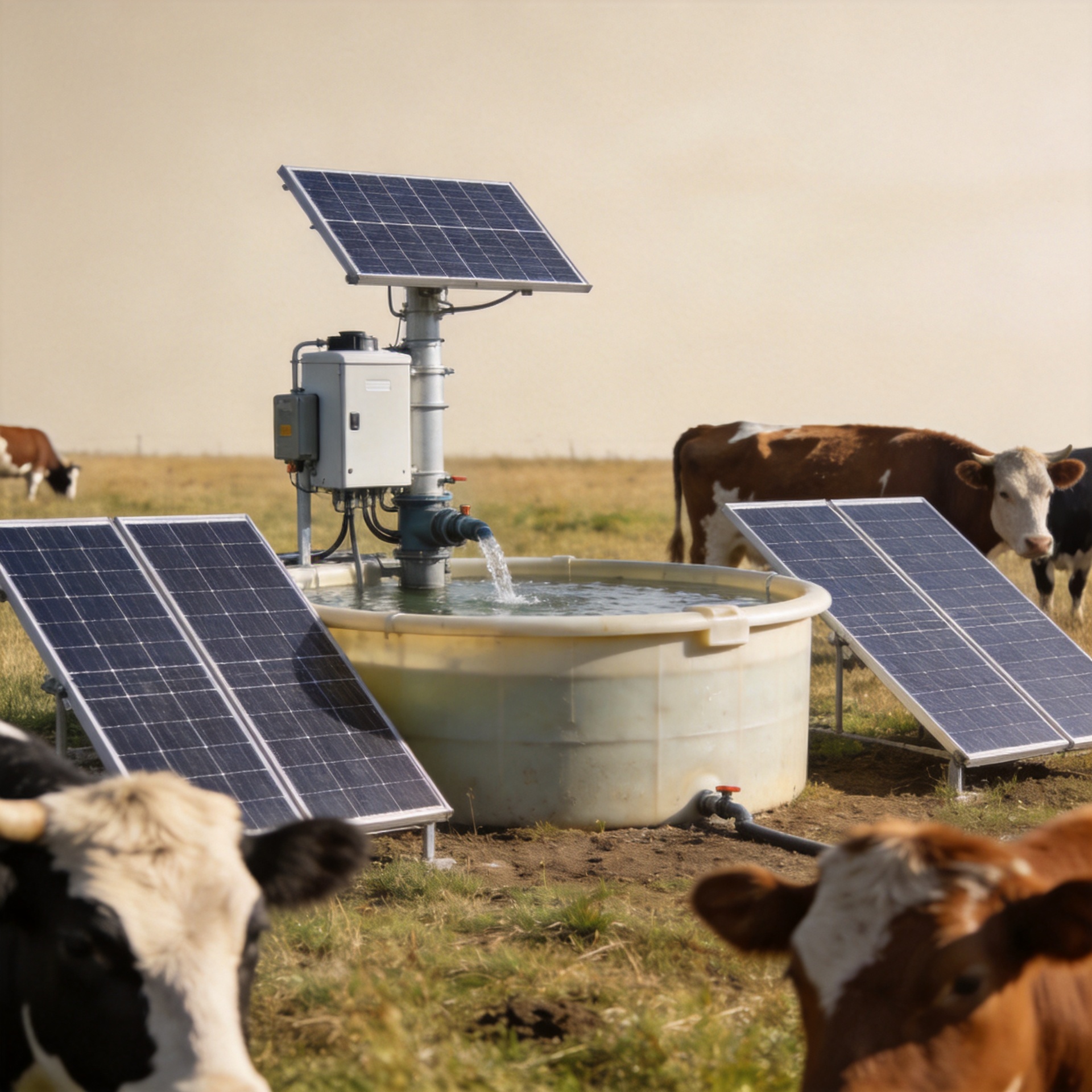
Write the daily water requirement in litres or cubic metres before comparing catalog curves. Include irrigation demand, livestock consumption, domestic supply, or a planned storage refill volume. Then identify when the water is needed. A solar system often pumps while sunlight is available and uses a storage tank to separate pumping time from consumption time.
A practical first estimate is:
Required average flow = daily water volume ÷ effective pumping hours.
For example, if a site needs 24 m³ per day and the design assumption is six effective pumping hours, the initial target is 4 m³/h. This is only a starting point. Seasonal irradiance, temperature, panel soiling, cloud cover, water-level changes, and the desired storage reserve still need review. If water demand is concentrated into a short irrigation period, the tank size and outlet arrangement matter as much as the nominal pump flow.
In planning conversations, this is often the point worth checking twice: do not use a maximum flow number from a product page as the project flow. Maximum flow normally occurs at low head, while a deep-well installation operates at a higher system head.
Measure well depth correctly for a solar powered borehole pump
The borehole’s drilled depth tells you whether a submersible pump may physically fit, but it does not by itself define the lifting duty. Record these separate values:
- Total borehole depth: the drilled depth and casing information.
- Static water level: the water level before pumping.
- Dynamic water level or drawdown: the water level after pumping at the expected rate.
- Pump setting depth: where the pump will sit, with adequate submergence and clearance from sediment according to the well and pump requirements.
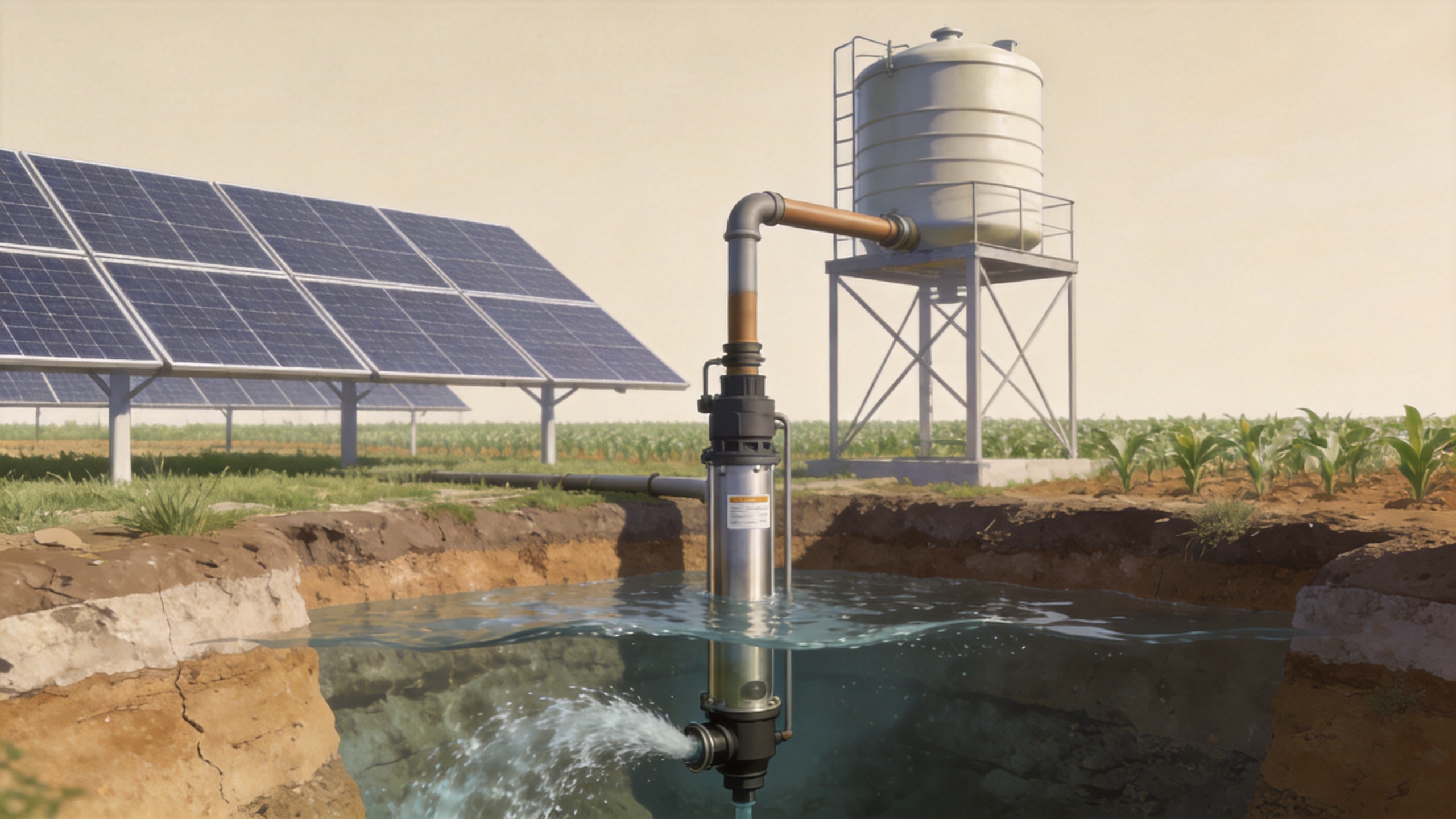
- Delivery elevation: the vertical rise from the pumping water level to the tank inlet or point of use.
The relevant technical question is not only “How deep is the well?” It is whether the solar powered borehole pump can move the requested volume from the dynamic water level to the final delivery point. If the well draws down substantially during pumping, using the static water level will understate the head and can lead to an undersized selection.
Calculate total dynamic head for the solar powered borehole pump
TDH combines the vertical and friction-related resistance that the pump must overcome. A useful field formula is:
TDH = vertical lift from dynamic water level + tank/outlet elevation + pipe friction losses + required outlet pressure head.
Vertical lift is only one part of the calculation. Long riser pipes, small pipe diameters, fittings, valves, filters, bends, and a pressurized outlet all add resistance. For gravity filling of an open storage tank, outlet pressure may be negligible; for a pressurized distribution line, convert the required pressure to head and include it. The final TDH should be checked by a qualified designer against the actual pipe size, material, route, and fittings.
| Item to confirm | Why it changes pump selection |
|---|---|
| Dynamic water level | Defines the real suction-side lift for a submersible deep-well duty point. |
| Tank or outlet elevation | Adds vertical head beyond the wellhead. |
| Pipe diameter and route | Controls friction loss; undersized pipe can consume a meaningful share of the available head. |
| Required flow | Higher flow generally raises pipe friction and moves the duty point on the pump curve. |
| Outlet pressure | Must be converted to equivalent head when the system supplies a pressurized line. |
Do not add a generic “safety margin” before the physical inputs are understood. First calculate a defensible TDH, then discuss an appropriate design allowance with the supplier. An excessive margin can shift the selection to a pump that is poorly matched to the desired flow or the available PV power.
Match the solar powered borehole pump flow and head on one curve
Every pump curve relates flow to head. Find the calculated TDH on the head axis and move across to the proposed flow. The intersection is the duty point that matters. A solar water pump for deep well should be evaluated at that intersection, not by combining the maximum listed head from one column with the maximum listed flow from another.
Ask for the curve or verified performance data at the intended voltage and controller configuration. Also confirm the borehole inside diameter, pump outside diameter, cable length, riser-pipe connection, allowable water quality, and control method. This turns a catalogue comparison into a project-fit review.
For small farms, remote water points, and wholesale projects, a storage-first layout can reduce the need to force high instantaneous flow during weak solar periods. In contrast, a direct-pressure application may require more detailed control and hydraulic design. If the operating conditions change frequently, confirm the site data before treating a single curve point as a final selection rule.
Size the solar side around the solar powered borehole pump duty point
Solar pumping is a daily-energy problem as well as a hydraulic problem. The controller and PV array must supply the pump’s required electrical input through the expected solar resource. That is why two systems with the same borehole depth may require different PV configurations: their flow target, TDH, pipe losses, seasonal solar conditions, and storage strategy may differ.
A published humanitarian borehole project illustrates the scale of this relationship: a 30 kW pump was paired with a 51 kW PV generator for a stated 450 m³/day design. That project is not a sizing rule for another well; it simply shows why matching a pump to a panel array by nameplate power alone is inadequate.
For supplier comparison, request the recommended PV input range, controller compatibility, start-up behavior, cable-loss assumptions, and the expected output at the proposed TDH. Keep all assumptions on the same quotation sheet so the pump, controller, panels, and delivery pipe are reviewed together.
Use a complete solar powered borehole pump RFQ checklist
- Daily water volume and required delivery schedule.
- Static water level, expected dynamic water level, and borehole depth/diameter.
- Vertical distance to the storage tank or point of use.
- Pipe diameter, total length, material, valves, filters, and fittings.
- Whether the outlet is open tank filling or requires pressure.
- Water-quality details and the planned pump installation depth.
- Site location, seasonal solar conditions, and preferred storage volume.
- Required documentation: pump curve, controller and PV recommendations, wiring guidance, and installation limits.
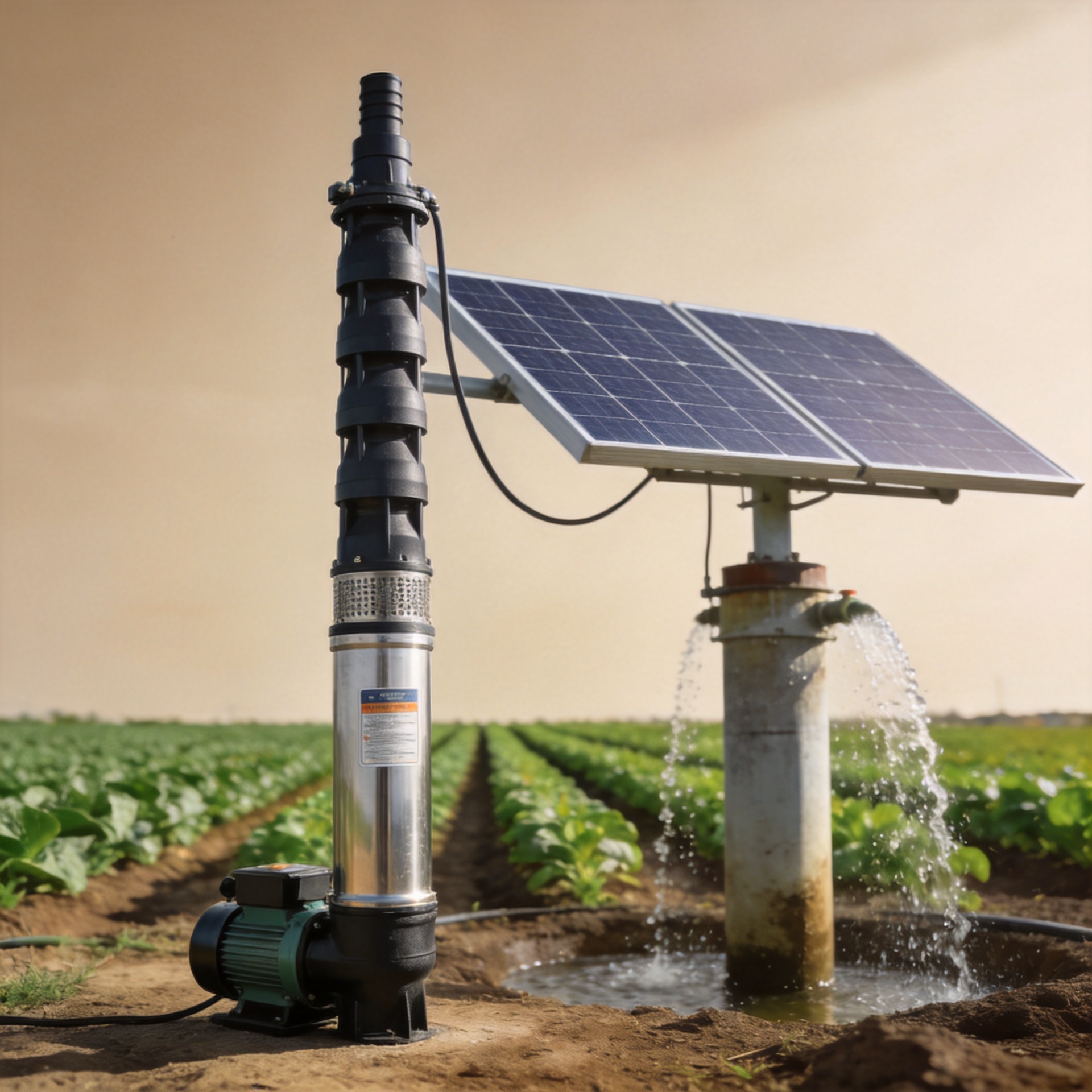
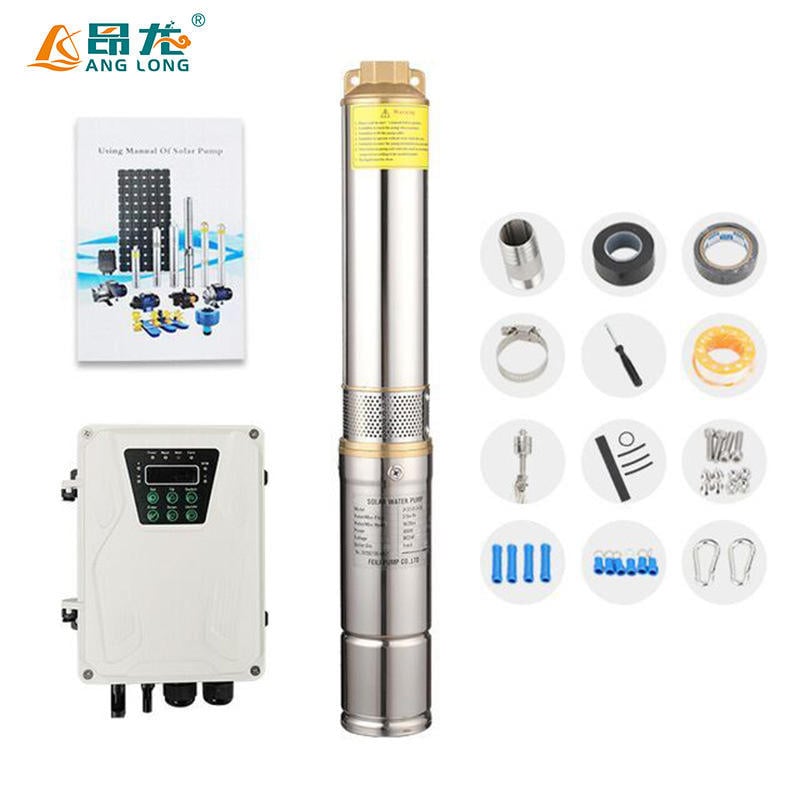
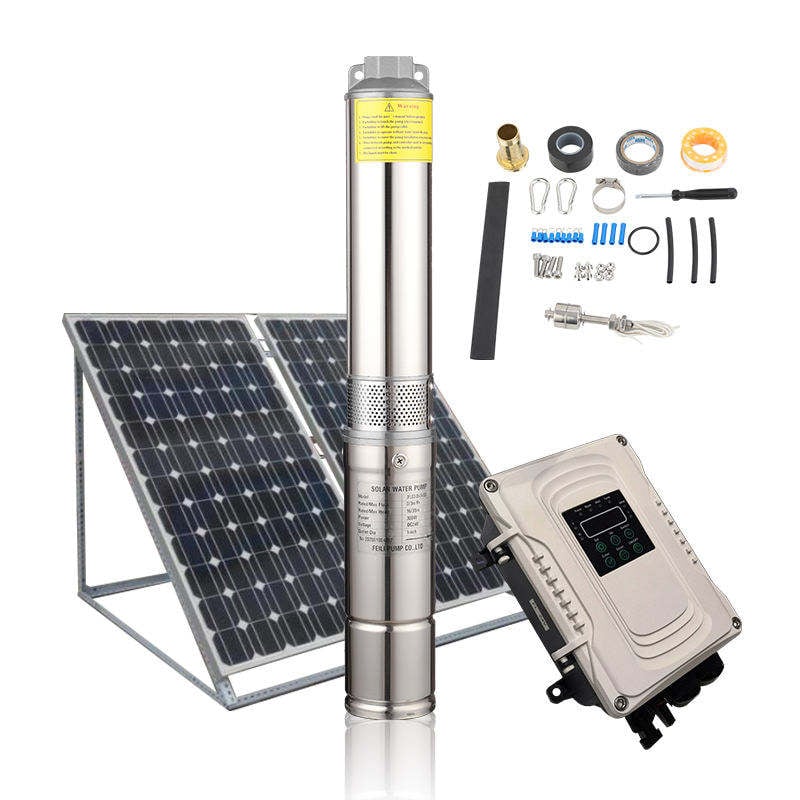
Angdong Pump Co., Ltd. lists solar water pumps for overseas wholesale buyers. For a product starting point, review the confirmed listing for 3 Inch Agriculture Solar Water Pump Deep Well Submersible Screw Water Pump For Home, then validate its actual curve and configuration against the project duty point before ordering.
Final selection rule: verify the whole system
A reliable solar powered borehole pump selection follows a simple sequence: calculate the daily water requirement, establish the required flow, use the dynamic water level and delivery route to calculate TDH, then check the pump curve and solar configuration at the same duty point. This approach is more dependable than choosing by horsepower, borehole depth, or maximum flow alone.
For a solar water pump for deep well, provide the completed site-data checklist when requesting a quotation. It gives the supplier the information needed to recommend a system that fits the well, the hydraulic route, and the available solar resource—while clearly identifying what still needs confirmation before installation.