 EN
Solar Livestock Watering Systems: Pumping Options for Farms
For a remote pasture, water is not simply a pump-capacity question. It is a system-fit question: how much water the herd needs, where the water starts, how far it must travel, when the animals drink, and how much sunshine is available when the pump is expected to work. Well-planned solar livestock watering systems use photovoltaic power to move water from a well, borehole, pond, or storage source into a tank and then on to troughs. That arrangement can be especially useful when extending grid power to a grazing area would be difficult or costly.
From an irrigation and drainage project-planning viewpoint, begin with the farm’s water pattern rather than a catalog rating. Livestock intake changes with species, feed, temperature, production stage, and travel distance to water. The right design therefore captures site conditions first and treats pump selection as the next decision.
Start With the Watering Job, Not the Pump
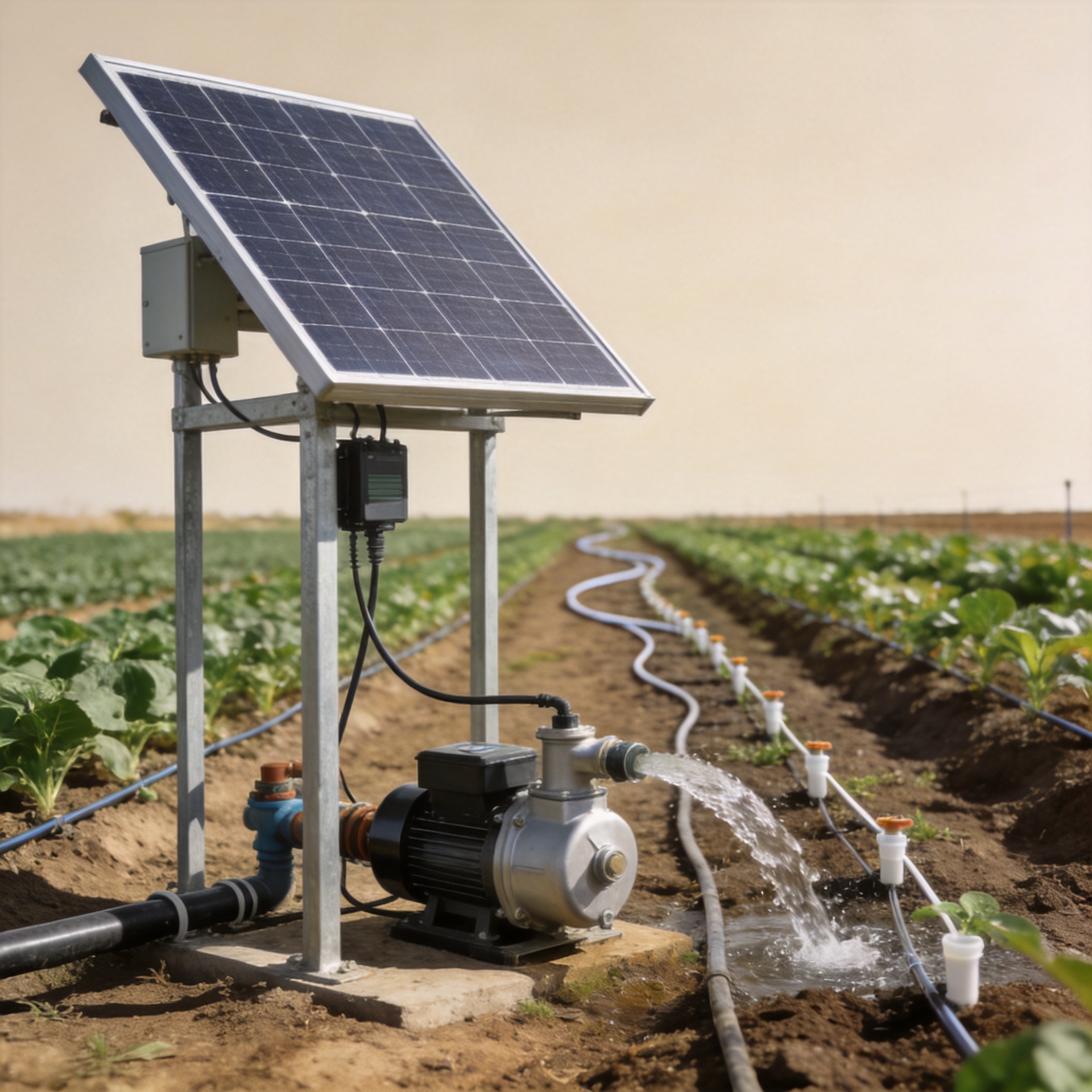
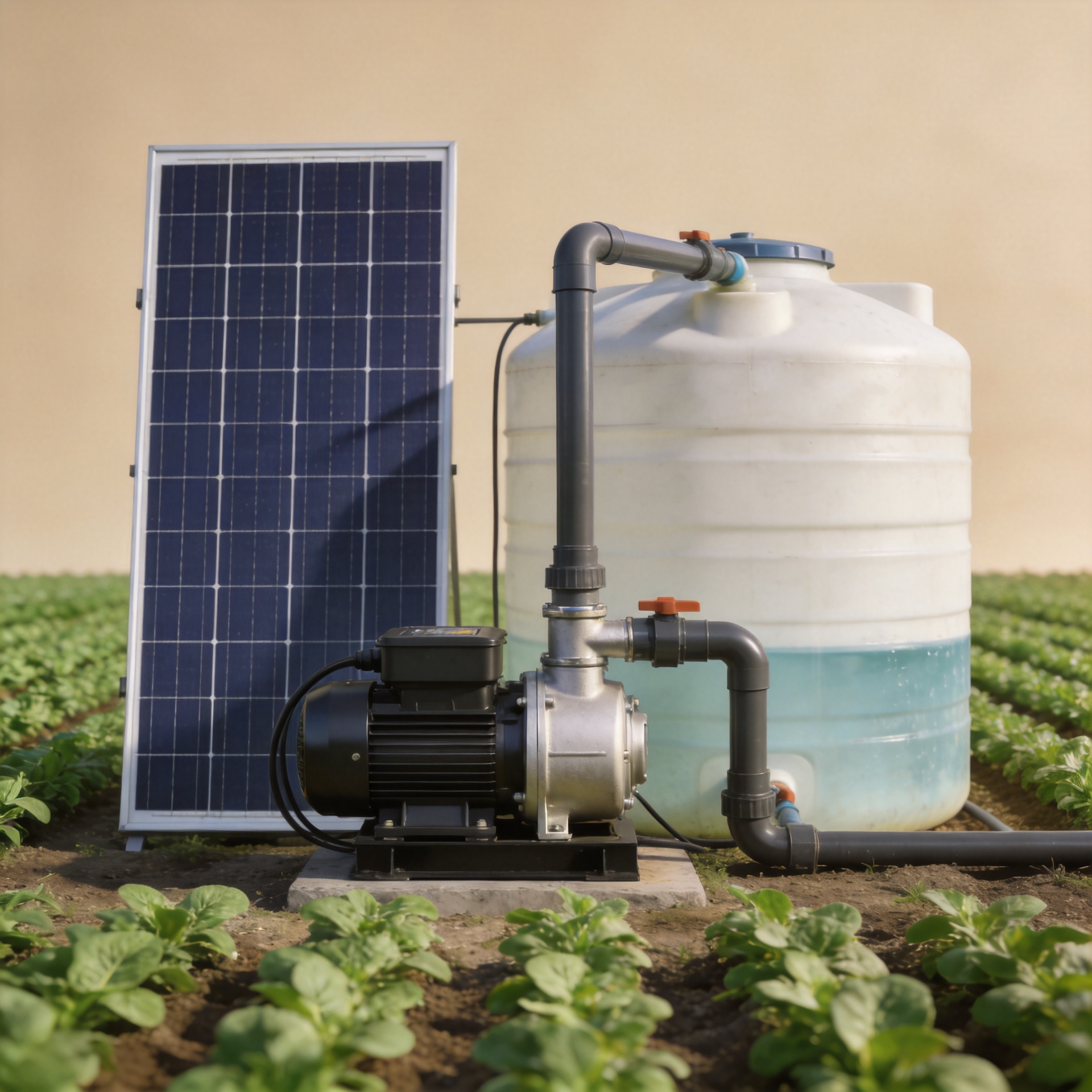
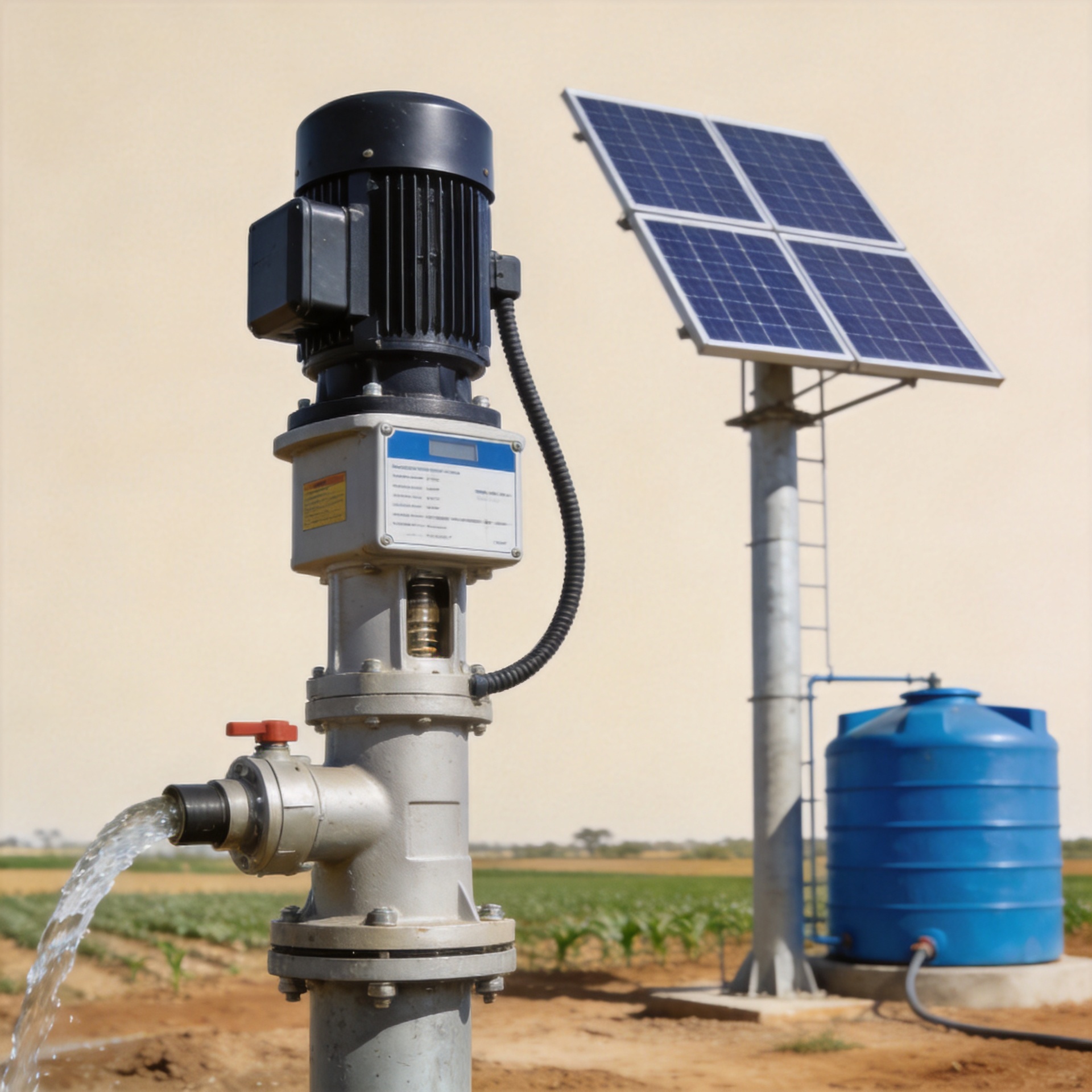
The basic path in most solar livestock watering systems is straightforward: solar modules supply electricity, a controller manages pump operation, the pump lifts or transfers water, and a storage tank creates a reserve for trough demand. The details, however, are site-specific. A shallow surface source may need a different approach from a deep borehole, while a long pipeline or elevated tank changes the total lift the pump must overcome.
List the questions that define the job before discussing equipment:
- How many animals need water, and how does the herd size change by season?
- What are the source type, static water level, pumping water level, and distance to the tank?
- What elevation change, pipe length, fittings, and pressure requirements affect total dynamic head?
- When does peak drinking occur, and how much stored water should cover cloudy periods or short-term demand spikes?
- Has the source water been tested for suitability for the intended livestock?
This is where a common shortcut fails: choosing a larger motor before confirming the water route. A larger pump is not automatically a safer choice when storage, pipe size, lift, and solar input are poorly matched.
Use Daily Demand and Storage as the Design Buffer
Daily herd demand gives the design a starting point, but it should not be treated as a fixed rule for every farm. One extension planning example uses 50 cattle at 20 gallons per day each, or 1,000 gallons per day. That is useful for illustrating the calculation, not for setting a universal intake figure. Actual consumption can rise in heat, vary with animal class and feed, and concentrate around certain hours.
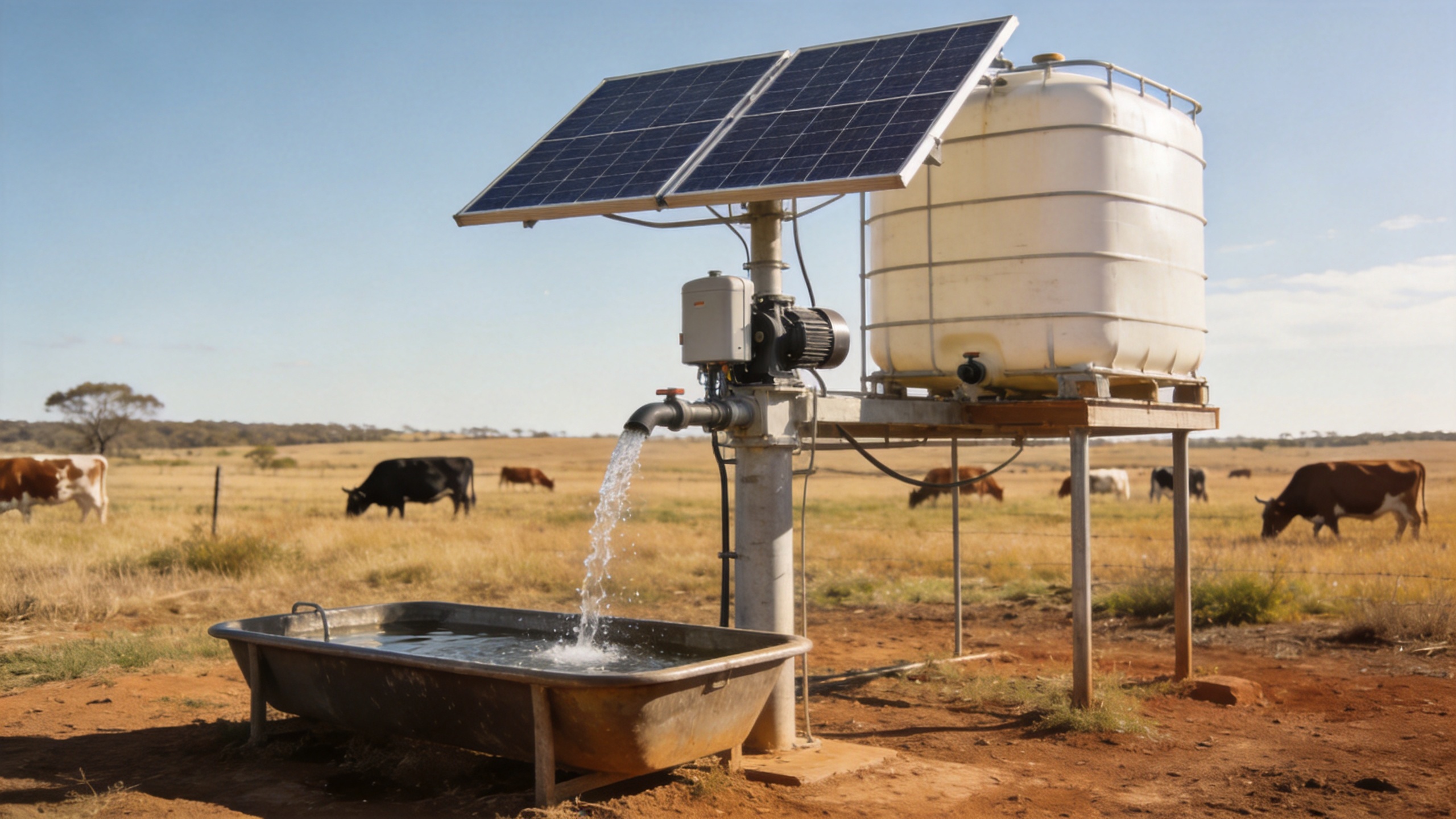
Storage is what lets solar livestock watering systems work with the solar day rather than against it. A pump can refill a tank steadily during usable daylight, while animals draw from the trough or tank when they need water. This often reduces the need to size the pump around the highest short-duration demand. It also provides a practical buffer for passing cloud, seasonal sunlight changes, and scheduled maintenance. In planning conversations, this is often the point worth checking twice: storage volume, tank location, overflow control, and access for cleaning can be as important as pump output.
Choose the Pumping Configuration Around the Source
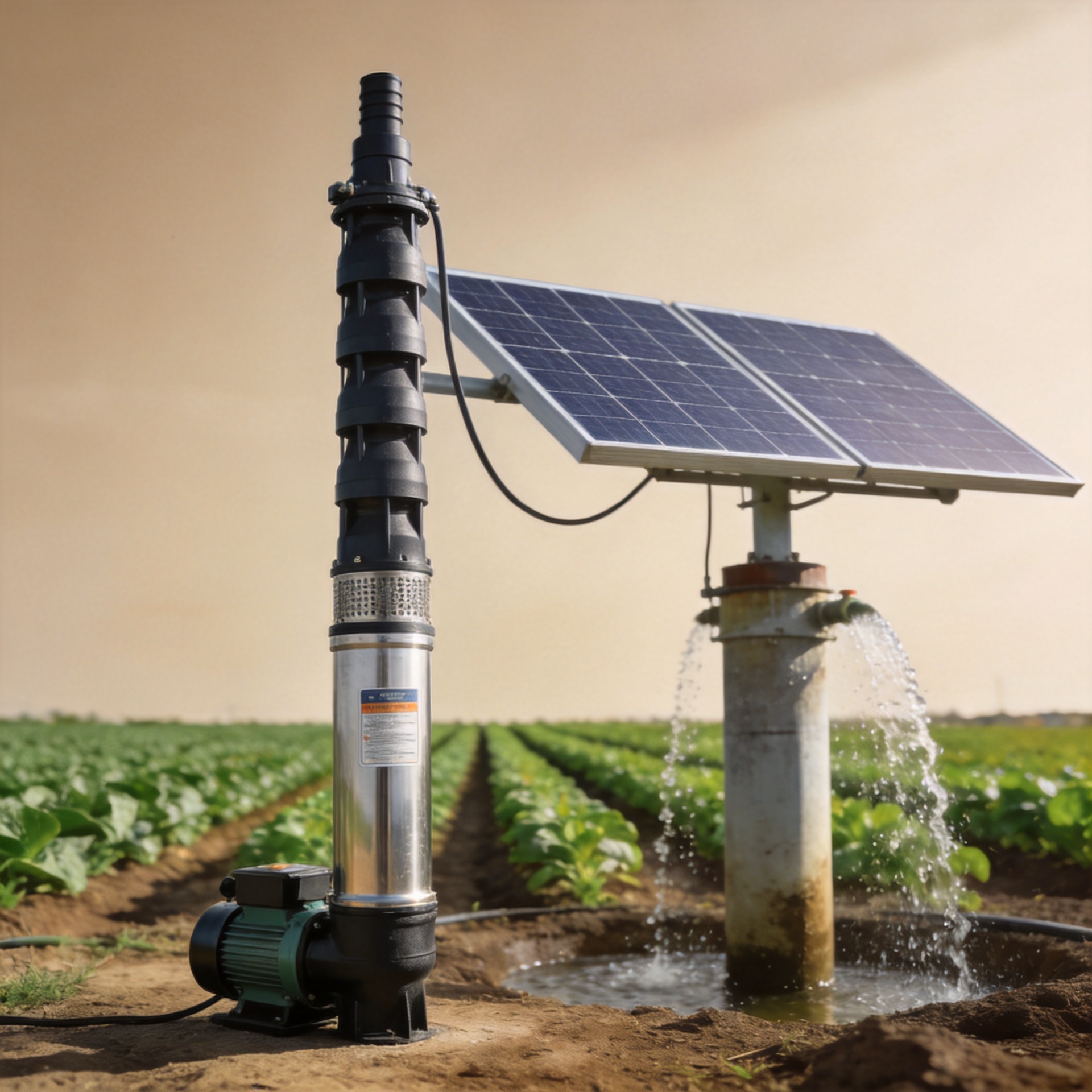
A solar powered water well pump is typically considered when water must be lifted from a borehole or deep well. For these installations, confirm the pumping water level rather than relying only on well depth, then add the vertical lift to the tank and the losses in the discharge line. A submersible solution can be appropriate for a suitable well application, while a surface-transfer arrangement may suit a pond, spring, or shallow source when the suction conditions and local installation requirements are appropriate.
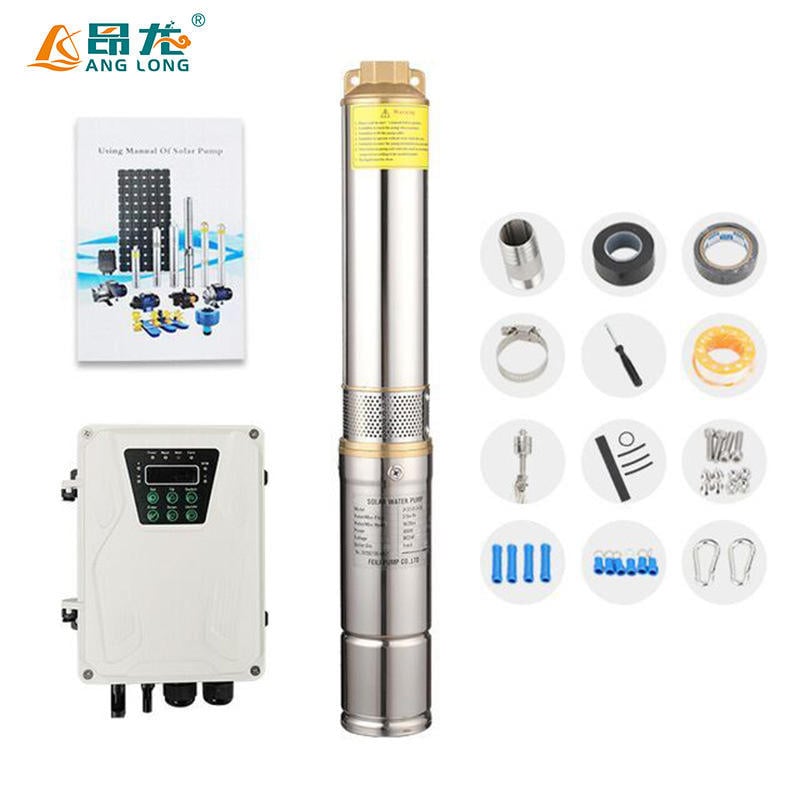
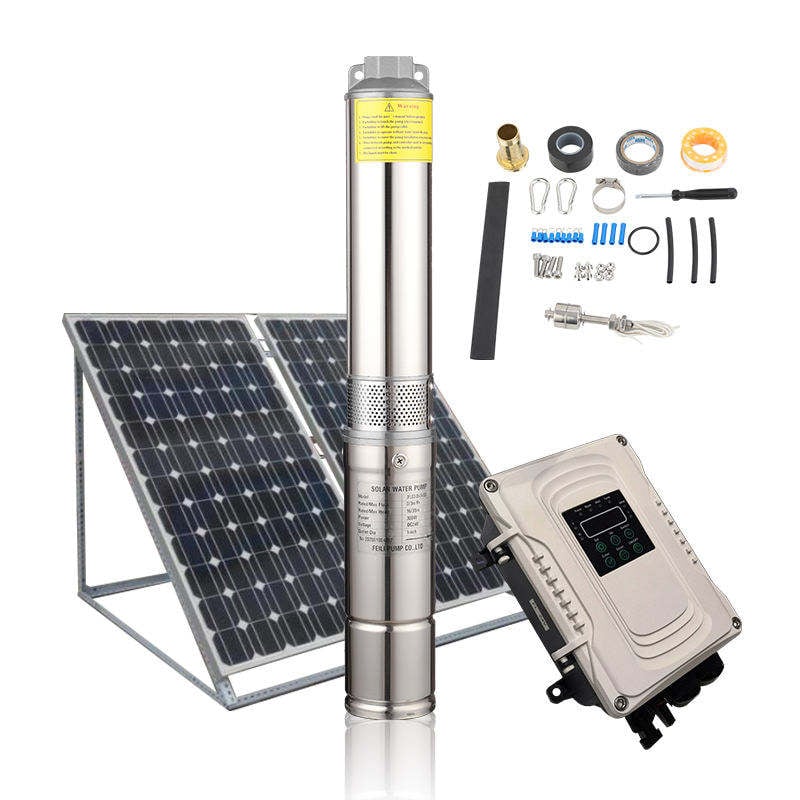
For farms reviewing deep-well options, the product pages for a 3 Inch Agriculture Solar Water Pump Deep Well Submersible Screw Water Pump For Home and a Solar Water Pumps Farm Irrigation System Dc Solar Submersible Pump With Battery can be used as starting points for a specification discussion. Confirm actual flow, head, power, cable, controller, water-quality compatibility, and installation requirements with the supplier before treating any product as a final fit.
Match Solar Input, Controls, and Water Storage
Solar panels do not produce the same output every hour or every season. Panel orientation, shading, local weather, latitude, dust, and temperature all influence available energy. That is why a system should be assessed as a whole: expected solar window, pump duty point, controller capability, storage reserve, and the farm’s required service continuity.
Some projects use direct solar pumping into storage, while others add batteries when the operating plan requires stored electrical energy. Neither arrangement is universally better. Direct pumping can simplify the energy side when adequate water storage is available; battery-backed systems add another component to evaluate for autonomy, maintenance, and replacement planning. The relevant technical question is not only whether a battery is present; it is whether the system can meet the watering schedule under the site’s actual conditions.
Do Not Skip Water Quality and Distribution Details
Reliable delivery is also about water quality and the distribution route. Water that is acceptable for one class of livestock may need more careful review for young, pregnant, or lactating animals. As a broad screening reference, FAO guidance describes water with electrical conductivity below 1.5 dS/m as excellent for all classes of livestock and poultry, but a local test and professional assessment remain important whenever source quality is uncertain.
Also check the practical details: pipe protection, tank covers, float valves, trough placement, drainage around watering points, and access for inspection. A clean layout can reduce water loss and simplify routine checks. The benefit of a remote solar solution is clearer when the whole route—from source to tank to trough—is planned, not just the pump.
A Farm-First Checklist for Solar Livestock Watering Systems
- Estimate daily and peak herd demand using local animal-management information.
- Measure source depth or lift, tank elevation, pipe run, and likely friction losses.
- Test water quality when the source is new, seasonal, saline, or otherwise uncertain.
- Decide how much water storage is needed to bridge variable sunlight and peak demand.
- Review solar exposure, shading, mounting location, controller needs, and protection for wiring.
- Request verified pump curves, electrical requirements, installation guidance, and service information for the intended duty point.
Well-designed solar livestock watering systems can turn available sunlight into a practical water-delivery resource for remote farm areas. The most useful next step is a site survey that records demand, source conditions, lift, storage, and distribution details. With those inputs in hand, a solar powered water well pump and the rest of the system can be evaluated against the real farm job rather than a generic headline specification.