 EN
How to Choose a Solar Submersible Water Pump for Agriculture
Choosing a solar submersible water pump for agriculture begins with the water job—not with the largest motor or the lowest catalog price. For farms drawing from boreholes or deep wells, the pump, controller, solar array, pipe route, storage, and irrigation schedule work as one system. A sound choice matches that system to the site’s daily water demand and seasonal operating conditions.
For wholesale buyers and project teams, a useful starting point is to turn the site survey into a short specification sheet. Record the well depth, the pumping water level, the delivery height, pipe length and diameter, irrigation method, daily water requirement, and the hours when water must be available. That is where selection becomes practical: a catalog flow figure alone cannot tell you whether the system fits the farm.
Start With the Agricultural Water Requirement
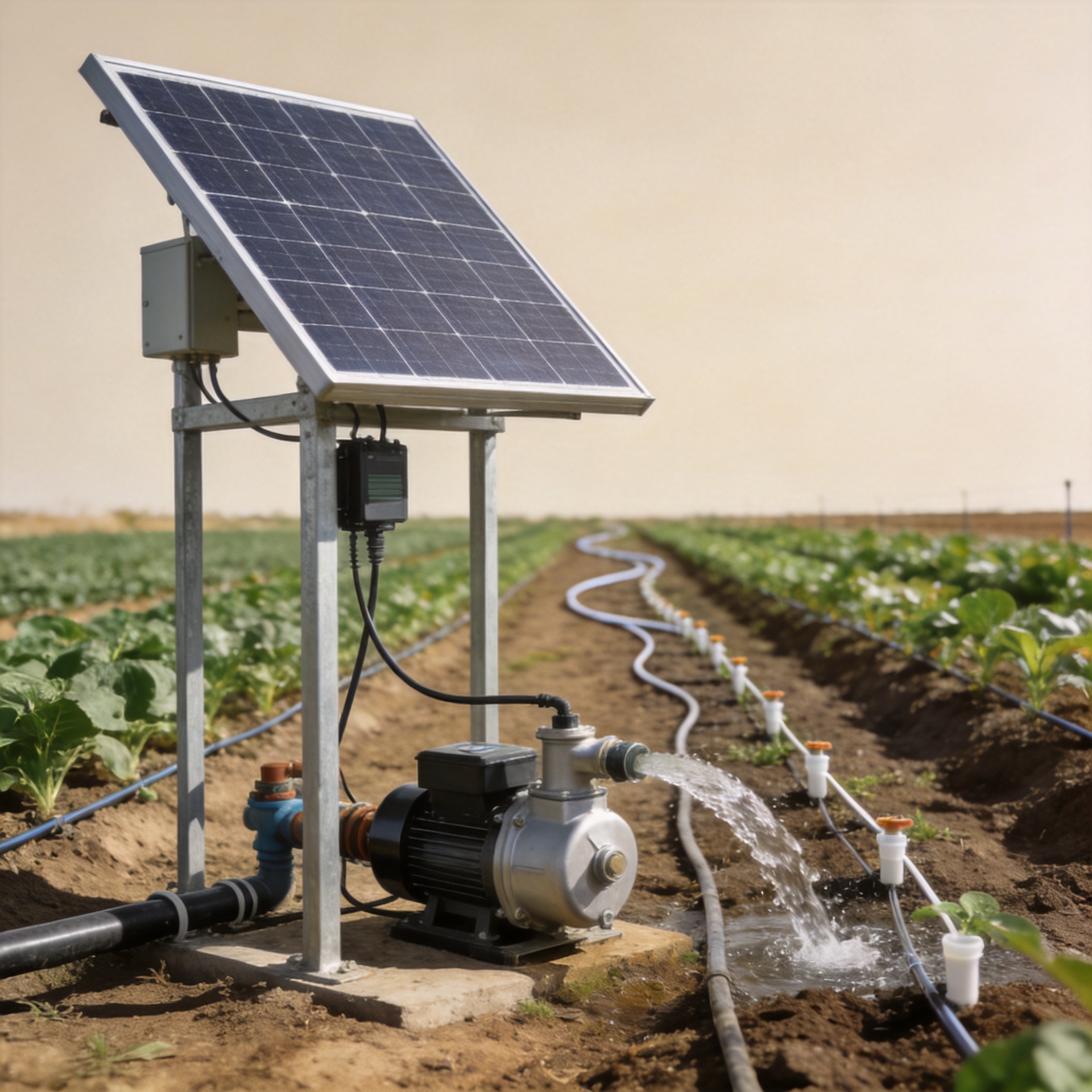
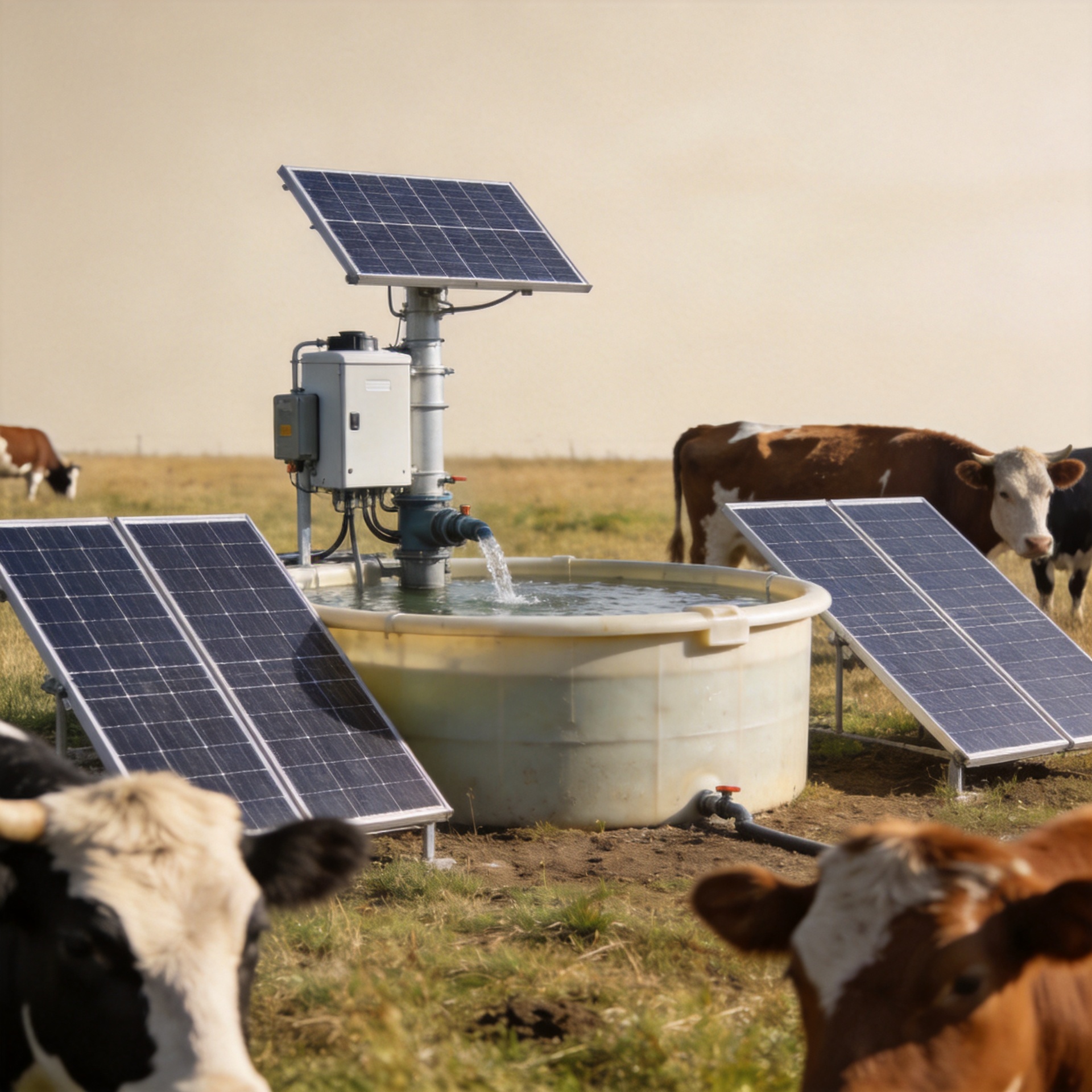
Before comparing a solar submersible water pump for agriculture, define how much water the farm needs per day and when it needs it. Drip irrigation, livestock watering, open-field irrigation, and tank filling can have very different demand patterns. Calculate the required daily volume first, then decide whether the system will pump directly to irrigation lines or fill storage for later use.
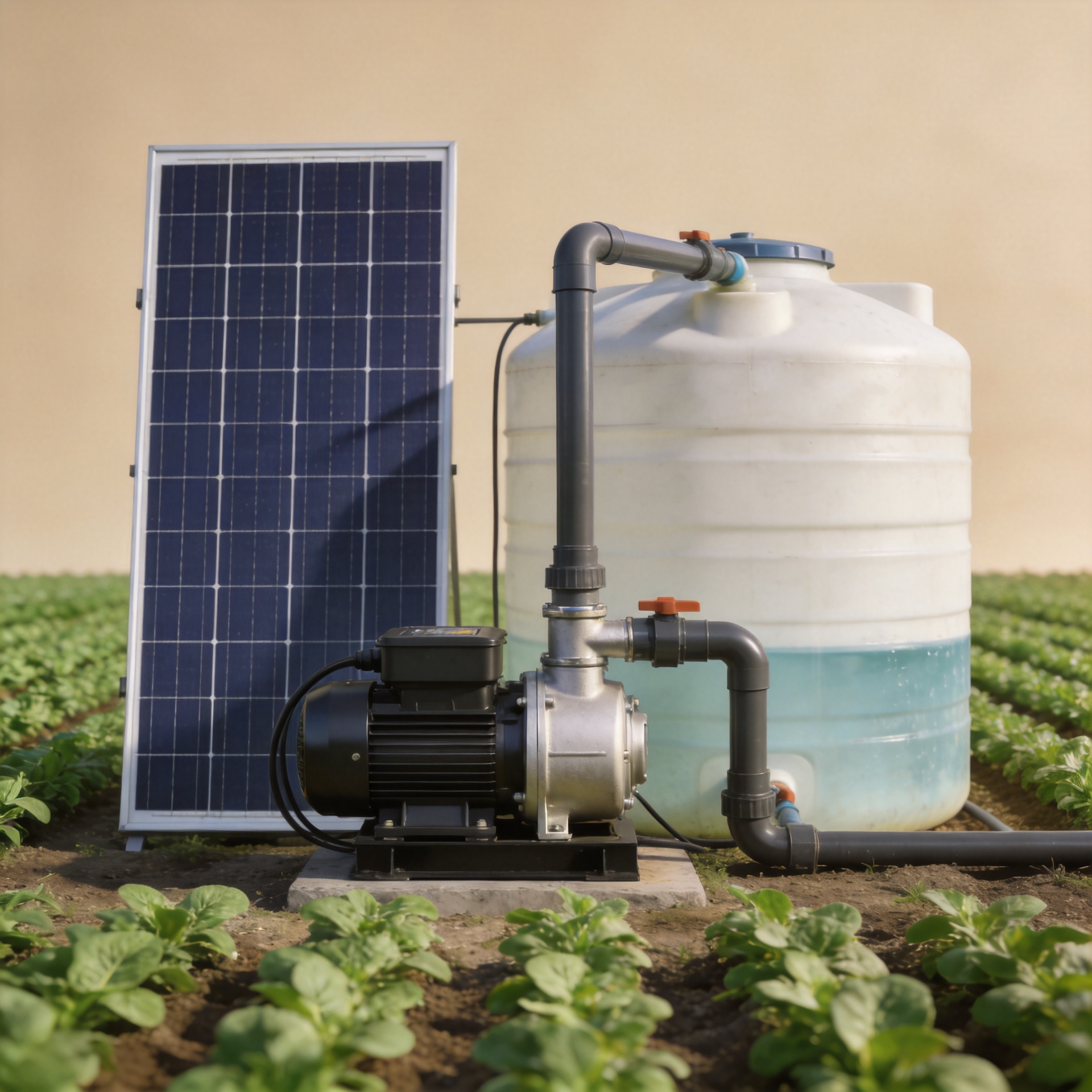
Storage can make a solar agriculture water pump easier to match with the irrigation schedule. Solar output varies during the day, while irrigation demand may peak in the morning, evening, or on a fixed rotation. A correctly sized tank can store water during useful sun hours and reduce pressure to make the pump meet every short-duration peak. This is not only a pump-capacity question; more accurately, it is a water-management question.
- Daily volume: estimate crop, livestock, and cleaning demand in cubic metres or litres per day.
- Required delivery window: identify how many hours are available for pumping and irrigation.
- Distribution method: note whether the water goes to a tank, drip lines, sprinklers, or an open channel.
- Seasonal change: check the hottest or driest operating period rather than sizing only for an average month.
Calculate Total Dynamic Head, Not Well Depth Alone
Well depth matters, but it is not the complete head requirement. For a solar submersible water pump for agriculture, total dynamic head (TDH) normally combines the vertical lift from the pumping water level, the elevation from the wellhead to the delivery point, and friction losses in pipes, fittings, filters, and valves. A long pipe run, a small pipe diameter, or elevated storage can materially change the duty point.
Ask for both the static water level and the pumping water level. The pumping water level is especially important because it may drop while the pump is running. Then map the discharge route from the well to the field or tank, including bends and elevation changes. Higher specification detail is useful only when it maps to the actual duty.
A published irrigation design example selected a pump after evaluating 2.4 m³/h at 14.2 m TDH and checking the pump curve. That example is not a universal recommendation; it shows why flow and head must be evaluated together. Request the relevant performance curve for the proposed model and identify the expected operating point on that curve.
Match Flow Rate to Irrigation Scale and Pressure Needs
After calculating TDH, choose a flow range that can meet the daily water target within the expected solar pumping period. A larger nominal flow does not automatically produce a better result. If the pump operates away from its intended duty point, the delivered flow may not match the catalog headline. A larger pump is not necessarily safer when the system is poorly matched.
For drip irrigation and sprinkler systems, consider the pressure requirement at the field as well as flow. Filters, fertigation equipment, pressure regulators, and pipeline losses all consume head. For a tank-filling application, the key question may instead be how quickly the desired volume can be lifted during usable daylight. In planning conversations, this is often the point worth checking twice: confirm the irrigation layout before finalizing the pump.
Size the Solar Array, Controller, and Pump as One Package
A solar submersible water pump for agriculture is a system selection. The required solar array depends on the pump’s electrical demand, local solar resource, the desired pumping window, controller settings, and site losses. Design references consistently start with water demand and hydraulic head, then use those requirements to size the hydraulic energy and solar array—not the other way around.
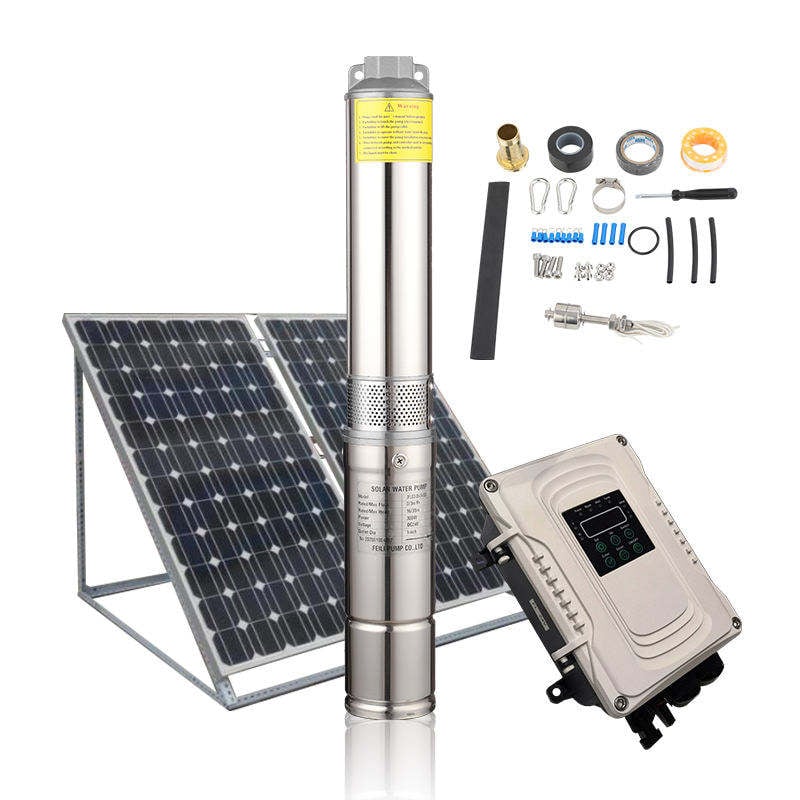
Confirm whether the proposed package includes compatible PV modules, a controller, necessary cable length, protections, and a suitable mounting arrangement. The controller should be matched to the pump’s voltage and operating range, while installation details should account for dry-run protection where applicable and accessible isolation points. If the farm has long cable runs or a variable water level, ask the supplier how these conditions affect the proposed system.
Choose a Pump Configuration That Fits the Water Source
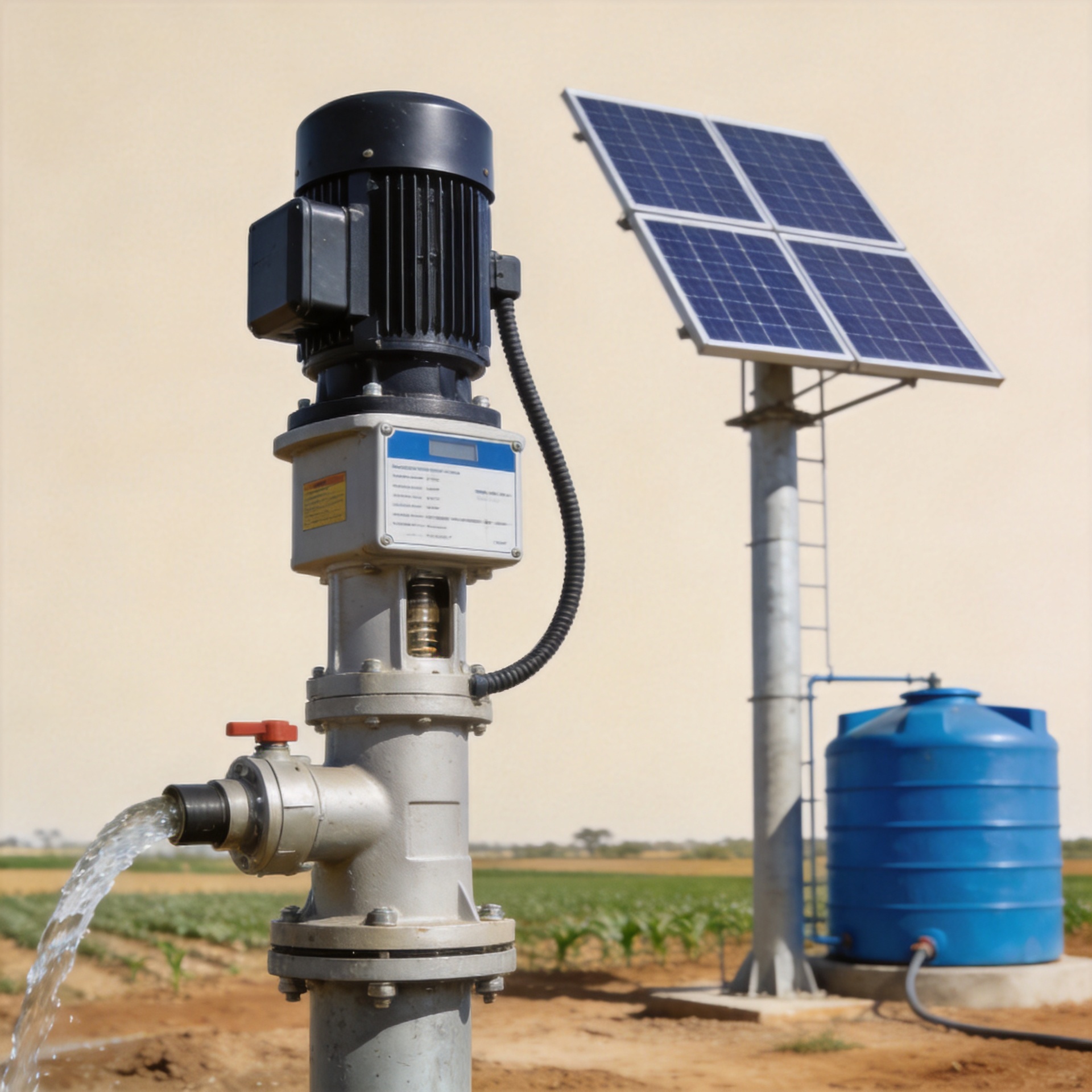
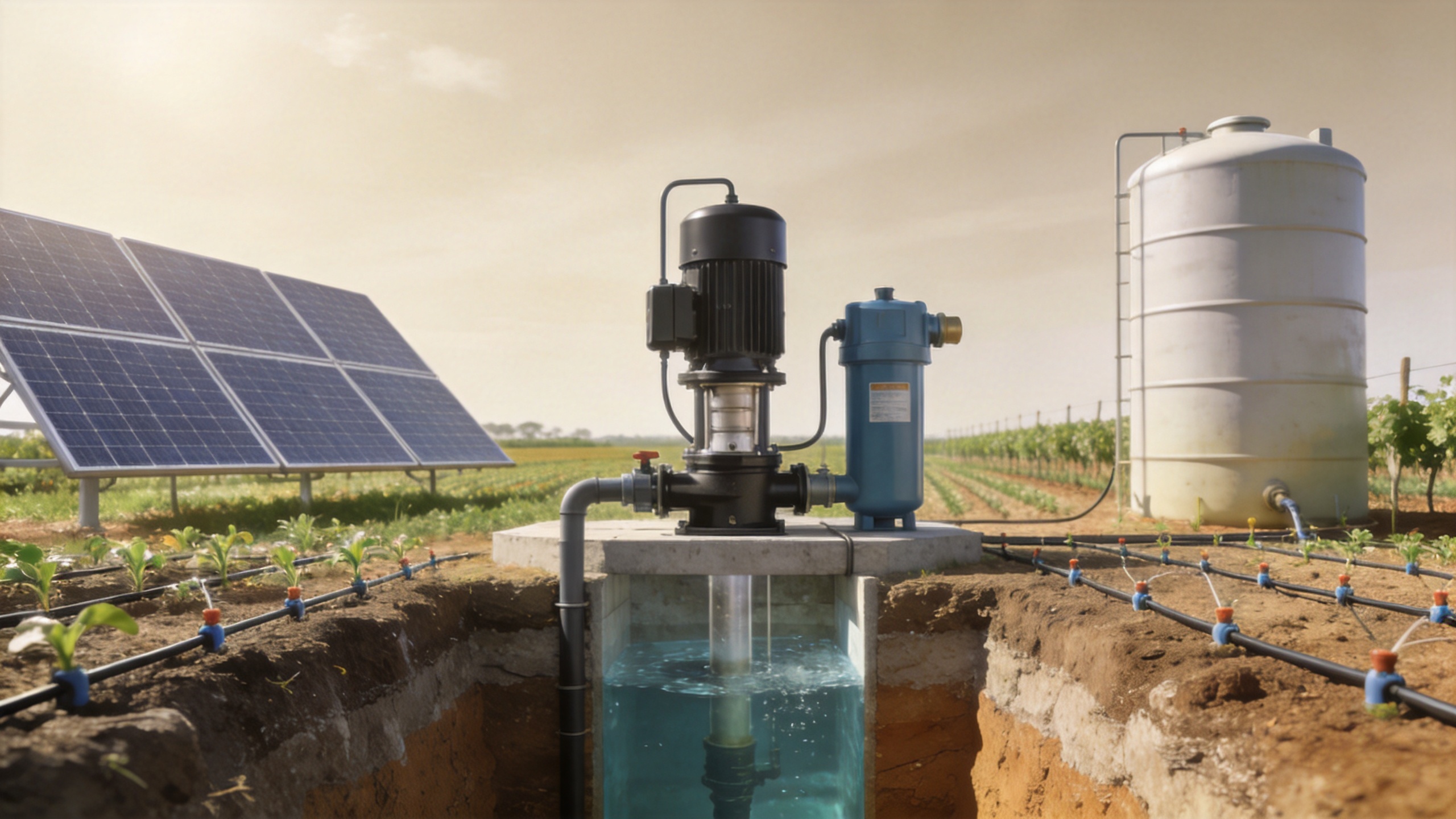
Submersible pumps are commonly considered where the water source is a deep well or borehole. Confirm the well diameter, straightness, water quality, expected drawdown, and available installation depth before selecting the pump body and cable. The pump must physically fit and operate within the water-source conditions; it should not be chosen only because a similar unit appears in another farm project.
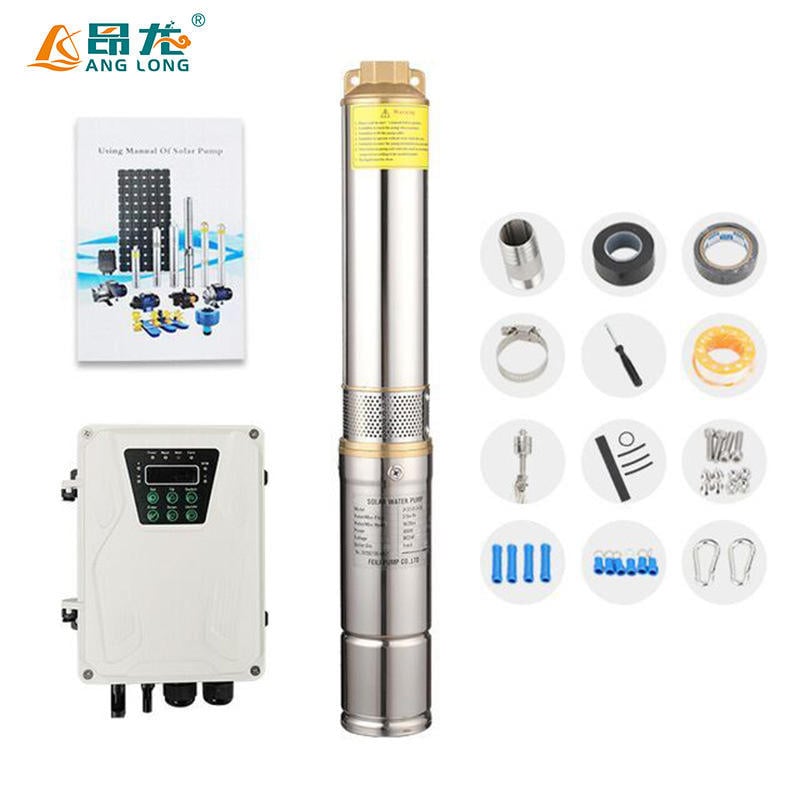
Where a deep-well solar configuration is appropriate, buyers can review an 3 Inch Agriculture Solar Water Pump Deep Well Submersible Screw Water Pump as a category reference, then request the confirmed curve, voltage, installation dimensions, and application-specific documentation. For projects prioritizing irrigation volume, the Solar Submersible Pump for Large-Flow Agricultural Irrigation can also be reviewed against the final duty calculation. Product titles alone do not confirm site suitability.
Use an RFQ Checklist Before Ordering
A structured request for quotation helps suppliers return comparable options for a solar agriculture water pump. Include:
- Well diameter, static water level, pumping water level, and installation depth.
- Required daily water volume and preferred pumping hours.
- TDH calculation, pipe length, diameter, fittings, and delivery elevation.
- Irrigation method, target field pressure, and storage capacity if used.
- Local location and seasonal solar conditions.
- Requested pump curve, PV array proposal, controller specification, wiring details, and installation instructions.
Can your team confirm which of these site inputs are measured and which are assumptions? Separating confirmed specifications from assumptions makes it easier to compare proposals fairly and avoid costly changes after installation.
Make the Final Choice on System Fit
The suitable solar submersible water pump for agriculture is one that can supply the required water volume at the real TDH within the farm’s solar and irrigation constraints. Start with the water requirement, verify head and flow on a pump curve, match the PV array and controller, and request the documentation needed for installation and service planning. For African and Asian agricultural projects with variable solar conditions and water levels, this disciplined sequence is more dependable than choosing by horsepower alone.
Before issuing the purchase order, have the supplier review the complete duty sheet against the proposed package. That final verification step turns a general selection framework into a project-specific specification.