 EN
DC Submersible Water Pump vs AC Pump for Off-Grid Irrigation
For an off-grid irrigation project, the first question is rarely “Which pump has the biggest motor?” The more useful question is whether the pumping system can deliver the required water volume at the required head when power is actually available. That distinction matters when comparing a submersible dc water pump with an AC submersible pump powered through an inverter, generator, or hybrid system.
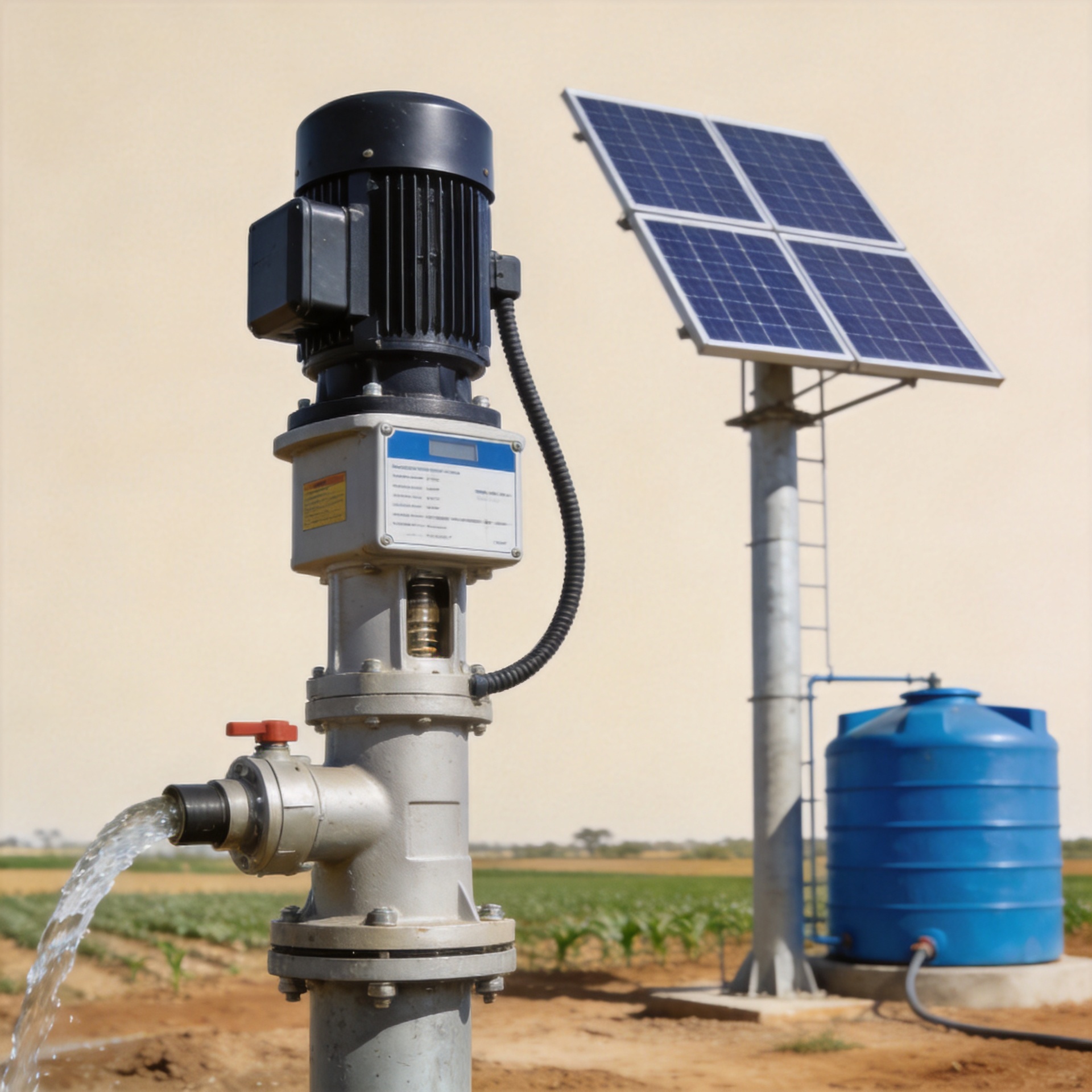
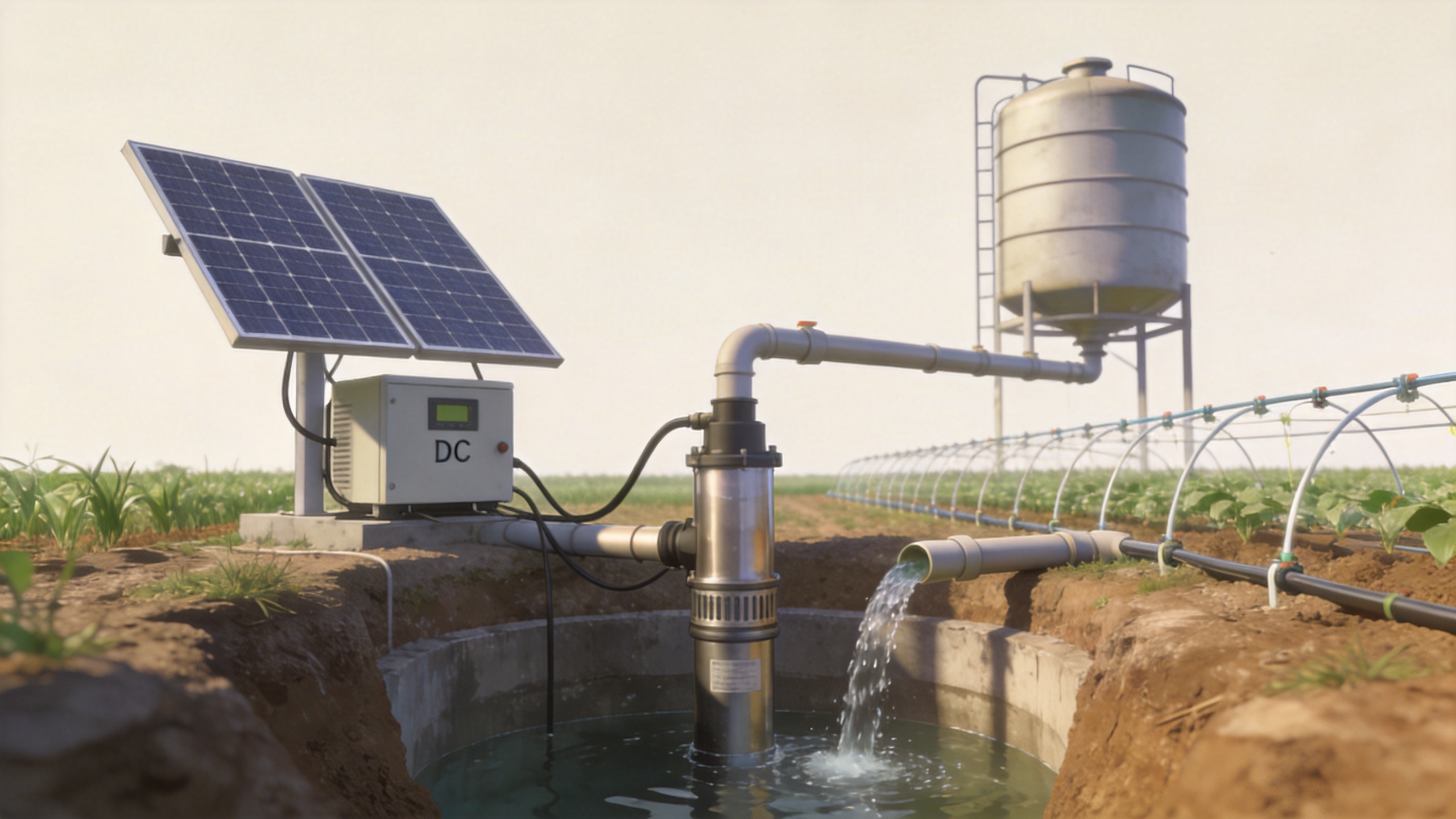
A solar water-pumping system commonly brings together PV panels, a pump or pump inverter, piping, and often a storage tank. The right architecture depends on the water source, total dynamic head, daily irrigation window, service access, and the variability of solar input. This is a selection framework rather than a confirmed performance claim for any one model.
Start With the Irrigation Duty, Not the Motor Type
Before choosing DC or AC, write down the duty point: expected daily water volume, desired flow rate, lift from the water level to the delivery point, pipe route, pressure needs, and irrigation schedule. Total dynamic head combines elevation and the resistance created by pipework and fittings at a given flow. Flow and head should be checked together; a pump that looks adequate on flow alone may not meet the duty once lift and friction are included.
For a remote borehole or reservoir, also check seasonal water-level changes and the hours when irrigation is needed. If water can be pumped gradually into storage during daylight and distributed later, a submersible dc water pump can be a very direct match. If the site needs a fixed high-flow schedule independent of sunshine, the power and storage plan may point toward a different architecture.
How a DC Submersible Pump Fits an Off-Grid System
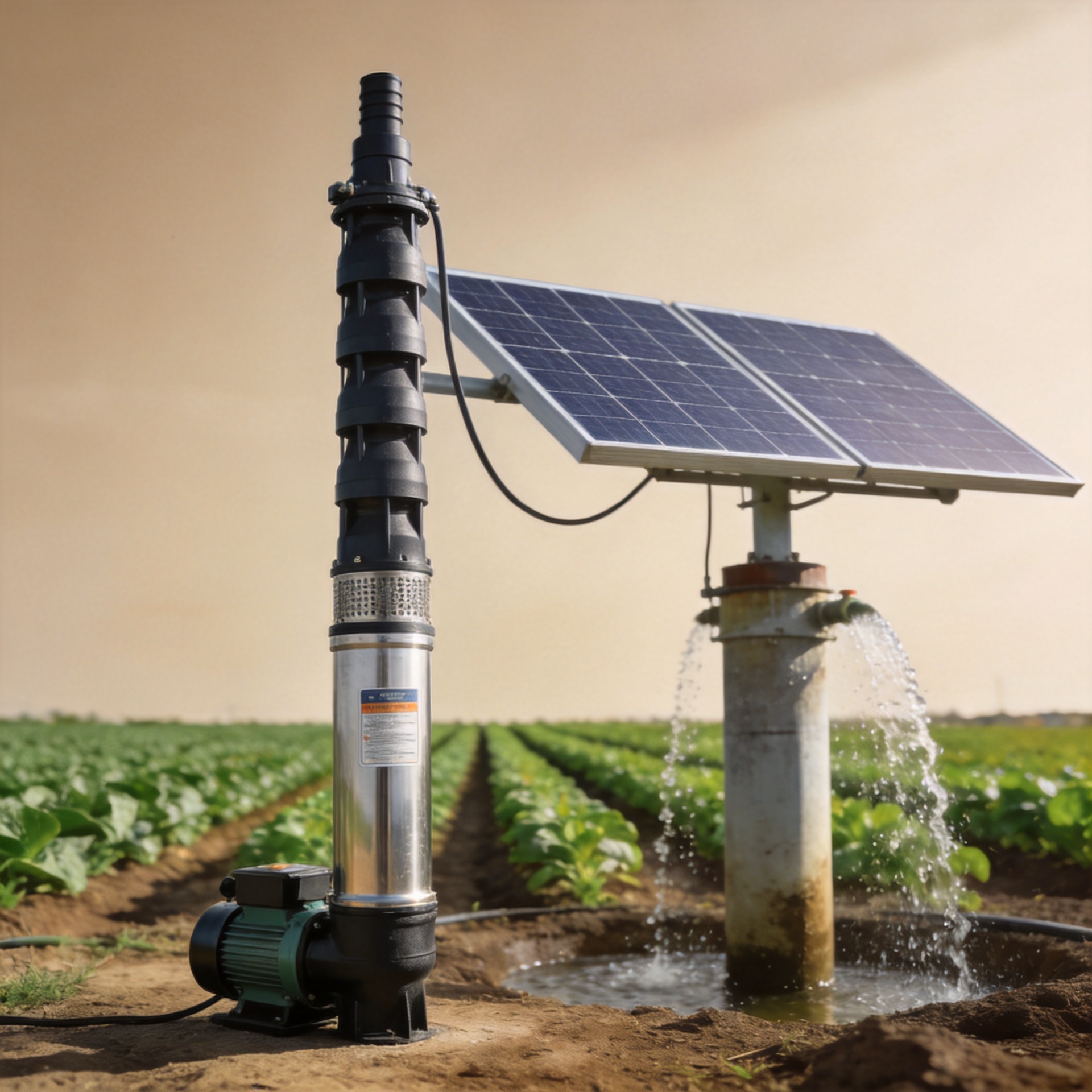
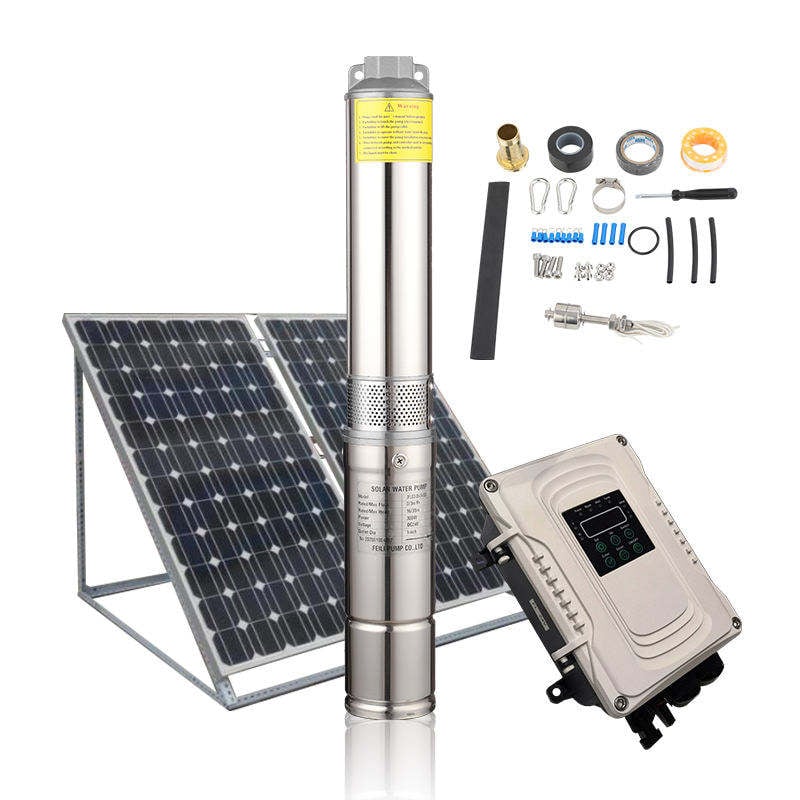
In this kind of layout, a submersible dc water pump is evaluated as part of the solar array, controller, cable route, well depth, delivery pipe, and storage plan. A dc well pump should be selected only after those interfaces are documented, because a suitable motor voltage alone does not confirm a suitable irrigation duty.
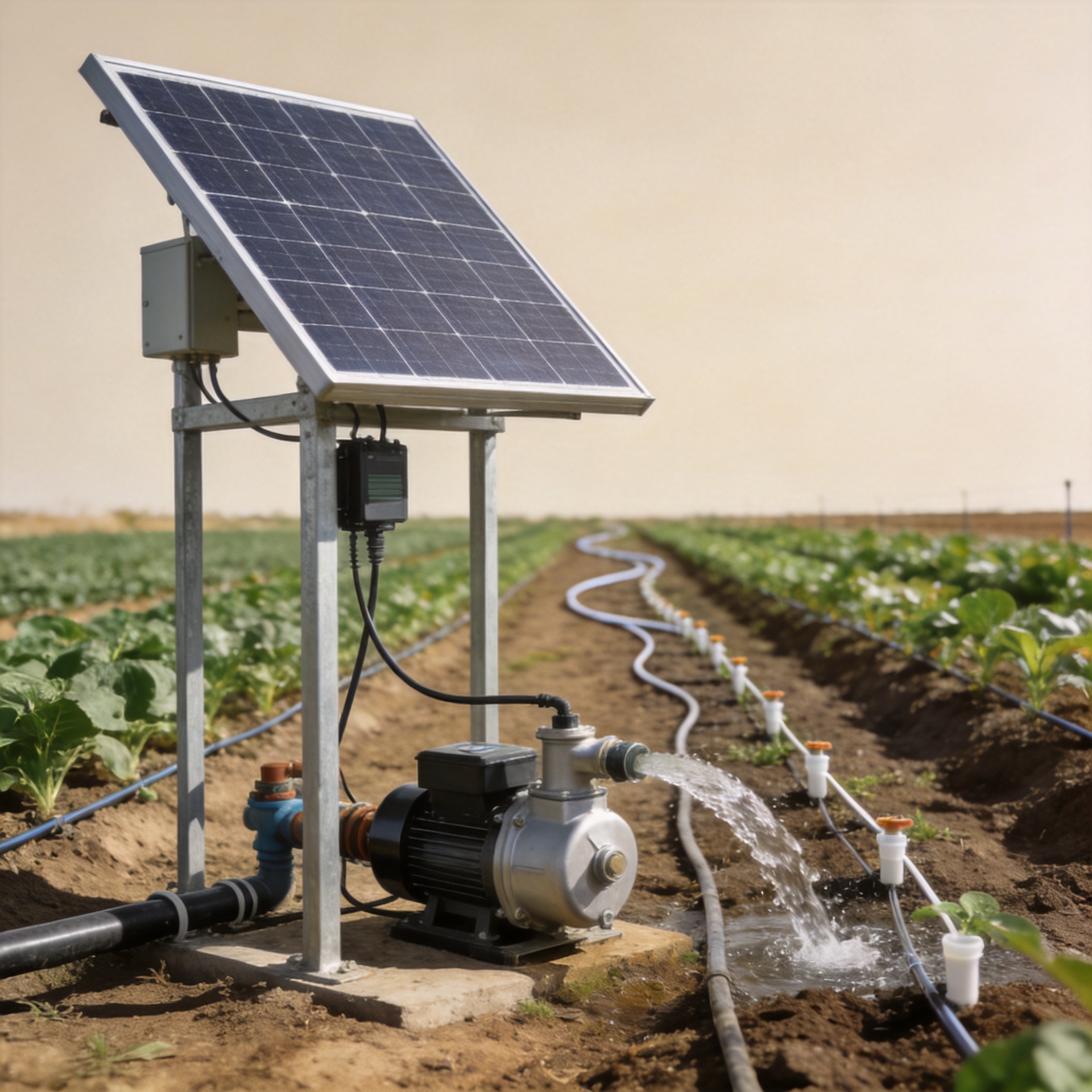
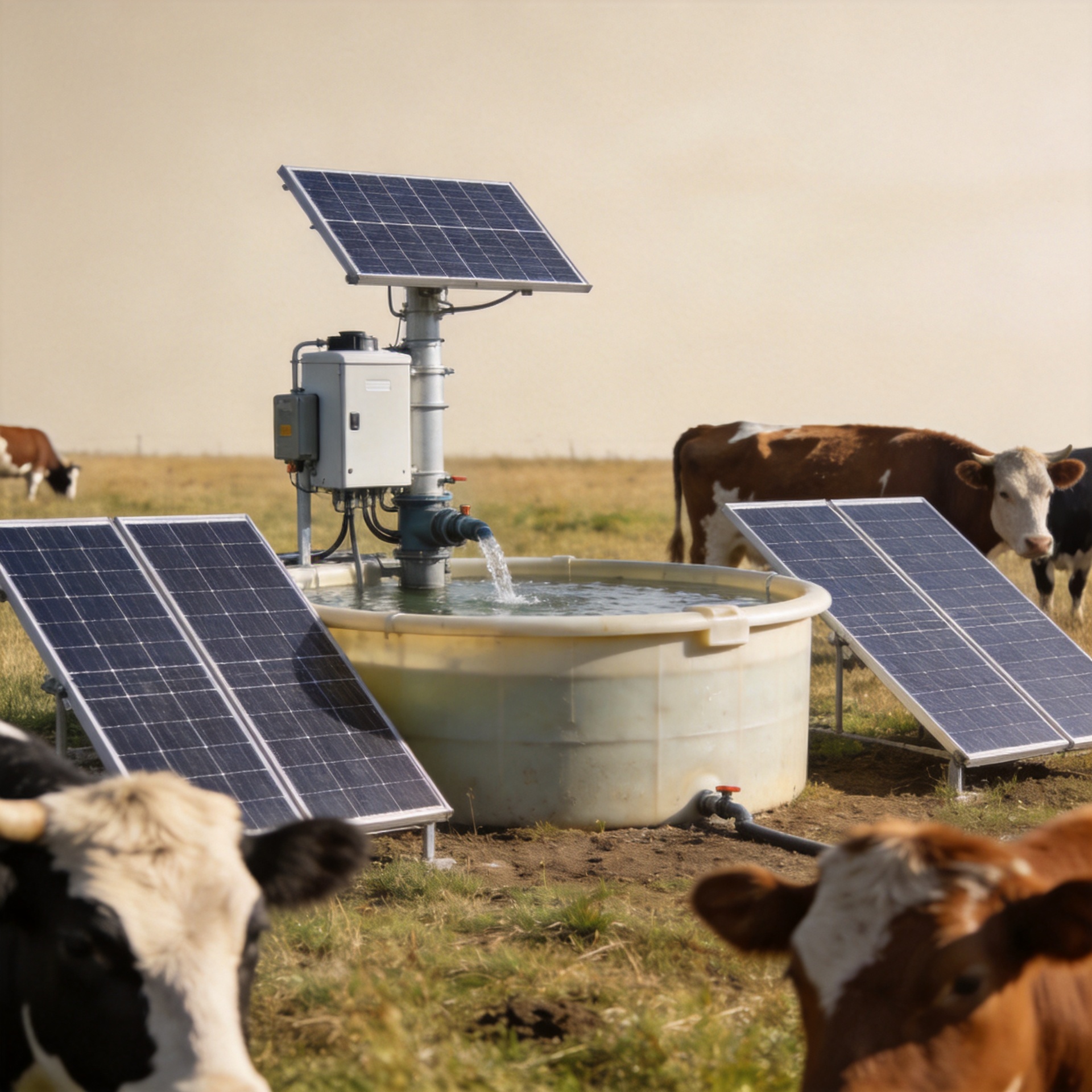
A DC system typically takes power from PV modules, batteries, or both, with a controller matched to the pump. A dc well pump is often considered where a solar-first design, low-voltage power path, and reduced conversion stages are priorities. In a daylight-pumping arrangement, water storage can act as an energy buffer: water is lifted when solar production is available, then supplied from the tank when irrigation demand occurs.
The practical advantage is not that DC is inherently preferable. Direct compatibility can simplify a solar-focused system when the pump, controller, array, cable run, and water duty are selected as one package. That is where the discussion becomes more practical: confirm the allowable voltage range, controller protection functions, cable losses, and dry-run or low-water safeguards before treating the arrangement as a final specification.
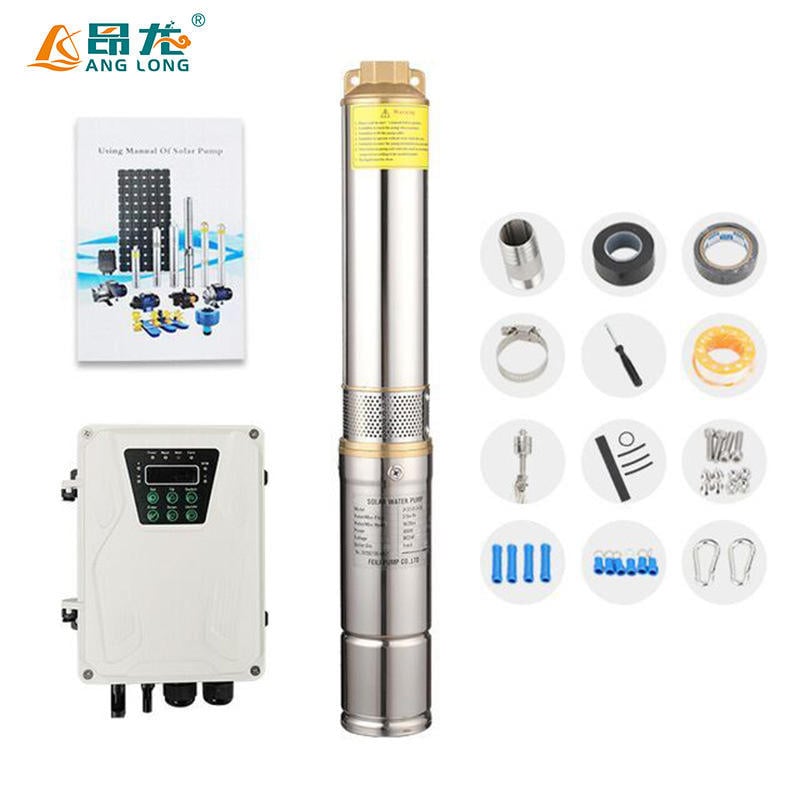
For buyers comparing product categories, Angdong Pump Co., Ltd. lists a solar submersible pump for agricultural irrigation and a 3-inch agricultural solar water pump. Review their current technical documentation for the actual voltage, flow, head, controller, and installation limits needed for a specific site.
When an AC Pump Can Make More Sense
Comparing a submersible dc water pump with an AC alternative is therefore a system decision, not merely a motor-label decision. A dc well pump can simplify a solar-first layout, while an AC pump can suit a hybrid site when the added conversion and controls are intentionally designed into the project.
An AC pump can be a sensible choice when the irrigation system already has dependable AC power, when a generator or hybrid inverter is part of the site plan, or when the selected pump range and local service network are built around AC equipment. In an off-grid system, however, AC power normally adds an inverter and introduces another compatibility check between the solar array, battery bank if used, inverter, controller, and motor.
That extra layer is not automatically a drawback. It may be justified when a project requires larger pump options, standardized AC controls, or operation across several loads. The trade-off is that the design team needs to assess conversion losses, inverter surge capacity, motor starting behavior, and the consequences of a controller or inverter fault. A price-only comparison can hide these installation and maintenance questions.
DC vs AC for Off-Grid Irrigation: A Practical Comparison
| Decision factor | DC submersible approach | AC pump with off-grid power |
|---|---|---|
| Power path | Can align directly with PV and a dedicated DC controller. | Usually requires an inverter or AC pump drive in the power chain. |
| Solar-first operation | Often well suited to daylight pumping into water storage. | Possible, but inverter and motor starting requirements need review. |
| System complexity | May reduce conversion stages, while still requiring correct controller and cable design. | May suit existing AC infrastructure but adds integration points. |
| Equipment selection | Check DC voltage range, array matching, controller functions, head, and flow curve. | Check AC voltage, inverter rating, starting load, head, flow curve, and backup power plan. |
| Service planning | Confirm local support for the pump and controller combination. | Confirm support for the pump, inverter, protection devices, and controls. |
Neither column replaces a site-specific pump curve review. The relevant technical question is not only whether the motor is DC or AC; it is whether the complete system fits the operating condition.
Use Water Storage to Reduce Power-Availability Pressure
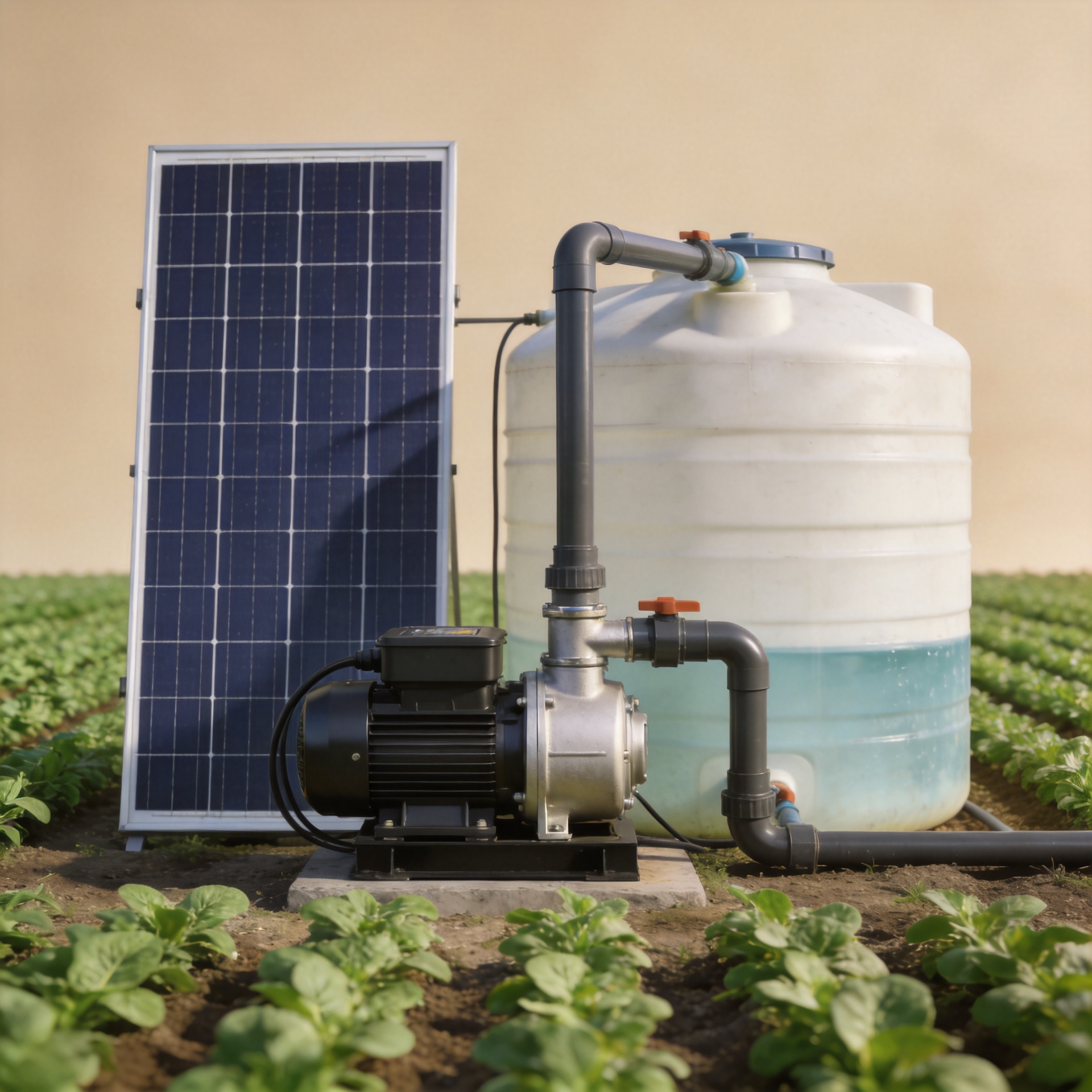
When irrigation timing is flexible, a submersible dc water pump can move water during productive solar hours, while a correctly sized tank separates pumping time from field-delivery time. This does not make a dc well pump universally preferable; it simply gives the project team another way to manage variable sunlight without assuming a large battery bank is required.
For many solar irrigation applications, a storage tank can be more valuable than trying to make the pump run exactly when every irrigation zone calls for water. Pumping during strong daylight and using gravity or a separate distribution arrangement later can reduce the need for large batteries. It can also make a submersible dc water pump easier to evaluate because the daily water target becomes more important than minute-by-minute solar fluctuations.
This approach still has boundaries. Storage elevation, tank capacity, pipe pressure, filtration, and irrigation-zone demand must be checked as a system. More water storage does not remove the need to calculate lift, friction, and pump duty.
A Selection Checklist for Buyers and Project Teams
Use the same checklist whether the shortlist contains a submersible dc water pump or an inverter-fed AC pump. For a dc well pump, the missing information is often the system information around it, not the pump category itself.
- Define the water source, seasonal water-level range, and water quality.
- Calculate the required flow and total dynamic head at the intended duty point.
- Decide whether daylight pumping plus storage can meet the irrigation schedule.
- For a dc well pump, verify PV-array matching, controller protections, voltage range, cable distance, and dry-run controls.
- For an AC system, verify inverter sizing, starting behavior, backup source, and protection coordination.
- Ask for the pump curve, wiring guidance, installation limits, and service documentation before purchase.
- Plan safe lifting, inspection, and replacement access at the well or water source.
Choose the Architecture That Matches the Operating Reality
A submersible dc water pump deserves consideration when direct solar compatibility and daylight storage are central to the design. An AC pump deserves consideration when the complete off-grid power arrangement supports its operational needs. In either case, request the evidence needed to confirm the duty point.
For a solar-first, remote irrigation site that can pump into storage during the day, a submersible dc water pump may offer a clean and focused path. For projects with established AC infrastructure, demanding schedules, or a wider hybrid power design, an AC pump may be the better fit. The right choice may prioritize serviceability and system compatibility over a marginal catalog feature.
Use the comparison to create a supplier request: provide the required flow, total dynamic head, source depth, pipe route, solar resource assumptions, storage plan, and desired operating hours. With those inputs, a supplier can help match the pump category and supporting equipment to the job rather than forcing the project to fit a generic pump.