 EN
How to Select a Solar Pump Irrigation System for Small Farms
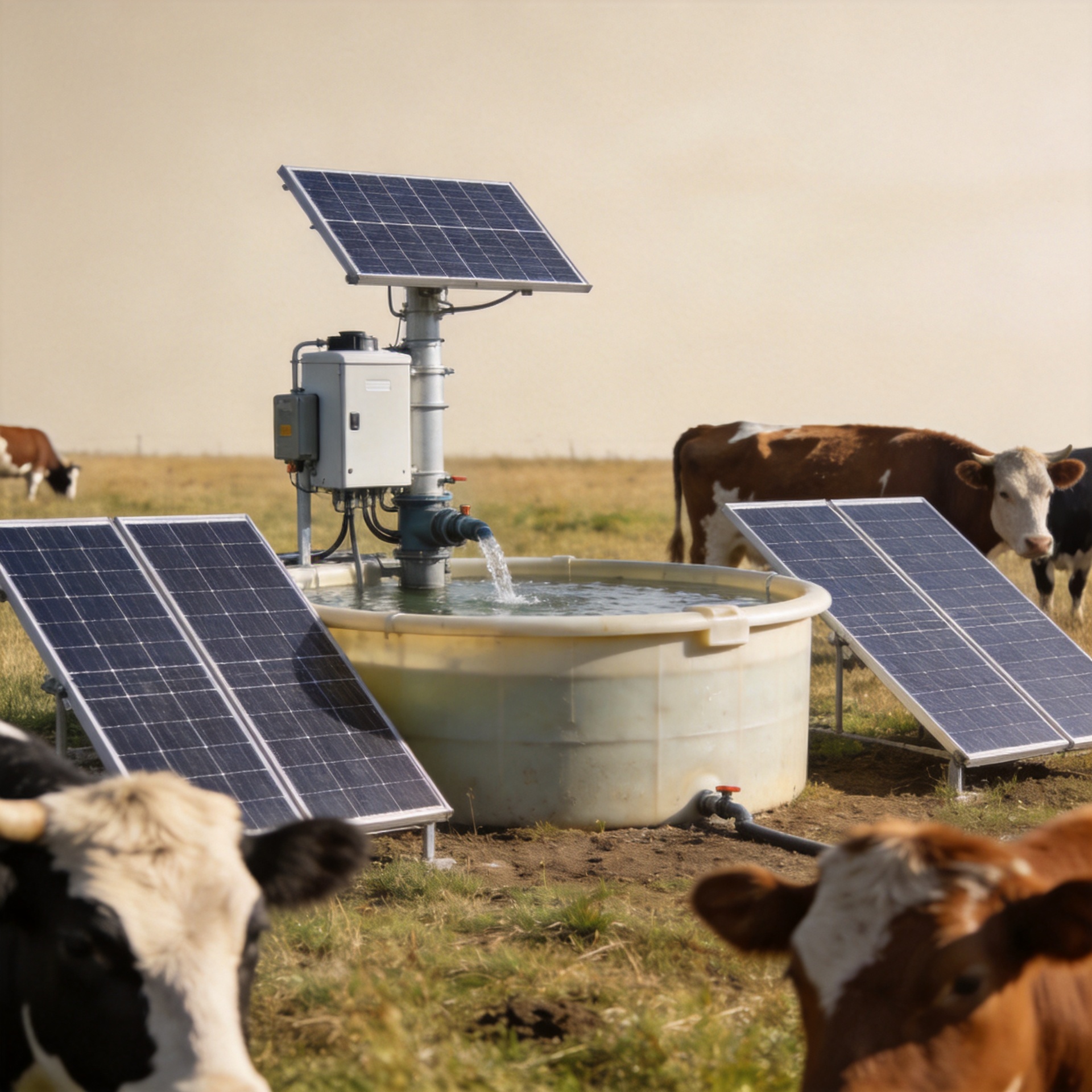
Choosing a solar pump irrigation system is less about finding the biggest pump and more about matching water, land, sunlight, and delivery needs. For a small farm, the useful starting point is the daily irrigation requirement: how much water must reach the crop zone, during which months, and from which source. Once that is clear, the pump, solar array, storage, pipework, and irrigation method can be planned as one working system.
From a pump-selection perspective, a solar pump irrigation system should be reviewed at its duty point, not selected by a horsepower label alone. This makes the purchase discussion more practical: define the water source, calculate the lift and losses, then check whether the equipment can deliver the needed water during the available solar window.
Start With the Farm Water Plan, Not the Pump Model
Before comparing a solar pump irrigation system, list the crop area, irrigation method, watering schedule, and seasonal peak demand. Drip irrigation, sprinklers, and open-channel delivery can require very different flow and pressure conditions. A field that is watered in zones may need a lower instantaneous flow than a field watered all at once, even when both use the same daily volume.
Also map the source: a borehole, shallow well, pond, canal, or storage reservoir. Water level variation matters. A well that performs well after rainfall may have a lower operating level in a dry period. For small scale solar powered irrigation pumping systems, this source check prevents a common error—sizing for the visible water level rather than the lowest realistic working level.
- Daily water volume required at peak demand
- Hours when irrigation can run without disrupting farm work
- Water-source level in the driest expected period
- Field elevation and the location of tanks, filters, and emitters
Calculate Flow Rate and Total Dynamic Head Together
The central technical question for a solar pump irrigation system is whether it can provide the required flow at the required total dynamic head (TDH). TDH is not simply the depth of a well. It includes vertical lift, the height of the delivery point, and friction losses through pipes, valves, filters, bends, and fittings at the intended flow.
Design guidance for solar water pumping treats flow rate and TDH as the main selection parameters. As TDH rises, a given pump normally delivers less flow. Ask for a pump curve or duty-point data showing the expected output at your calculated head, rather than accepting a maximum-flow figure quoted with little or no lift. If a supplier cannot relate the proposed solar pump irrigation system to your Q-and-TDH requirement, the selection is not ready to finalize.
| Decision factor | What to measure or confirm | Why it changes the selection |
|---|---|---|
| Flow rate | Water needed per hour or per irrigation zone | Determines how quickly the system can refill a tank or serve the field |
| Total dynamic head | Lift, delivery height, pipe length, fittings, filters, and pressure need | Determines the pump duty point and power requirement |
| Solar window | Usable sunlight by season and shading at the array site | Determines daily pumping time and PV-array planning |
| Storage | Tank size and elevation | Can shift pumping to sunny hours and irrigation to a more convenient time |
Choose the Water-Lifting Arrangement for the Source
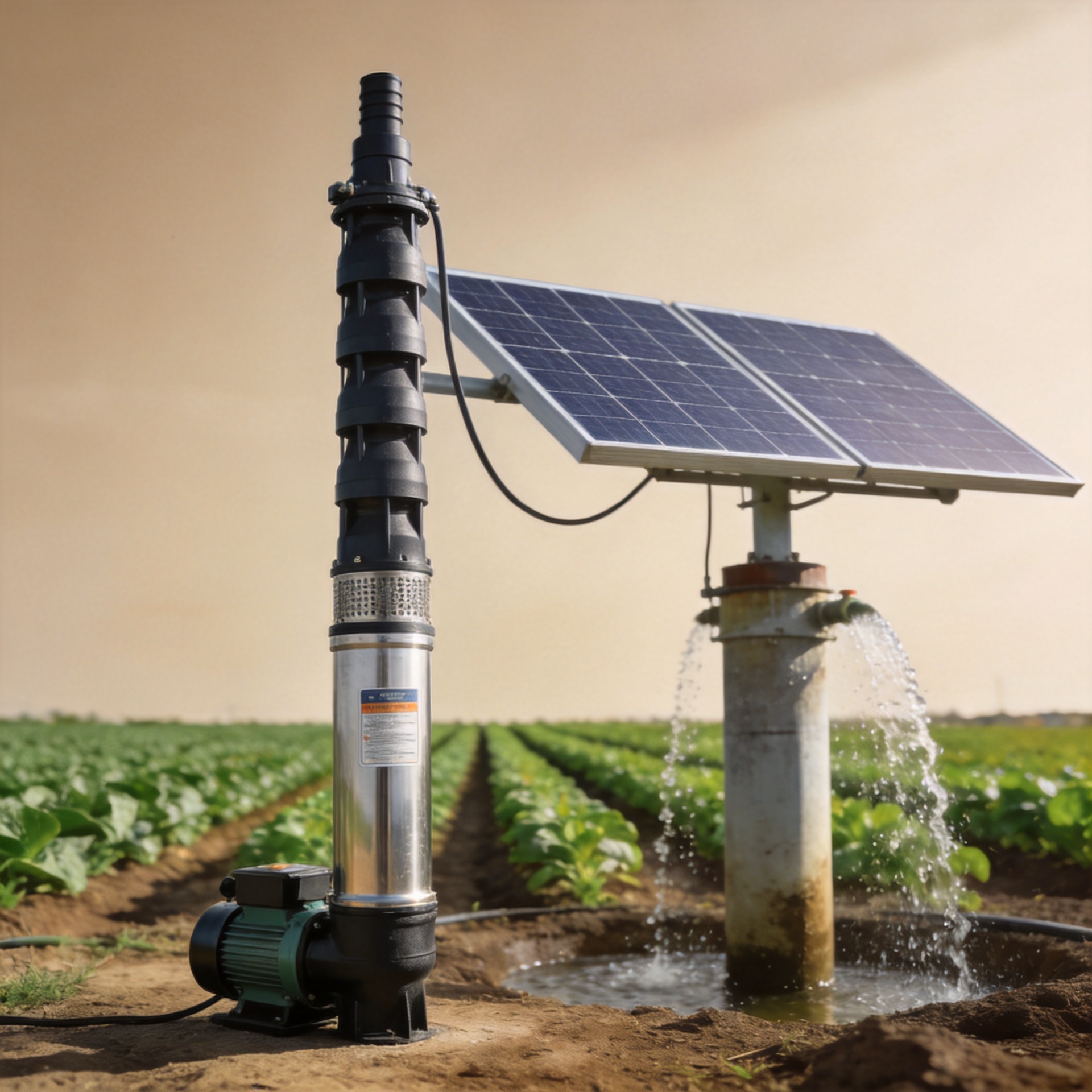
A solar pump irrigation system for a deep well is not evaluated in the same way as one moving surface water from a pond. A submersible configuration may suit a borehole or deep well, while a surface-oriented arrangement may be appropriate where the source and suction conditions allow it. The correct choice depends on the actual water path, site access, source characteristics, and required duty point.
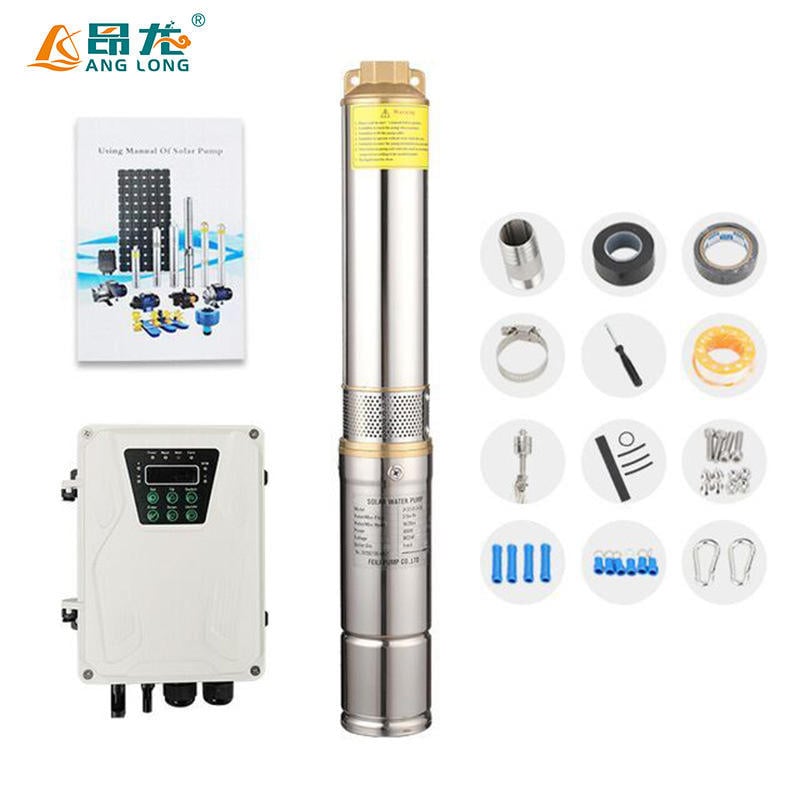
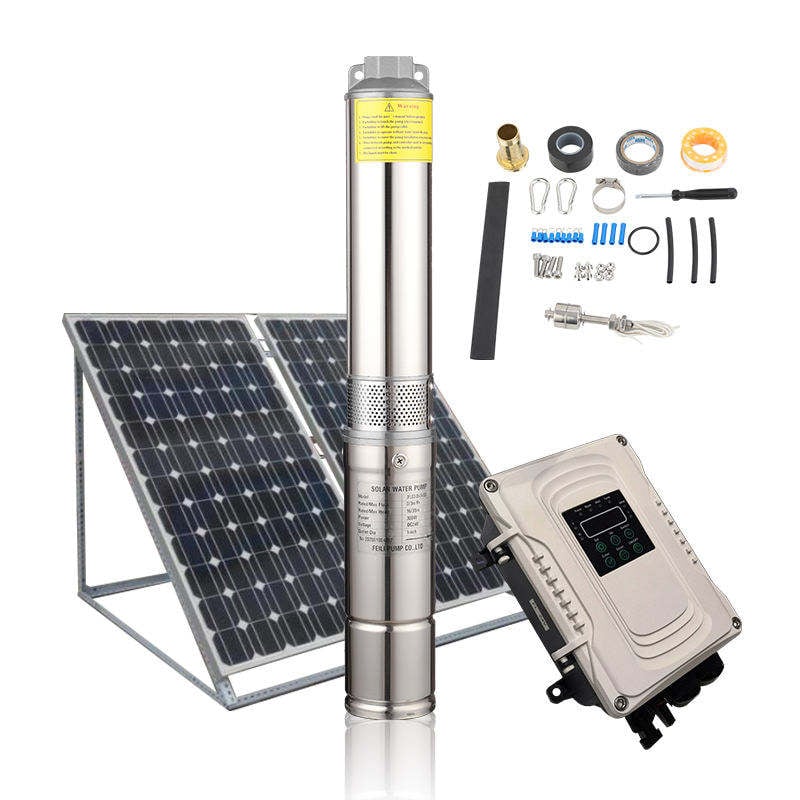
For farms reviewing submersible options, compare the proposed equipment against documented operating conditions instead of assuming that a product title confirms the fit. You can review a 3 Inch Agriculture Solar Water Pump Deep Well Submersible Screw Water Pump For Home as a product-page reference, then request confirmation of its fit for the planned head, source, and flow. A battery-supported configuration may also be worth discussing where the irrigation schedule must extend beyond the strongest sunlight; see the Solar Water Pumps Farm Irrigation System Dc Solar Submersible Pump With Battery page for a documented product option to evaluate.
Size Panels, Controls, and Storage as One System
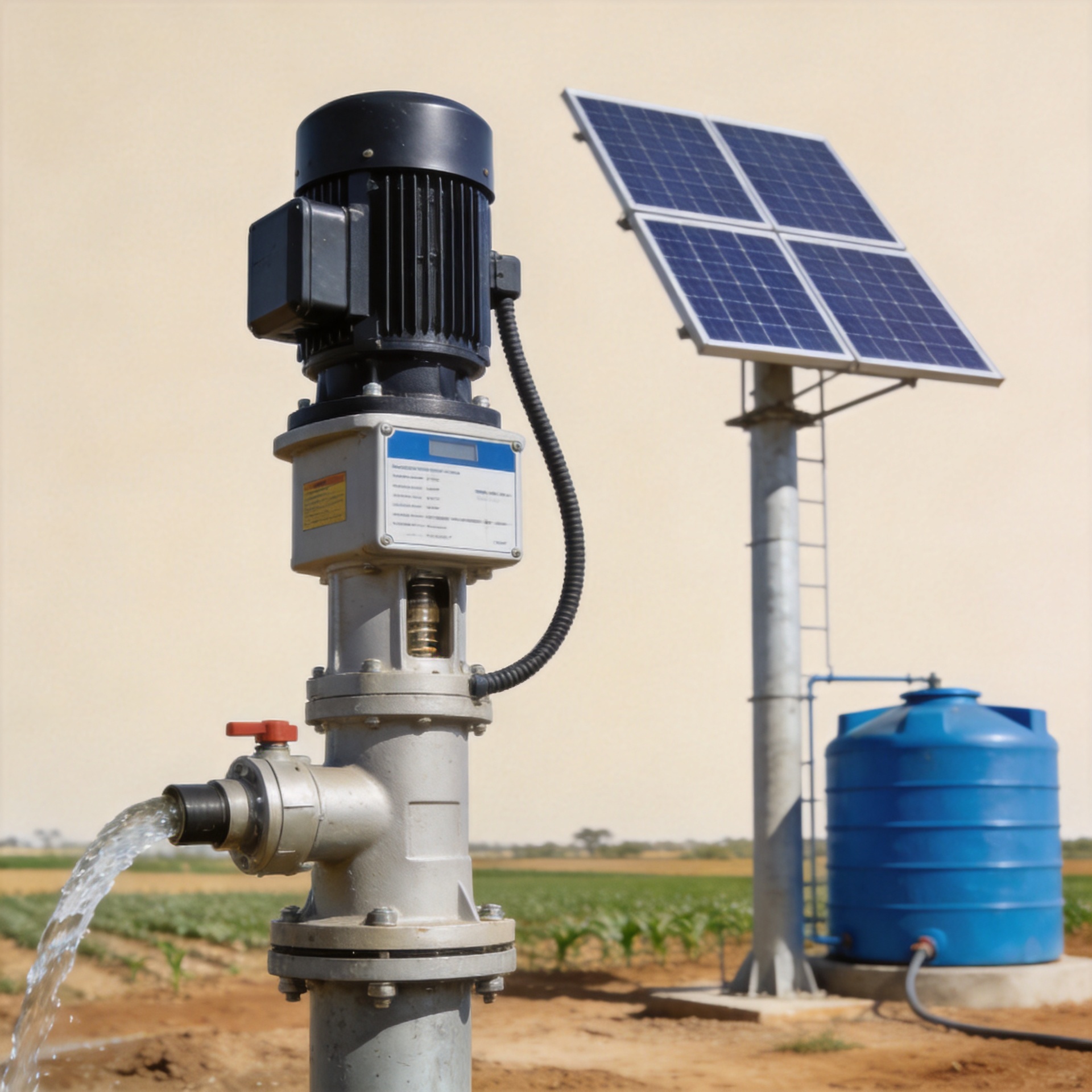
Think of a solar pump irrigation system as a package rather than a pump attached to a few panels. The pump controller, PV array, cable run, protection devices, water storage, filters, and irrigation distribution all influence real-world performance. Shade, dust, seasonal sun angle, and long cable runs can reduce the useful energy arriving at the pump.
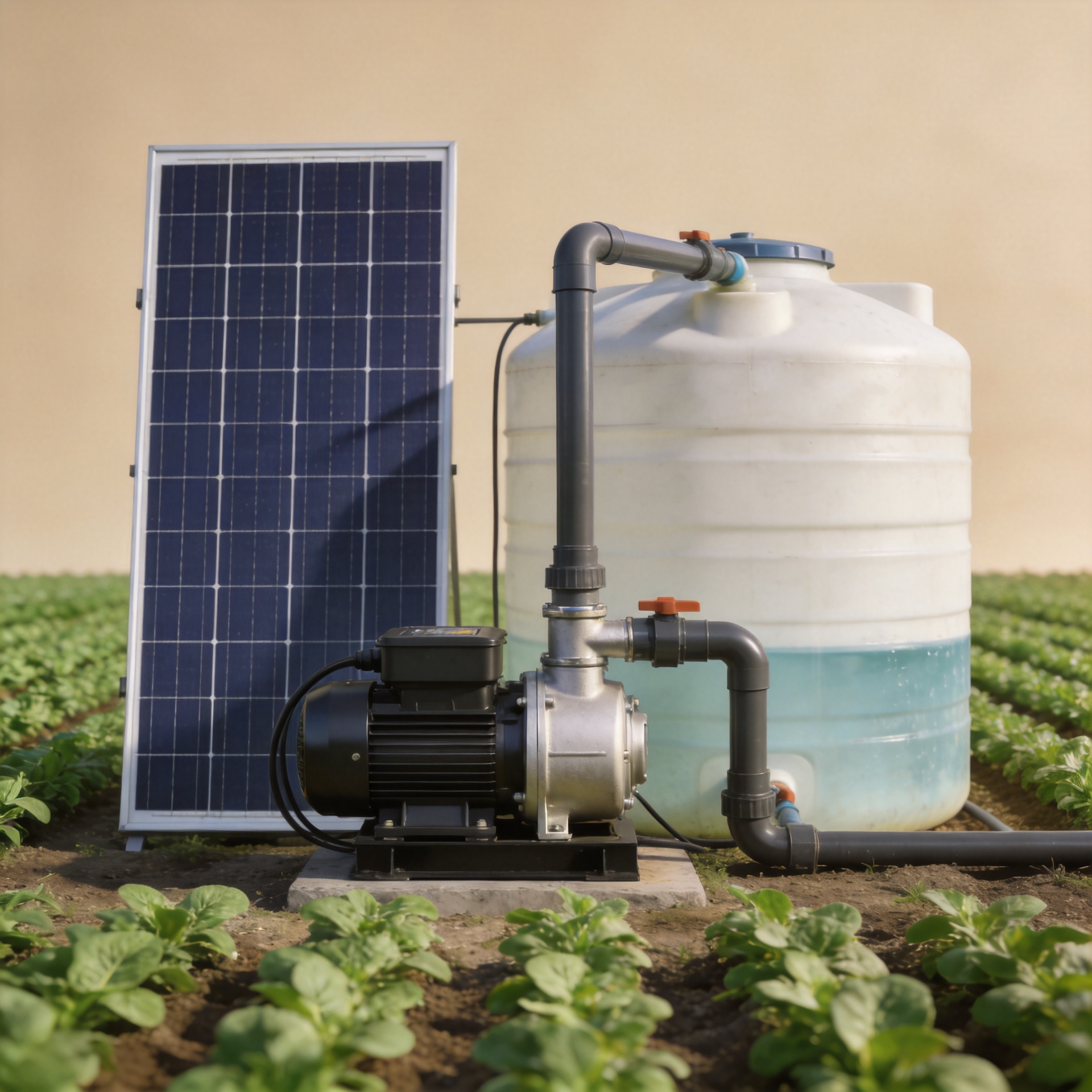
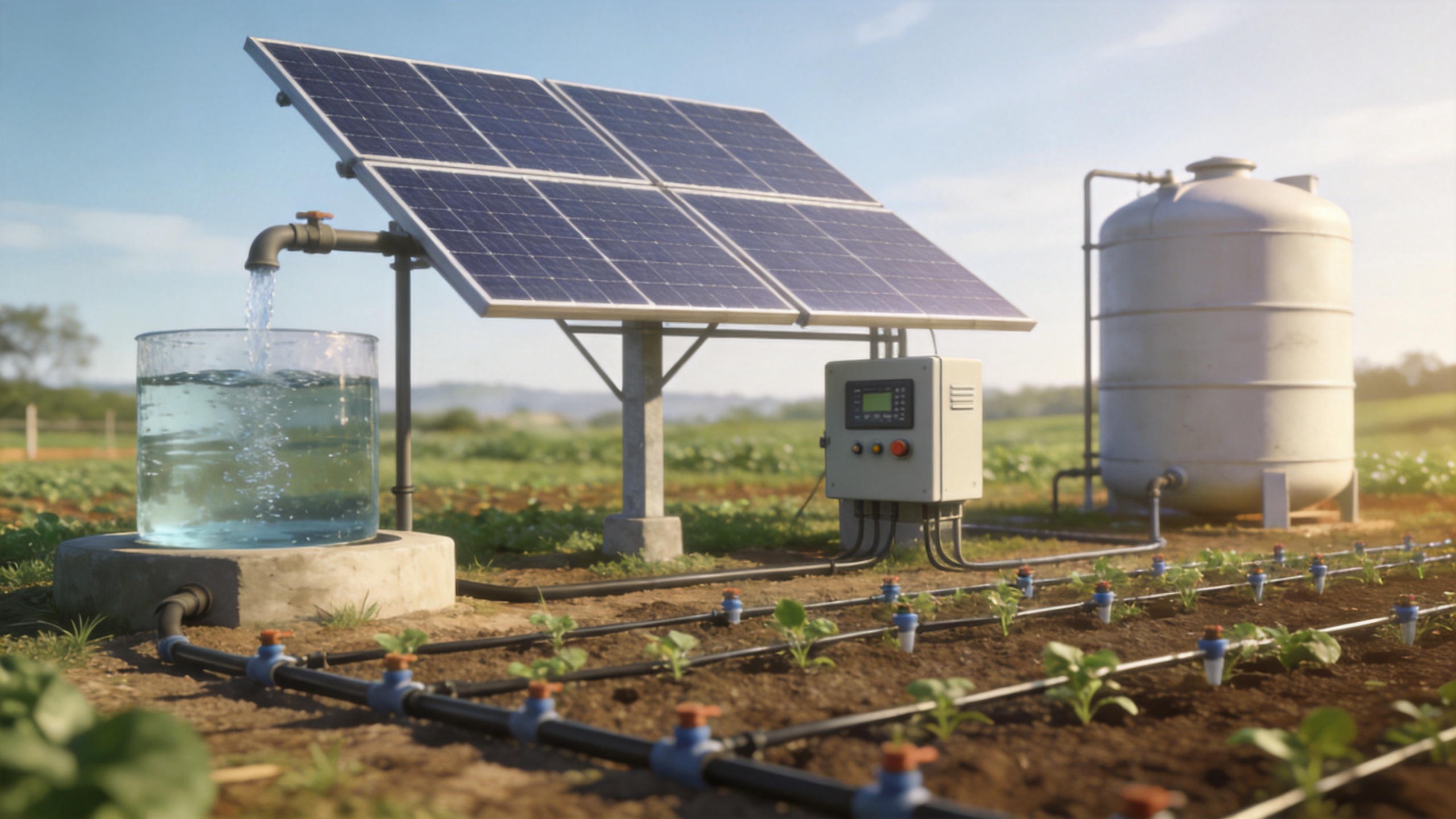
For many small farms, storing water in an elevated or ground-level tank during sunny hours creates more flexibility than trying to make the pump meet every irrigation event directly. The tank does not remove the need for correct sizing, but it can separate pumping time from delivery time. In small scale solar powered irrigation pumping systems, this can make zoning, filtration, and lower-pressure drip delivery easier to manage.
Compare Direct Solar, Battery, and Tank-Storage Approaches
There is no one configuration that fits every solar pump irrigation system application. Direct solar pumping can be a straightforward choice when irrigation can follow daylight and the water source is dependable. A battery may help when the farm needs pumping outside the solar peak, but it also adds components to specify, protect, and maintain. Water storage is often a useful alternative because the tank stores the irrigation resource itself rather than electrical energy.
Compare these choices against the farm's actual schedule. If morning or evening irrigation is essential, determine whether a tank can meet that requirement before adding battery capacity. If water must travel a long distance, include pipe friction and cable routing in the review. The useful question is not only whether a pump can run; it is whether the full solar pump irrigation system fits the field routine.
Use a Pre-Order Checklist
Before placing an order for a solar pump irrigation system, send the supplier a concise site brief. It should include water-source type, lowest working water level, vertical delivery height, pipe diameter and approximate length, desired flow, irrigation method, daily operating target, and site photographs or a simple layout. Request a matching duty-point explanation, component list, wiring and controller documentation, installation guidance, and service/spares information.
Do not overlook water stewardship. Solar pumping can make water access easier, but responsible irrigation still requires attention to source recharge, local rules, leakage, and field application efficiency. This is especially important where groundwater levels are seasonal or constrained.
Make the Final Decision Around Verified Fit
A suitable solar pump irrigation system for a small farm is supported by measured site information and a clear duty-point match. Start with water demand, calculate flow and TDH, assess the solar window, then decide how storage and irrigation zoning will work. That sequence reduces guesswork and gives you a stronger basis for comparing proposals.
If you are evaluating a solar pump irrigation system, use the checklist above to prepare your inquiry. Clear site information lets a supplier discuss a practical configuration without relying on unsupported promises or one-size-fits-all recommendations.