 EN
How to Choose a Solar Submersible Pump for Deep Wells
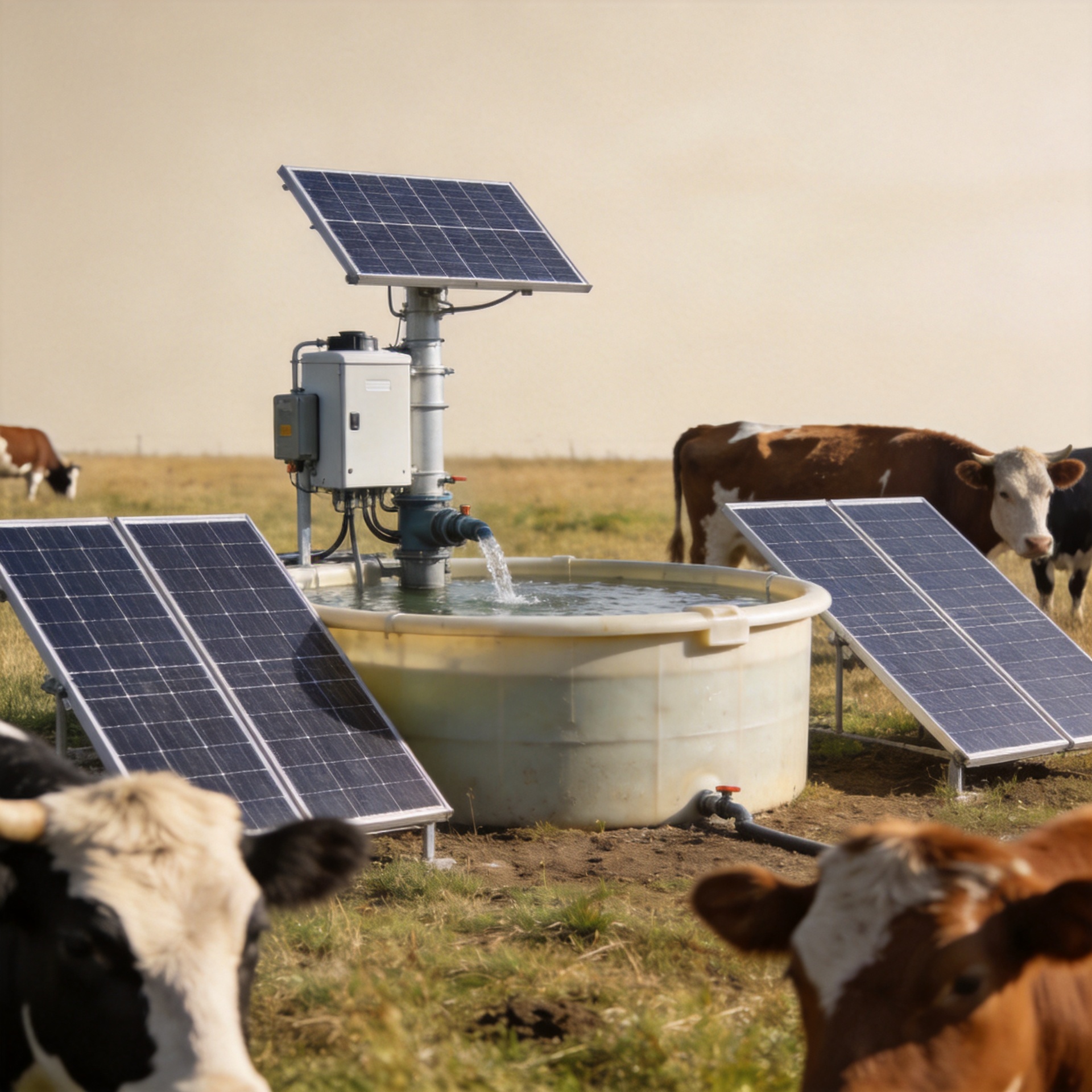
A solar powered borehole system can supply irrigation, livestock, household, or community water where grid power is limited. The pump itself is only one part of the decision. For a deep well, the useful question is not “Which model has the highest rating?” but “Which complete system can deliver the required water volume at this well’s real operating conditions?”
From an application-engineering perspective, start with flow, head, and installation conditions before comparing products. A well that looks simple on paper can behave very differently once the water level falls during pumping, pipe friction is included, and the water has to reach a raised tank or a distant field. This guide gives buyers a practical way to assess a solar powered borehole package before requesting a quotation.
1. Collect the well data before choosing the pump
The depth of the drilled well is not enough to size a solar powered borehole pump. Ask for the static water level, the dynamic water level while pumping, the planned pump setting depth, and the elevation of the outlet or tank. By dynamic water level, we mean the water level after drawdown during normal pumping, not merely the pump’s installation depth.
Total dynamic head (TDH) brings together the vertical lift to the discharge point and the friction losses through pipe, fittings, valves, and long horizontal runs. A common planning miss is treating borehole depth as TDH. Check the pumping water level, delivery height, pipe length, pipe diameter, and fittings before assuming a higher-head pump is the answer.
- Static water level: distance from ground level to water before pumping.
- Dynamic water level: level reached when the well is producing water.
- Delivery lift: height from ground level to the tank inlet, header, or field outlet.
- Pipe losses: resistance created by pipe length, pipe diameter, bends, filters, valves, and the target flow.
More rated head is not automatically better if the duty point is not verified. An oversized configuration can add cost without solving a poorly defined pipe or water-storage layout.
2. Convert daily water demand into a flow target
Next, define how much water the solar powered borehole system must deliver per day. For irrigation, work from the crop schedule, irrigated area, and delivery window. For livestock or domestic supply, use the expected daily demand and an allowance for seasonal peaks. Then decide how many effective sun hours are available for pumping at the site during the critical period.
A pump that can deliver high flow at shallow head may not meet the same flow at a deep-well TDH. Rather than selecting from a headline flow number, compare the required flow and TDH against the manufacturer’s pump curve. The duty point should sit in a stated operating range that meets both values. If the required daily water volume is high but sunlight hours are limited, a larger array, more storage, or a different pump configuration may be needed.
For year-round use, the design should be checked against the lower-sun period rather than only a bright-season estimate. That said, the right reference month depends on when the water requirement is most critical. A seasonal irrigation project and an all-year drinking-water project do not have identical solar-resource assumptions.
3. Choose the pump type for the well condition
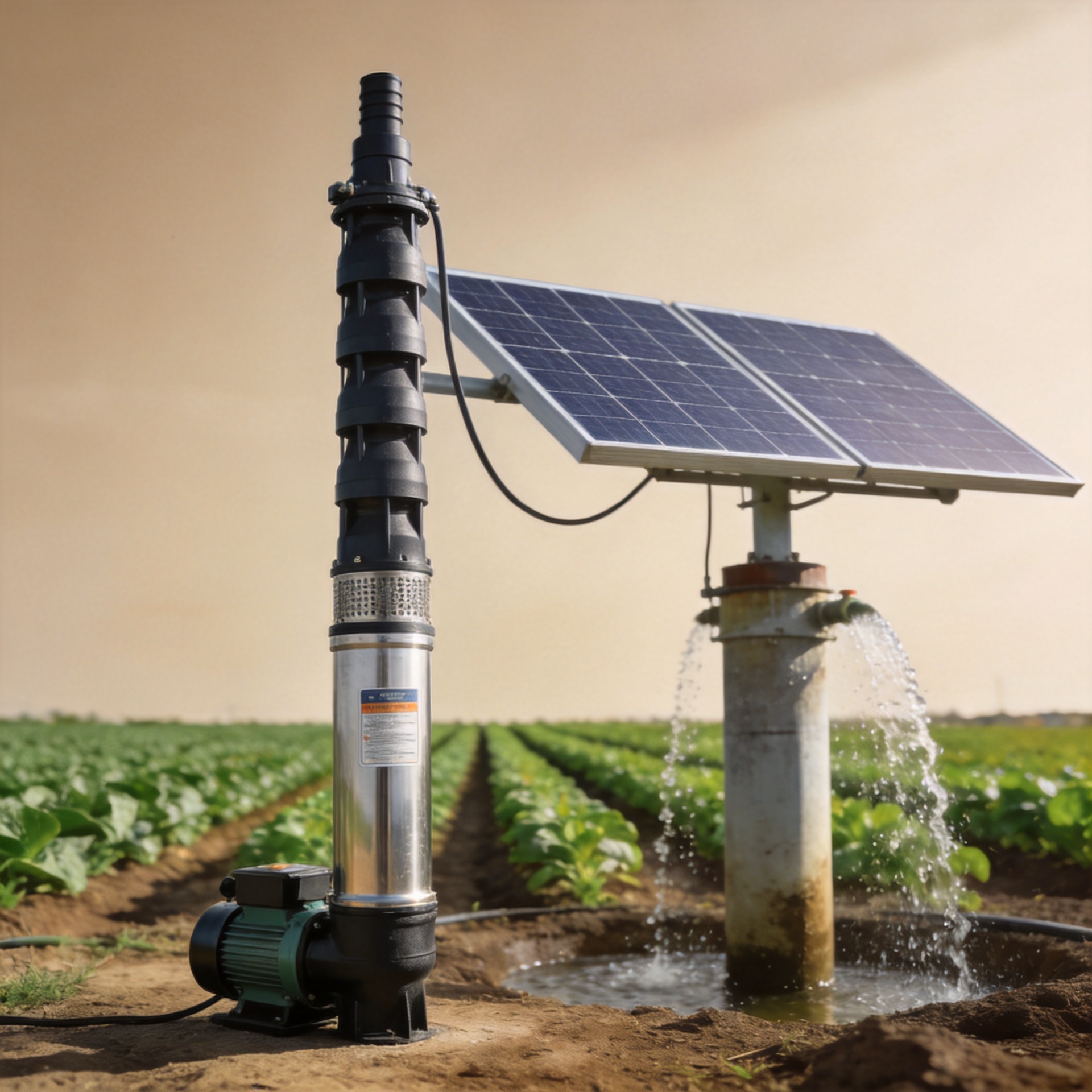
Deep wells normally call for a submersible design because the pump operates below the water level and pushes water upward. The suitable pump type still depends on the relationship between head, flow, water quality, and operating time. A screw or helical-rotor design can be relevant where higher head and modest flow are needed, while multistage centrifugal designs are often considered for higher flow applications. This is a decision framework, not a claim that one configuration fits every well.
| Selection factor | What to confirm | Why it matters |
|---|---|---|
| Flow and TDH | Duty point on the pump curve | Shows whether the pump can move the required water at the actual lift. |
| Well diameter | Clear internal diameter and casing condition | Determines whether the pump can be installed with suitable clearance. |
| Water quality | Sand, sediment, mineral content, and filtration plan | Helps define protection, maintenance, and material requirements. |
| Run time | Expected hours per day and seasonal use | Influences array, controller, storage, and backup planning. |
In a real installation review, look for access to the wellhead, safe cable routing, pipe support, non-return-valve position, and a way to inspect filters before drawing a conclusion. These basic details can affect serviceability as much as the pump specification does.
4. Size the solar array, controller, and water storage together
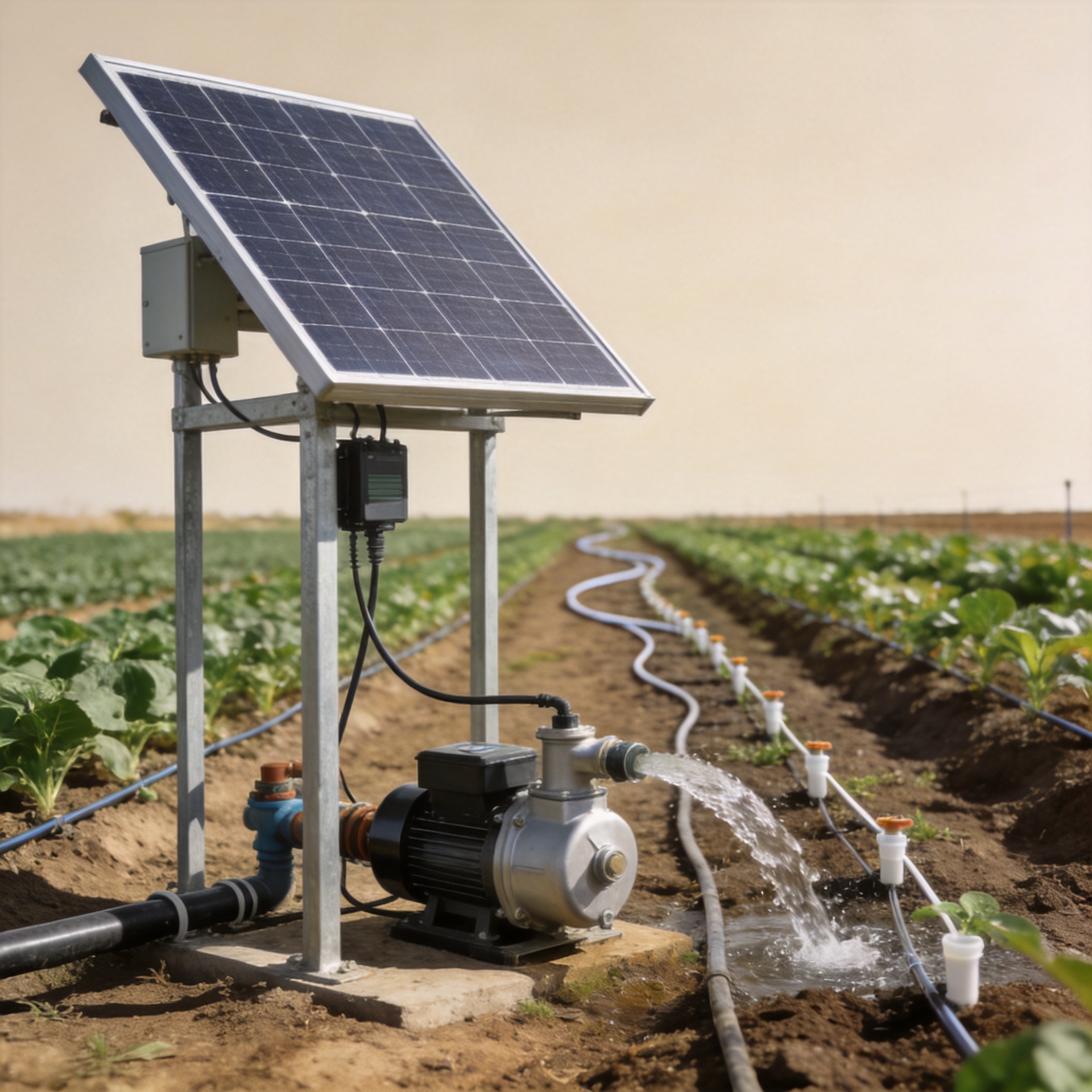
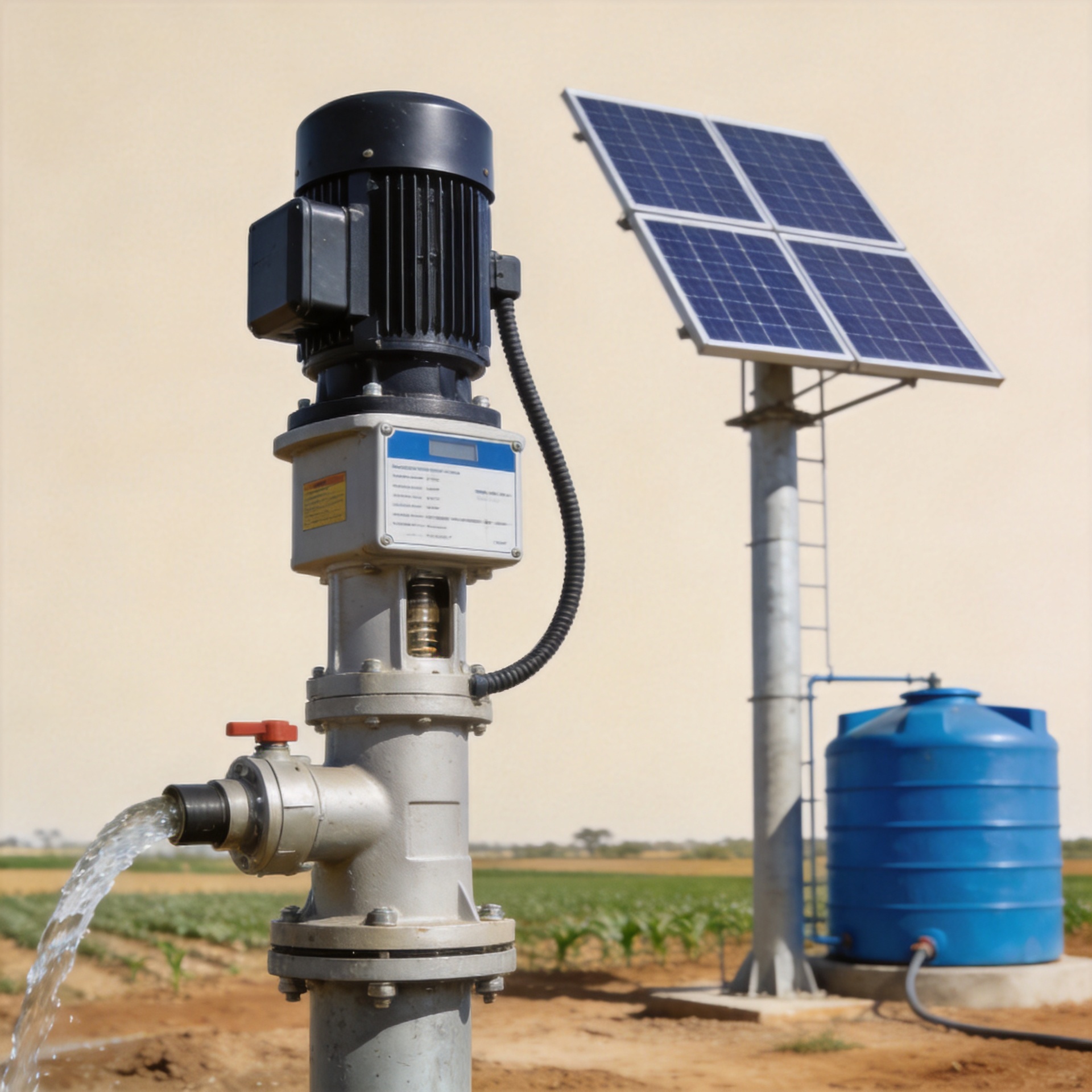
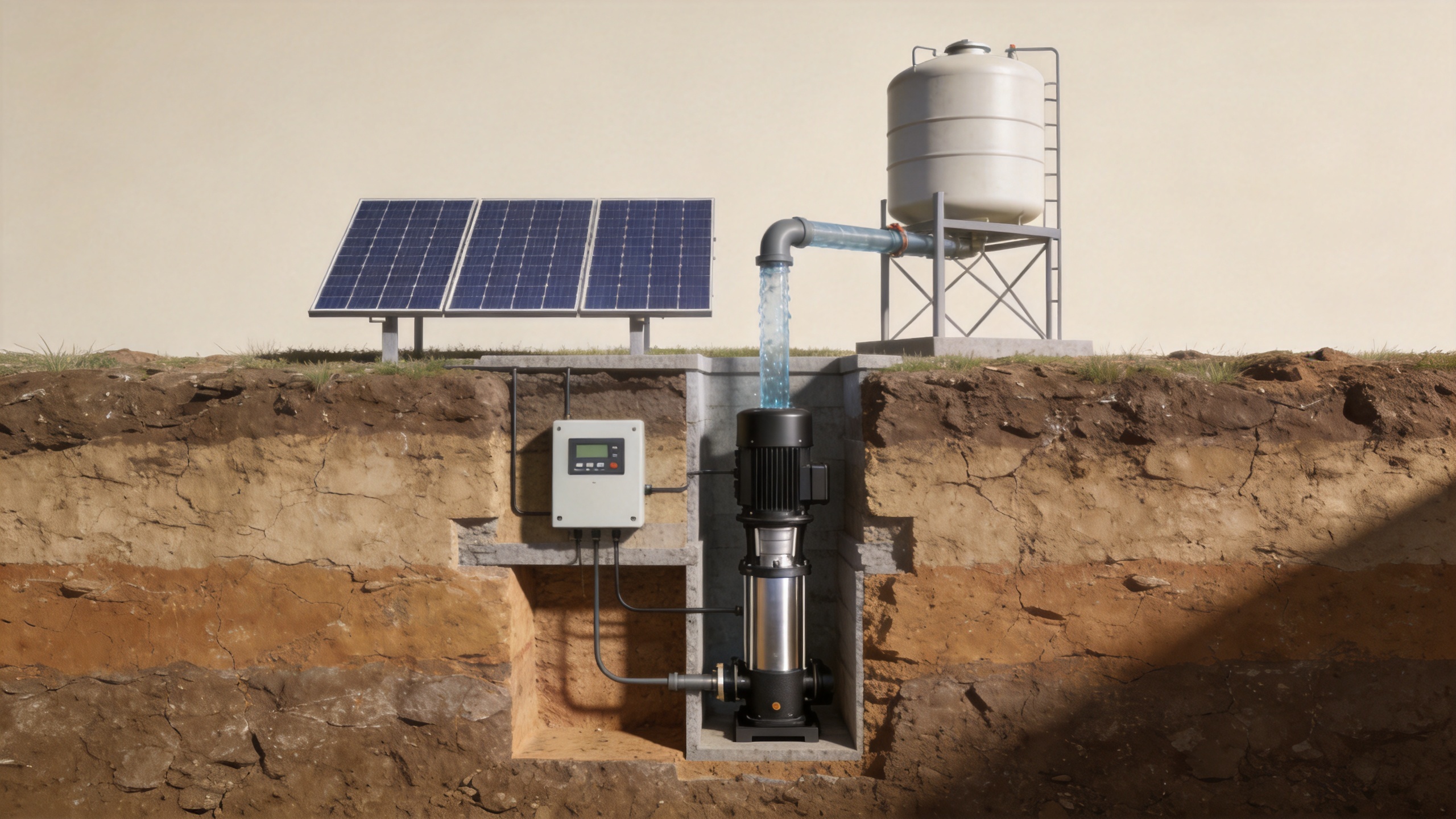
A solar powered borehole installation should be specified as a system: PV modules, controller, submersible pump, cable, pipework, protection devices, and storage. The controller should be compatible with the pump and the intended solar input. A controller with MPPT functionality may be part of a system design, but buyers should confirm its operating-voltage range and protection features from the supplier’s documentation.
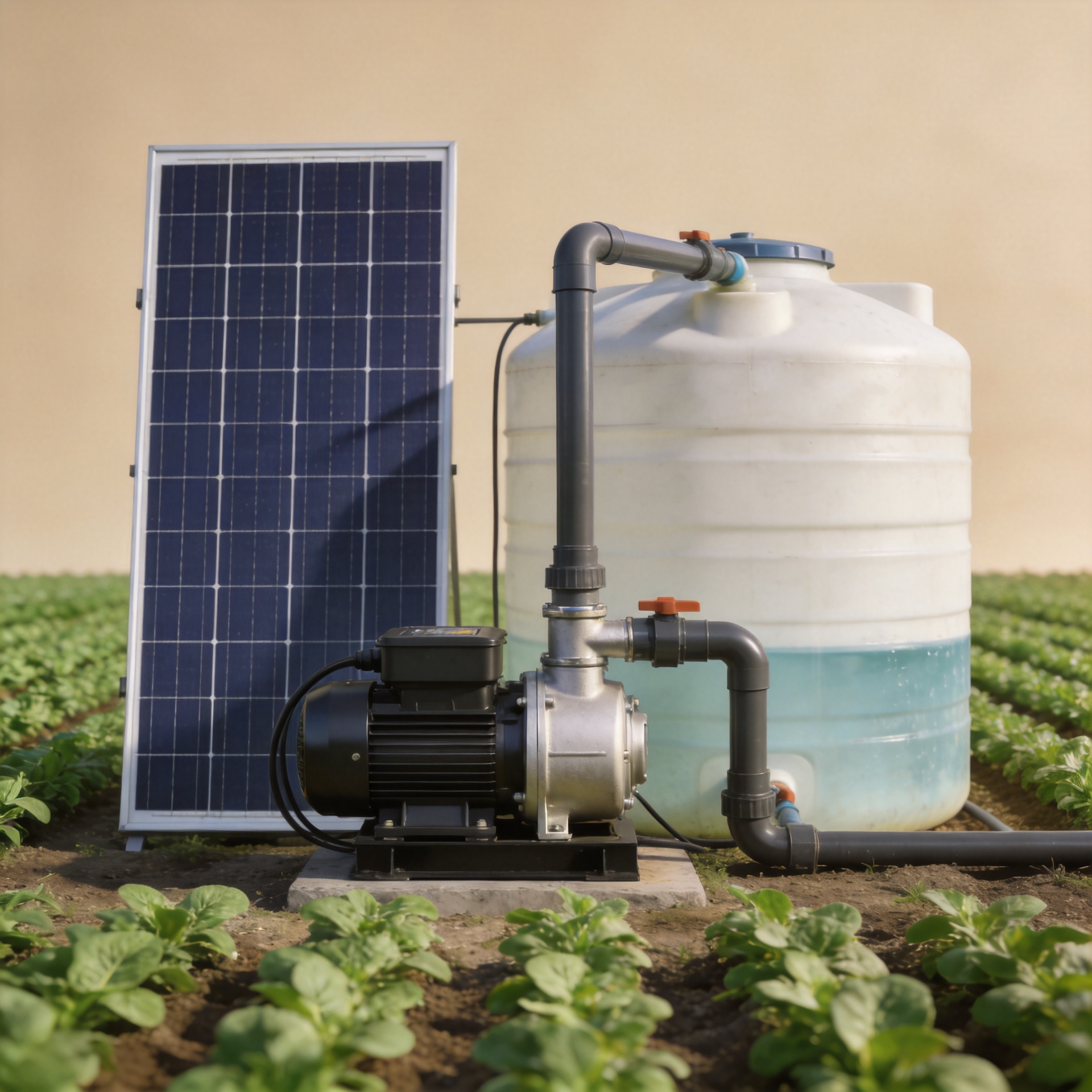
For many remote-water projects, storing water in a tank is simpler than storing electricity in batteries. The tank can bridge cloudy periods and lets the pump operate when sunlight is available. A solar pump with battery backup may be appropriate when pumping must continue outside solar hours or when a particular pressure or service requirement justifies the additional battery, charging, enclosure, and replacement planning. Compare that choice against direct solar pumping to a properly sized tank; do not assume a battery is automatically required.
Ask the supplier to state the expected daily water output at the requested TDH, the panel configuration, the controller model, and the design solar condition. This gives you a more useful comparison than comparing motor wattage alone.
5. Compare complete solar borehole packages, not isolated components
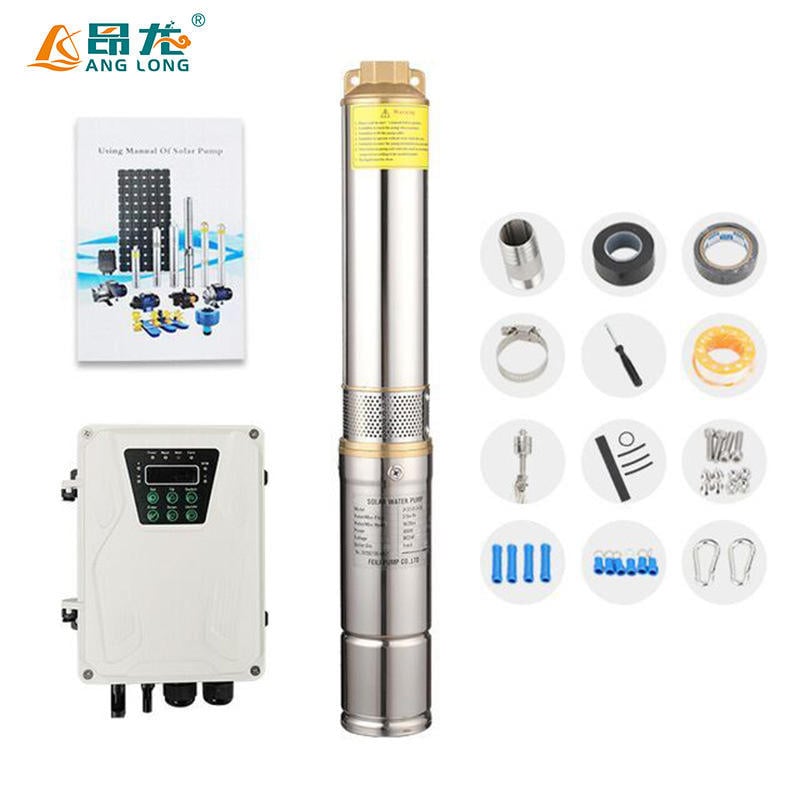
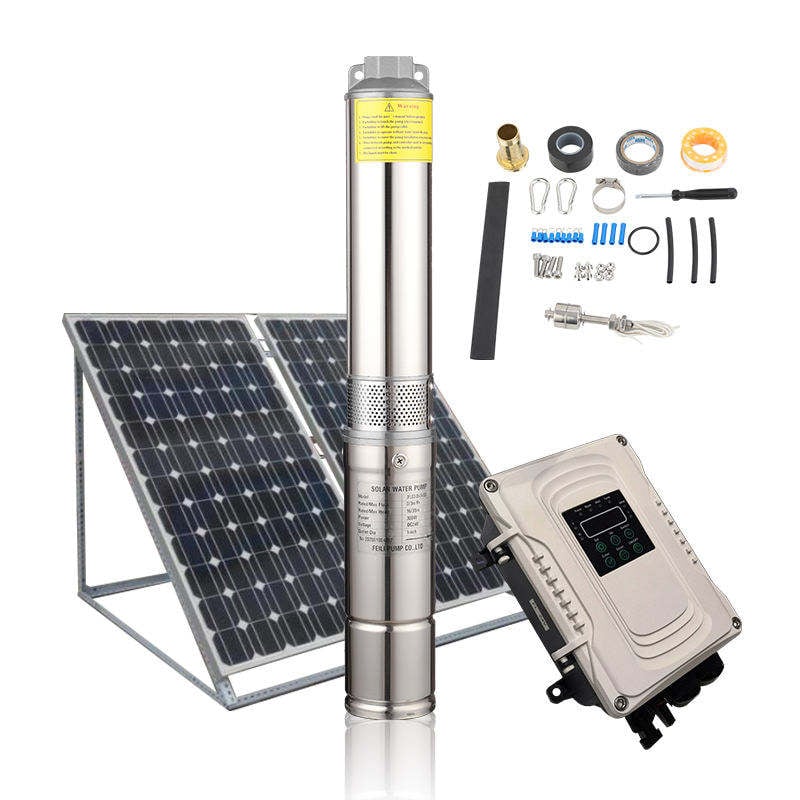
A solar borehole quotation should make the scope clear. Confirm whether it includes PV panels, mounting structure, controller, downhole cable, pipe, connectors, dry-run protection, water-level control, and shipping documentation. A low pump price can be misleading if essential electrical or installation components are excluded.
When reviewing product options, begin with the verified product page and then request the duty-point data for your project. Angdong Pump lists a complete kit stainless steel deep well submersible solar water pump for agricultural irrigation and a 3 inch agriculture solar water pump deep well submersible screw water pump for home. Use the product pages as a starting point, then verify suitability against the actual well and water-demand data.
6. Use this buyer checklist before placing an order
- What are the static and dynamic water levels, and what is the planned delivery height?
- What daily water volume is needed in the critical season?
- What TDH and flow point must the solar powered borehole pump meet?
- Which pump curve and solar-array configuration support that duty point?
- Is the system direct-to-tank, or is a solar pump with battery backup genuinely required?
- Which protections, cables, pipework, controls, and installation accessories are included?
- What information will be available for installation, commissioning, and routine maintenance?
Make the final choice from verified project data
The strongest solar powered borehole choice is not the unit with the largest advertised flow or the lowest component price. It is the configuration that matches the well’s dynamic level, required daily water, TDH, solar resource, and operating plan. Check the water demand. Check the head calculation. Then check the supplier’s pump curve and complete system scope.
Use this as a planning guide, then confirm the final configuration against measured well data and the supplier’s current technical documentation. That approach gives procurement teams and installers a clearer basis for comparing a solar borehole package before committing to a project.