 EN
How to Size a Solar Borehole Pump System for Farm Irrigation
Choosing solar panels for borehole pumps starts with the water your farm needs, not with a panel count. A workable solar powered well system has to move a known daily volume from the real pumping water level, through a pipe network, to the field or storage tank during the solar hours available at the site. When those inputs are clear, the pump, controller, solar array, pipework, and storage can be specified as one system.
For irrigation buyers, the most useful outcome is a duty point: a required flow rate at a calculated total dynamic head (TDH). That duty point lets a supplier compare pump curves and then size solar panels for borehole pumps around the selected pump rather than around a guess.
Start with the farm water-demand worksheet
Before choosing a deep-well pump, collect the daily water requirement in cubic metres or litres. Crop type, irrigated area, application method, weather, and irrigation schedule all affect this number. Drip zones, for example, may need lower instantaneous flow than an open-channel layout, but the system must still deliver the planned daily volume.
- Daily water target: total m³/day required at the field or storage tank.
- Irrigation window: realistic pumping hours during useful sunlight, adjusted for seasonal conditions.
- Peak flow requirement: daily volume divided by the available pumping window, with a practical operating margin.
- Distribution method: drip, sprinkler, basin, or transfer-to-tank, because each has different pressure needs.
For example, a farm that must supply 30 m³/day and plans on six effective pumping hours needs roughly 5 m³/h at the delivery point before allowing for operational margin. This is a planning example only; crop demand and solar availability should be confirmed locally. In solar water irrigation, a larger storage tank can reduce the need to force all water through the system in a short period of peak sunshine.
Calculate total dynamic head instead of using borehole depth alone
The borehole depth stamped on a drilling record is not the pump head. TDH is the vertical lift and resistance the pump must overcome while operating. A useful field calculation is:
TDH = pumping water level + height above ground + delivery pressure head + pipe friction losses.
Use the dynamic water level, not merely the static water level. The dynamic level is the water level while the borehole is being pumped; drawdown can materially change the selected duty point. Add the vertical rise from the borehole head to the tank or field, the pressure required by sprinklers or filters, and friction from pipe length, pipe diameter, fittings, valves, and filters.
| Input to record | Why it matters | Common sizing mistake |
|---|---|---|
| Dynamic water level | Sets the true lift inside the borehole | Using static depth and undersizing the pump |
| Tank or field elevation | Adds vertical head above ground | Ignoring slopes between the borehole and field |
| Pipe route and diameter | Determines friction loss | Selecting small pipe to lower first cost |
| Irrigation pressure | Protects emitter or sprinkler performance | Calculating flow without pressure requirements |
A solar powered well system should be reviewed at the worst expected operating condition, including seasonal drawdown where that information is available. This creates a more reliable basis for matching solar panels for borehole pumps to the required hydraulic work.
Match the borehole pump curve to the duty point
Once flow and TDH are known, identify a submersible pump that can provide that flow at that head. Do not choose a model simply because its maximum head or maximum flow looks high; those values are usually reached at different points on the curve. Ask for the curve and locate the planned duty point within the recommended operating range.
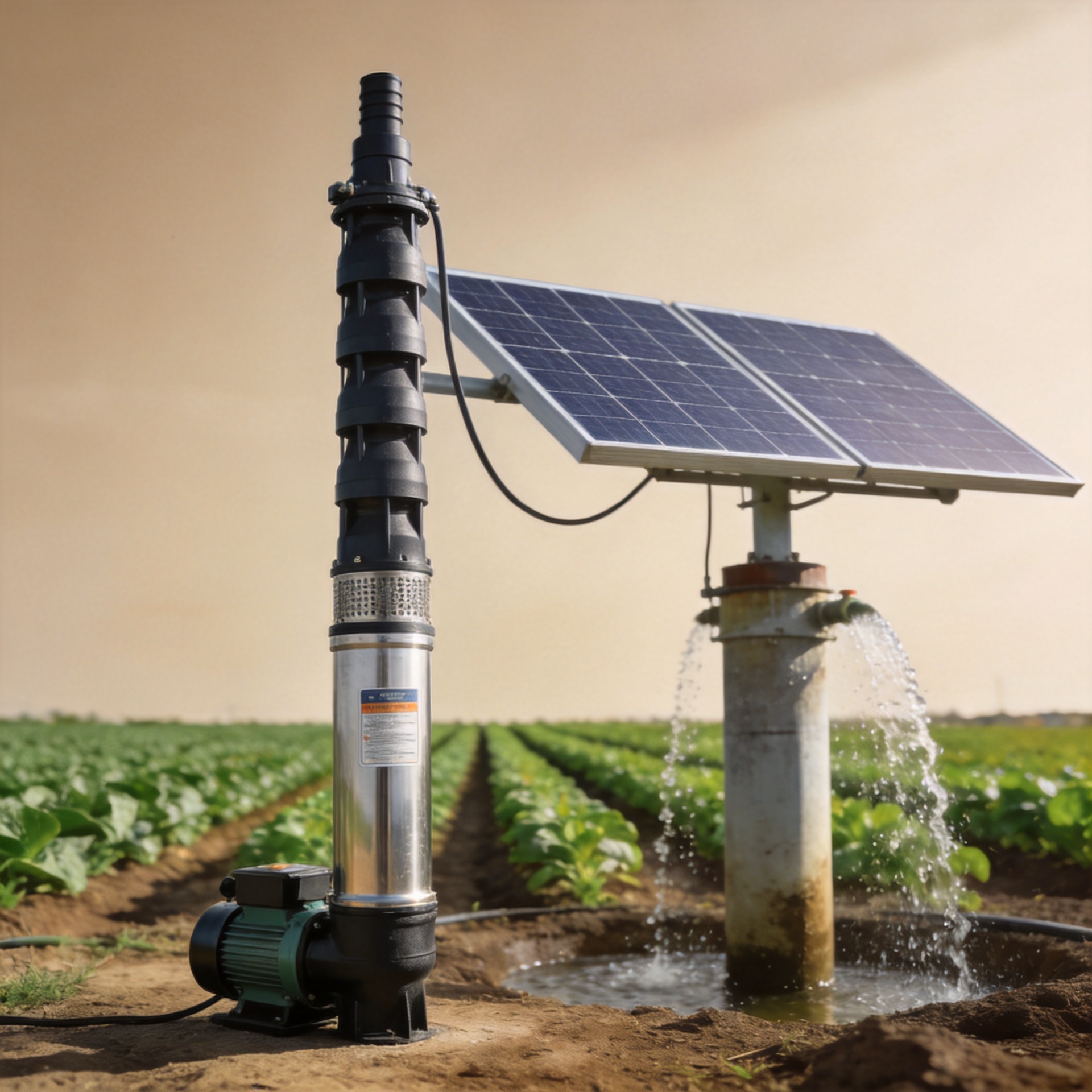
For groundwater irrigation, a submersible borehole pump is often the practical format because the motor and hydraulic section operate below the water level. Confirm borehole diameter, water quality, expected sand content, cable length, and the controller’s voltage range before finalising the package. If the well yield is limited, the pump flow must also remain below a sustainable borehole yield.
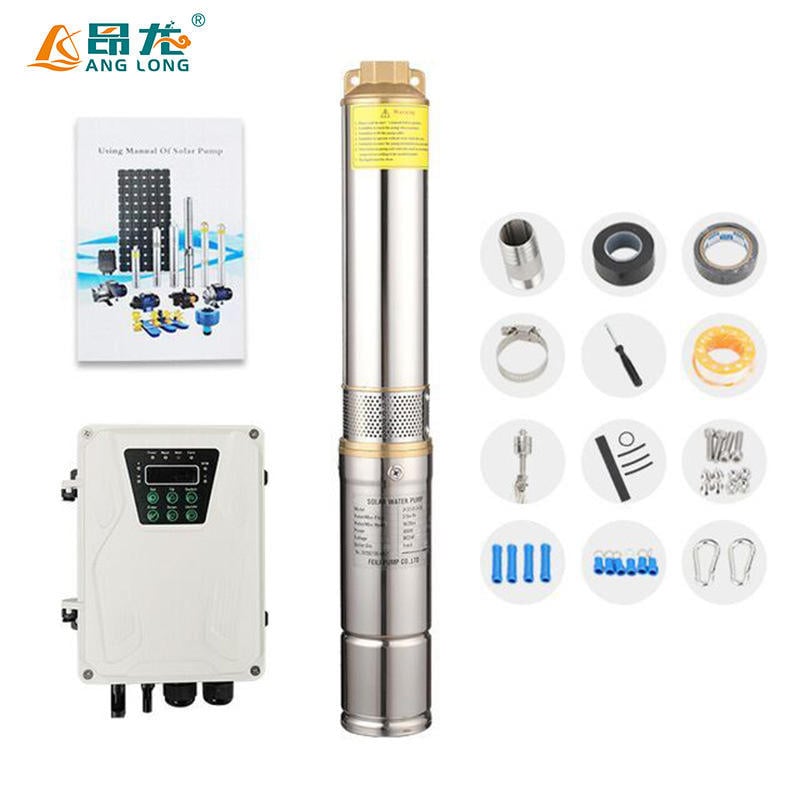
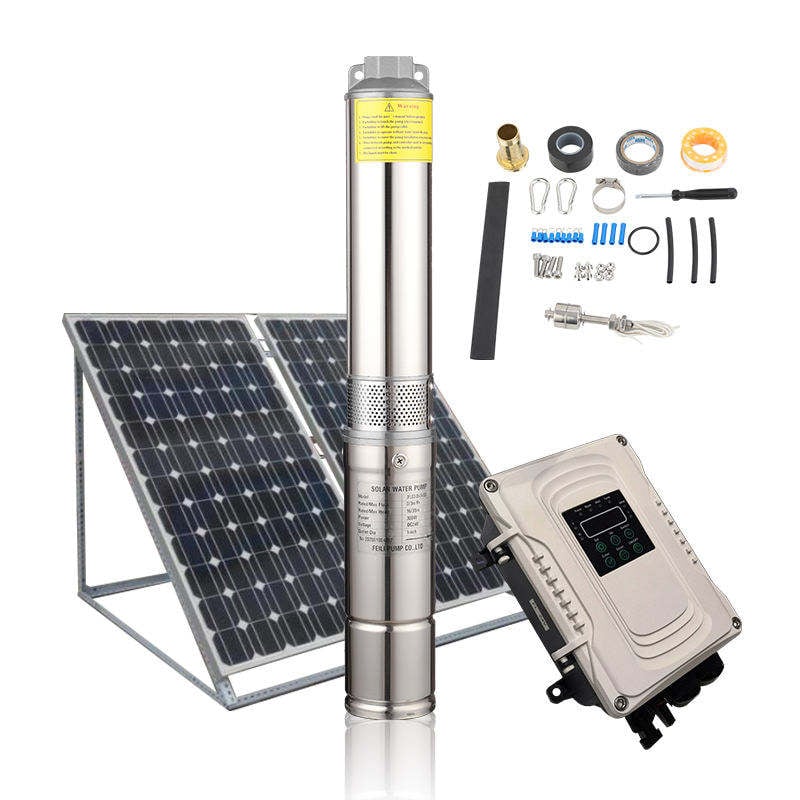
When discussing a package with a supplier, you can use this deep well solar borehole agricultural water pump as a product-category reference, then request the specific pump curve and configuration that matches your confirmed flow and TDH.
Size solar panels for borehole pumps after selecting the pump
The selected pump and controller define the electrical input that the PV array must support. Solar panels for borehole pumps should be sized from the controller’s allowed DC input range, the pump’s power demand at the duty point, local solar resource, temperature effects, cable losses, and the required daily pumping volume. A panel count copied from another farm may be unsuitable because a deeper well, longer delivery line, or shorter solar window changes the result.
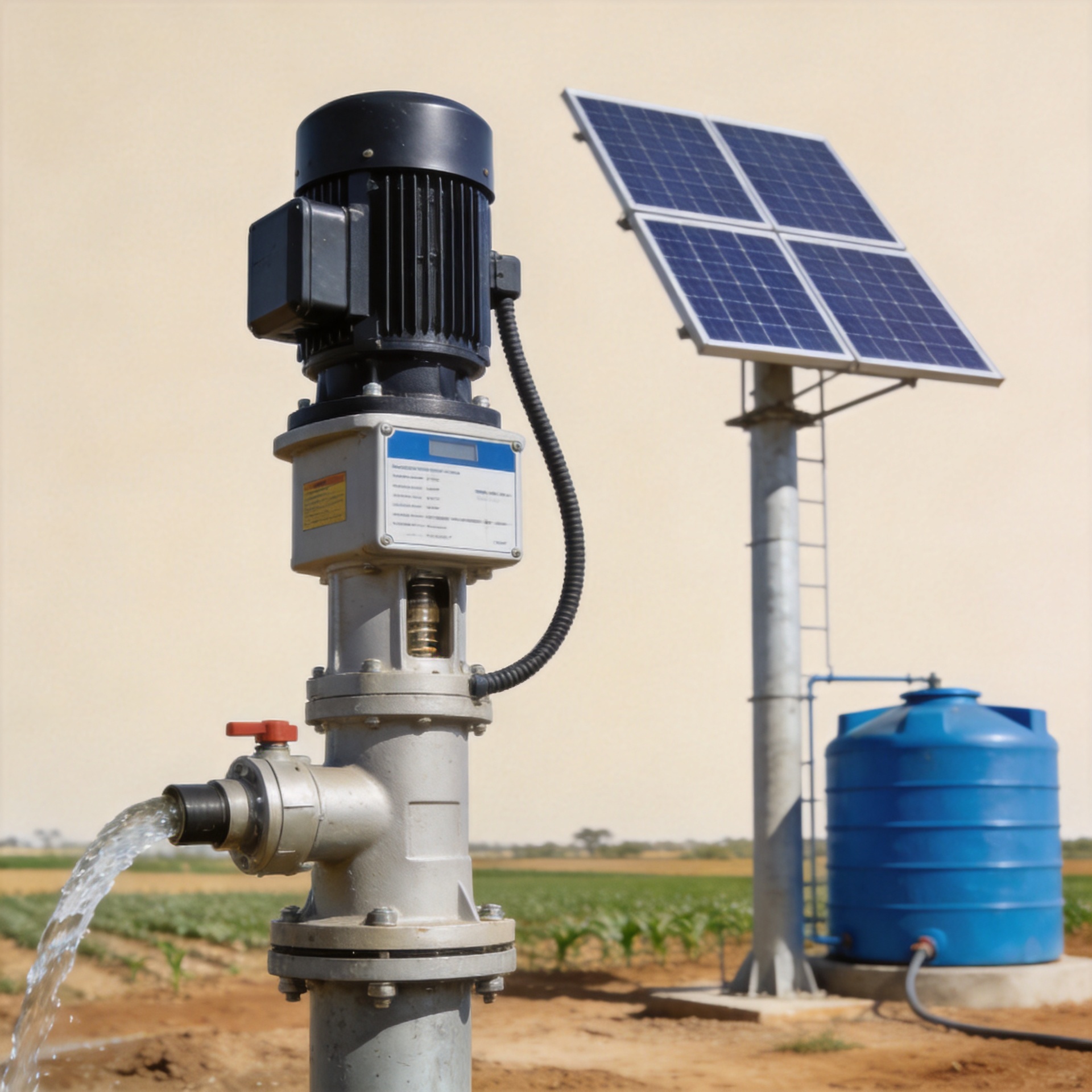
Use a controller designed for the pump and array. MPPT-based solar pump controllers can help the pump use changing irradiance more effectively, while dry-run protection and water-level sensors help protect the borehole and pump. The installer should check open-circuit voltage in cold conditions, operating voltage at high module temperature, array wiring, grounding, fusing, and cable sizing against the controller documentation.
- Confirm the pump duty point in m³/h and TDH.
- Obtain pump power and controller input requirements at that duty point.
- Check average effective solar hours for the irrigation season, not only annual averages.
- Choose a PV array whose voltage and power remain within controller limits under expected conditions.
- Use water storage to buffer cloudy periods and midday production variation.
Use storage and zoning to make solar water irrigation more resilient
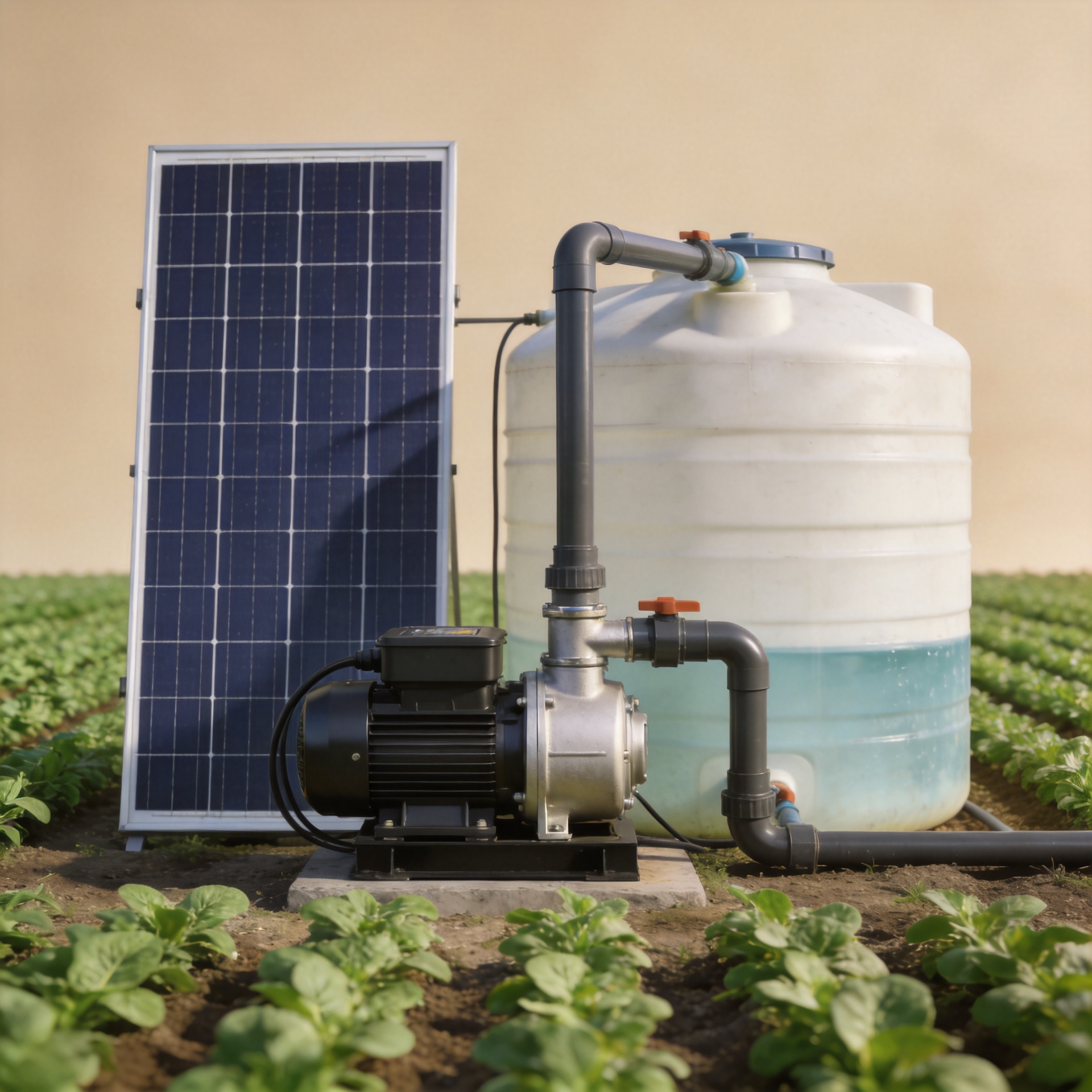
Water storage is often more economical and simpler to maintain than trying to run a battery bank solely for pumping. The pump can fill an elevated or ground-level tank when sunlight is available, while the irrigation network uses the stored water when the schedule requires it. Tank capacity should reflect daily demand, cloudy-day risk, and the farm’s tolerance for interrupted irrigation.
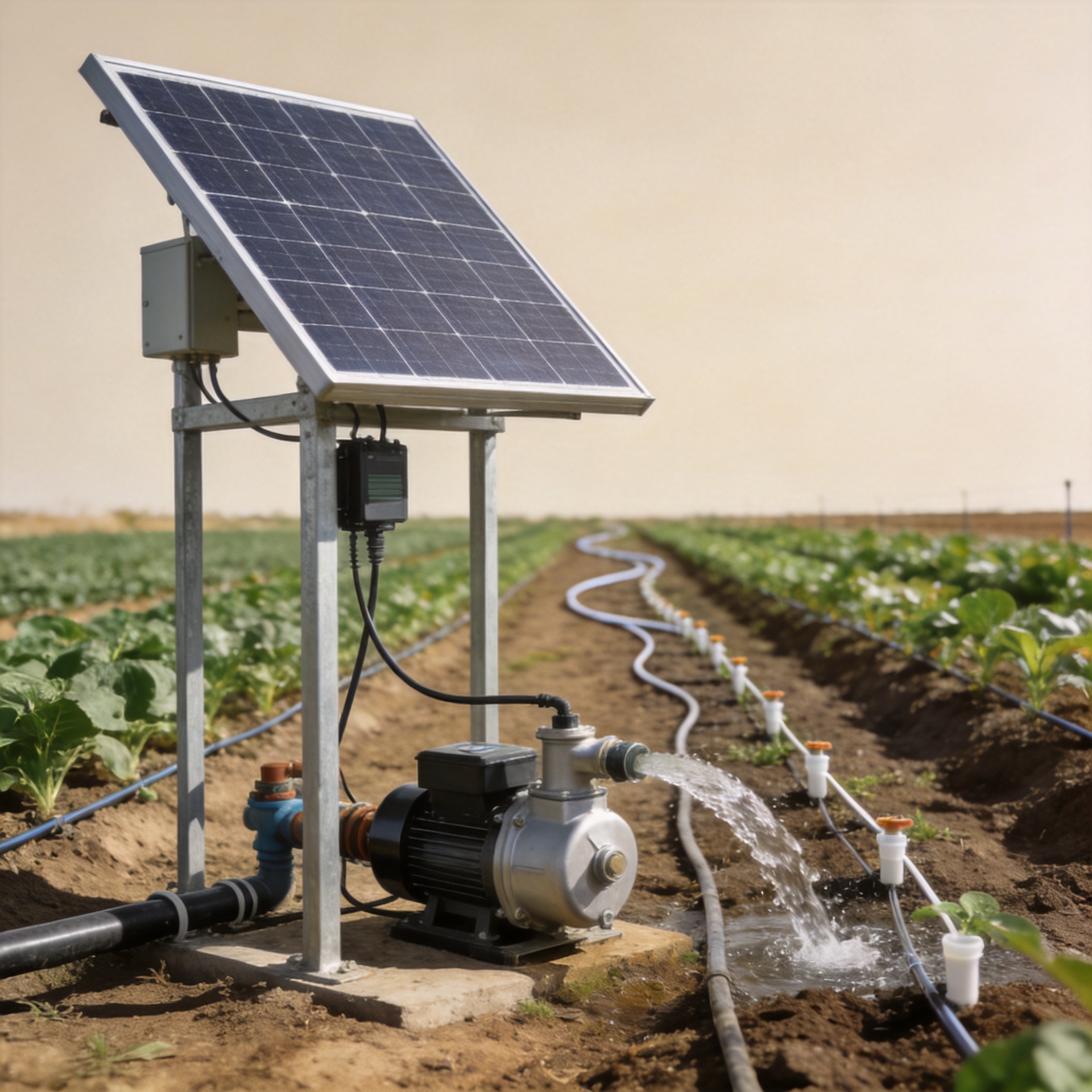
For larger fields, zone valves let the same solar borehole pump fill different sections without demanding the highest possible flow everywhere at once. This can lower pipe friction and make the selected pump duty point easier to achieve. It also helps match solar water irrigation to real crop schedules rather than treating every field block as one simultaneous load.
Prepare these figures before asking for a configuration
A complete request for solar panels for borehole pumps should include:
- Borehole diameter, total depth, static water level, and pumping water level or drawdown test data.
- Required water volume per day and desired pumping hours.
- Delivery elevation, pipe length, pipe diameter, fittings, filtration, and irrigation pressure requirement.
- Water quality and any solids or sand information.
- Project location and seasonal solar conditions.
- Whether the design uses direct irrigation, tank storage, or both.
These figures allow a supplier to check the pump curve, controller limits, solar array, cable, and protection components as a connected system. The result is a configuration based on farm demand and measured head, rather than an attractive but mismatched pump-and-panel bundle.
Final sizing checklist
For a dependable solar powered well system, confirm daily water demand first, calculate TDH from the pumping water level through the delivery point, select a pump at that duty point, and only then size the PV array and controller. Add storage, monitoring, and protective controls to suit the farm’s operating pattern. This sequence gives buyers a clear basis for comparing solar panels for borehole pumps and requesting a technically relevant quotation.