 EN
Inline Water Pump Specifications to Request from a Manufacturer
When you send an inquiry for an inline water pump, the fastest way to receive a useful quotation is to describe the duty, not simply ask for a price. An inline configuration can save space because the suction and discharge connections align with the pipe run, but that layout alone does not establish whether a pump will meet the required flow, pressure, temperature, or installation conditions.
For overseas wholesalers and project buyers, a clear inline water pump request also reduces the risk of comparing quotations that are based on different assumptions. Treat the inquiry as a short technical brief: state what the system must do, then ask the manufacturer to confirm the selected model against that duty.
1. Define the Inline Water Pump Duty Point First
The most important information for an inline water pump is its operating point: the flow rate required at the required total dynamic head (TDH). Ask for flow in m³/h, L/min, or GPM, and state the unit. Then give the required head in metres or feet. If your system is specified by pressure, include the pressure target and clarify where it is measured.
A maximum-flow figure or maximum-head figure is not enough. They are normally measured at different points on the pump curve, so neither describes the real working condition by itself. Request the performance curve for the proposed inline water pump and ask the supplier to mark the specified duty point. That makes it easier to compare alternatives and check whether the pump will operate in a sensible region of its curve.
- Required flow rate and the time profile: continuous, intermittent, peak, or variable demand.
- Required TDH, including static lift, pipe friction, fittings, valves, filters, and equipment losses.
- Minimum and maximum inlet pressure, plus the required discharge pressure if applicable.
- Whether a standby unit, parallel operation, or variable-speed control is planned.
For a booster application, explain whether the inline water pump is increasing pressure from a tank, a municipal supply, or another pressurized source. The available inlet condition affects the selection and may affect cavitation margin.
2. State the Fluid, Temperature, and Installation Conditions
Manufacturers need more than the word “water.” State whether the fluid is clean water, hot water, chilled water, treated water, water with glycol, or another compatible liquid. Give the normal and maximum fluid temperatures, expected solids content, and any chemical-treatment information. These details influence seal material, elastomers, casing material, and the safe operating range of an inline water pump.
Next, describe the installation. Confirm whether the unit will be vertical or horizontal, indoors or outdoors, and whether ambient conditions include dust, humidity, rain, heat, or freezing temperatures. Include pipe size, connection standard, available installation length, and whether the pipework provides adequate support. An inline water pump should not be selected on connection size alone; the manufacturer still needs the duty point and system conditions.
It is also useful to send a simple piping sketch. Mark the suction source, elevation changes, isolation valves, strainers, check valves, pressure vessels, and control equipment. A short sketch often reveals assumptions that a text-only inquiry misses.
3. Request Hydraulic Evidence, Not Just a Model Number
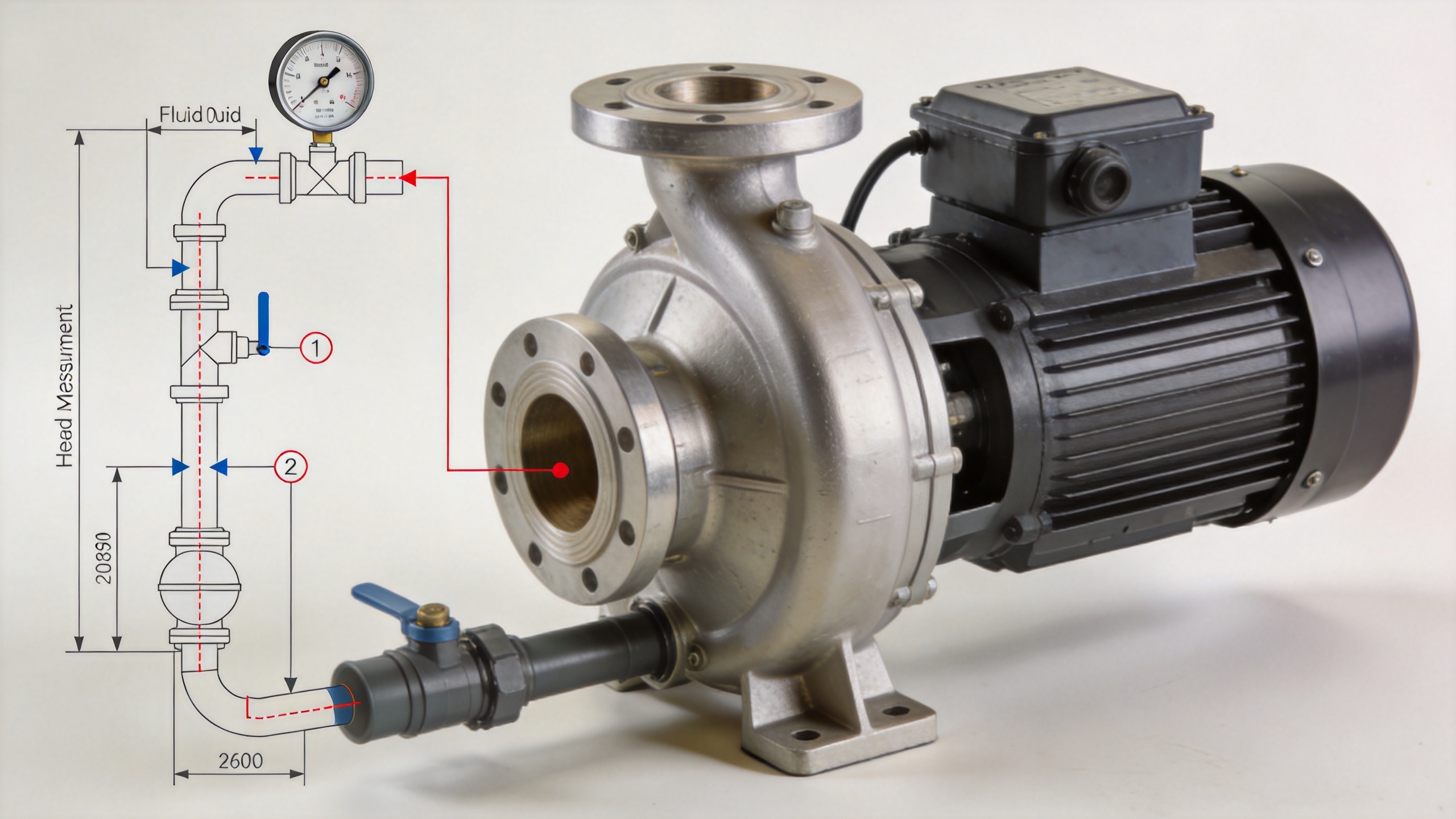
Ask the supplier for a pump curve showing head, flow, efficiency, absorbed power, and recommended operating range. Ask which impeller diameter and motor rating apply to the quoted inline water pump. If the application is critical, request the NPSH required curve and provide the available suction conditions so the manufacturer can assess margin.
For acceptance planning, ask whether hydraulic performance can be tested to an agreed standard such as ISO 9906, where appropriate for the pump type and contract. This is not a substitute for agreeing the actual duty point and tolerances, but it gives the buyer a basis for discussing test documentation. Also request the data sheet, outline drawing, sectional drawing if needed, material list, and operating and maintenance manual.
4. Confirm Motor, Electrical, and Control Requirements
An inline water pump quotation should identify the motor power, rated voltage, frequency, phase, speed, insulation class, enclosure or protection rating, efficiency class where relevant, and cooling arrangement. Tell the manufacturer the power supply available at site—for example, 220–240 V single phase or 380–415 V three phase—and the local frequency. Do not assume a motor configured for one market will suit another.
If the pump will work with a variable-frequency drive, pressure controller, or building-management system, say so early. Ask about the acceptable speed range, minimum-flow considerations, sensor inputs, dry-run protection, overload protection, and communication requirements. For hot-water circulation or booster duties, also confirm the seal design and maximum working pressure at the specified temperature.
5. Check Materials, Connections, and Service Parts
Request the casing, impeller, shaft, mechanical-seal, and O-ring materials for the proposed inline water pump. Material selection should follow the liquid and temperature rather than a generic preference. Specify the flange or threaded connection standard, nominal diameter, pressure rating, and whether the supplier should provide mating flanges, gaskets, or fasteners.
For wholesale purchasing, ask for the spare-parts list, recommended commissioning spares, warranty terms, packing dimensions, gross weight, HS-code support if needed, lead time, MOQ, and available branding or carton options. These items are commercial specifications, but they can materially affect the suitability of an inline water pump for distribution.
6. A Manufacturer Inquiry Checklist
Before sending your RFQ, verify that it includes the following:
- Application and fluid description.
- Required flow, TDH, inlet pressure, and discharge-pressure target.
- Fluid temperature range, ambient conditions, and installation orientation.
- Pipe size, connection standard, system sketch, and available power supply.
- Requested pump curve, efficiency, NPSH information, motor data, materials, and drawings.
- Testing, documentation, spare-parts, lead-time, packaging, and warranty requirements.
If you need a product starting point, review the Inline Hot Water Booster Pump Dry Iron High Pressure 1hp Booster Pump Jockey Pump alongside your own duty and installation requirements. The final selection should still be confirmed with the manufacturer using the complete specification list.
Conclusion
A well-defined inline water pump inquiry leads to a more comparable quotation, fewer follow-up questions, and a better basis for technical approval. Start with flow and head, then add pressure, fluid, temperature, installation, electrical, material, control, and documentation requirements. Asking for the curve and the selected duty point turns an inline water pump request from a catalog search into a procurement decision.