 EN
Off-Grid Solar Agriculture Pump Systems for Remote Farms
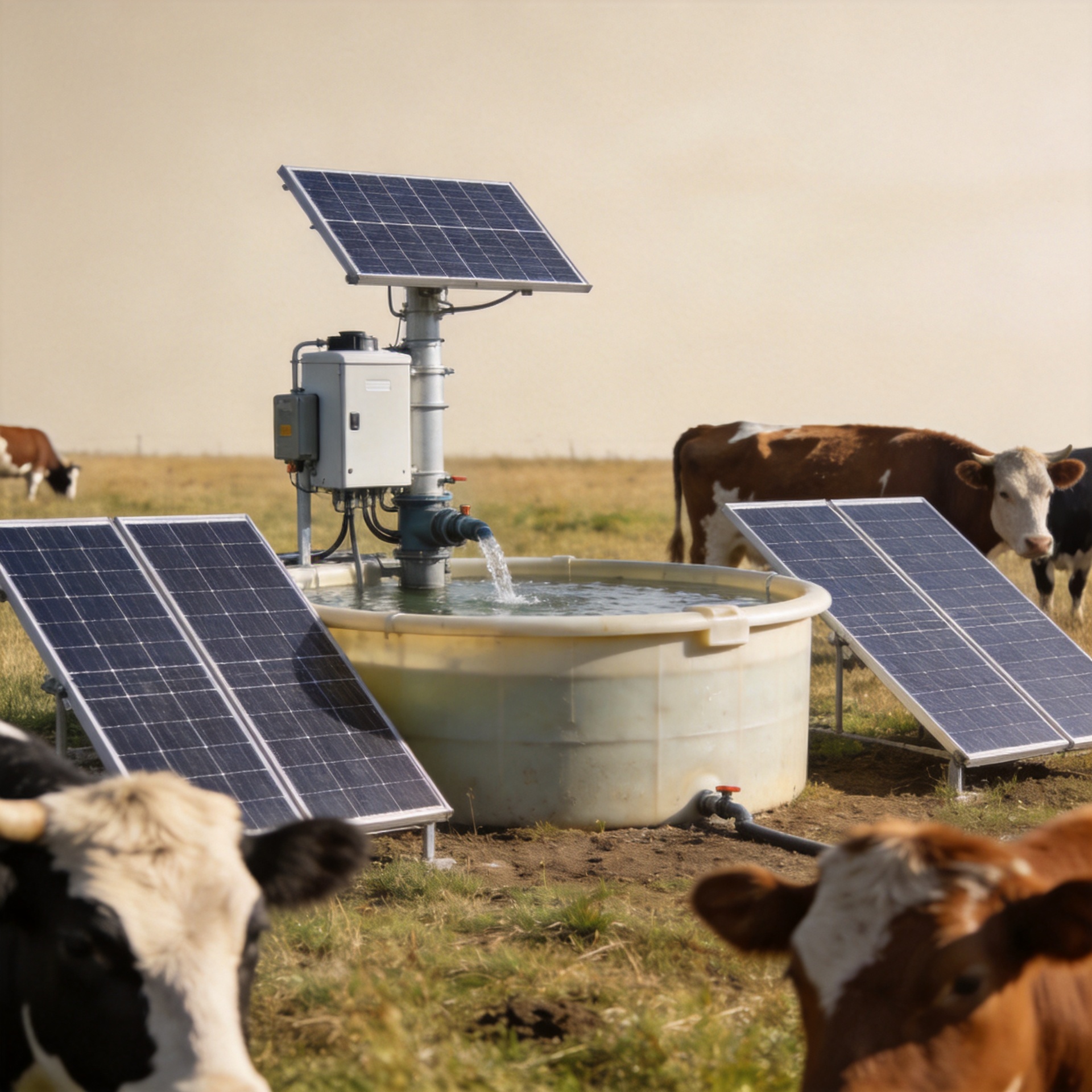
For a remote farm, water reliability is often a larger operating problem than electricity itself. An off grid solar agriculture pump turns daylight into pumping power, moving water from a borehole, pond, river intake, or storage source to a tank, trough, or irrigation line without a grid connection. The technology is straightforward; the design work is not. A useful system begins with water demand and total dynamic head, then matches the pump, solar array, controller, pipework, and storage to the farm’s actual operating pattern.
This guide is written for buyers comparing an off grid solar agriculture pump solution for irrigation or livestock water. It focuses on the questions that matter before purchase: where water comes from, how high and how far it must travel, when crops need it, and what the farm will do when solar output is low.
Start With the Farm’s Water Job, Not the Pump
The first decision is to define the daily water job. Separate irrigation demand from drinking-water demand for livestock, washdown water, and household or staff use. A pump that works for a small trough may not meet a field irrigation schedule, while an oversized system can add unnecessary array and pipe costs.
Build a simple daily profile: required volume per day, preferred delivery hours, source-water availability, and the highest-priority water use. For seasonal irrigation, size around the period of peak crop demand rather than an annual average. If the farm uses drip irrigation, account for the pressure requirement of filters, valves, and emitters as well as the volume requirement.
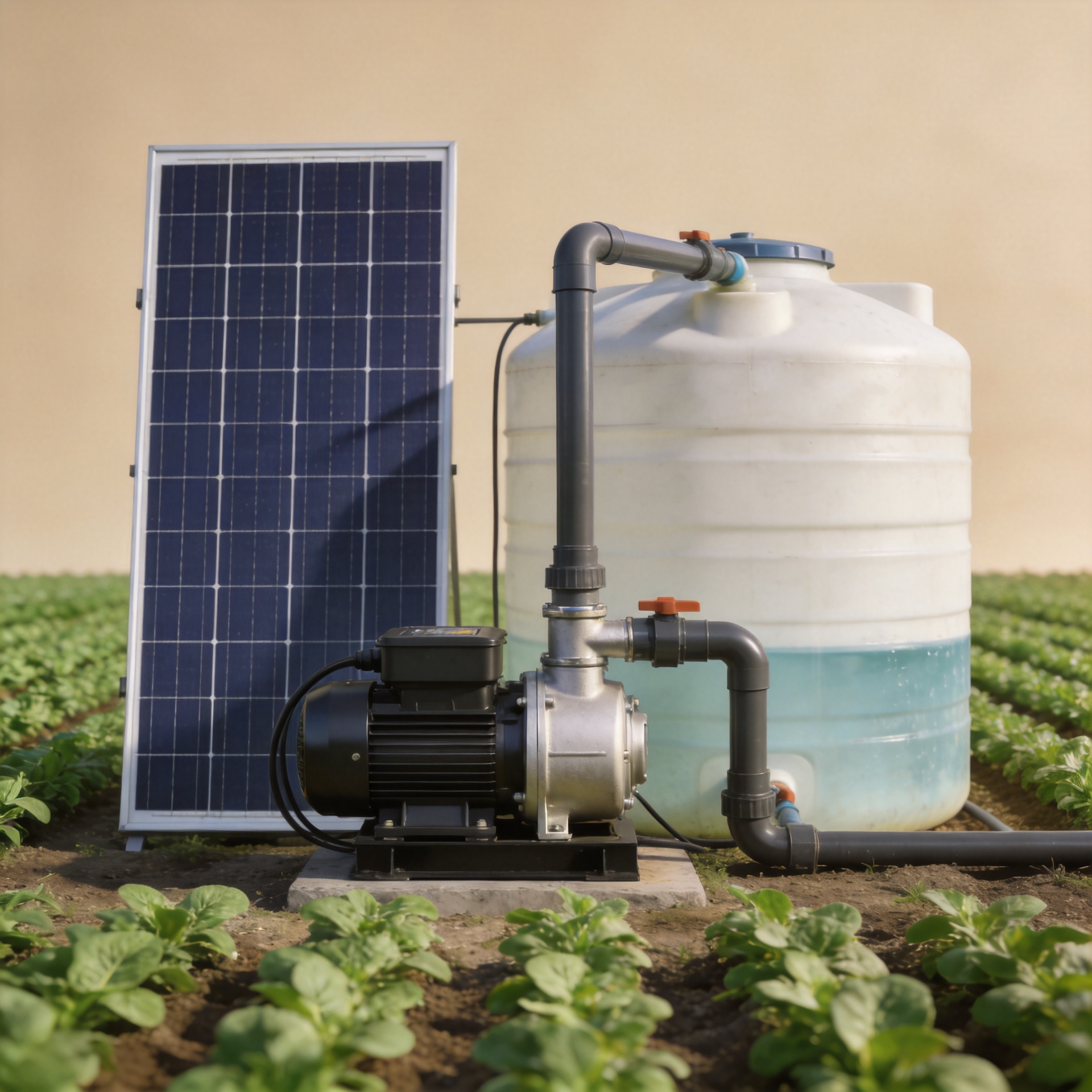
An agri solar pump is often most effective when it pumps into a properly sized storage tank during sunny hours. The tank then decouples water delivery from instantaneous sunlight, so irrigation can run early in the morning or livestock can drink after sunset. This approach can reduce dependence on batteries, although a battery-backed design may still make sense for controls, small critical loads, or a specific operating window.
Calculate Total Dynamic Head Before Comparing Models
Flow rate alone cannot select an off grid solar agriculture pump. Total dynamic head (TDH) combines the vertical lift from the water source, drawdown in a well, elevation to the outlet or tank, and friction losses through pipework, fittings, filters, and valves. A long small-diameter pipe can consume a meaningful share of the pump’s available head, even where the site looks relatively flat.
During site assessment, record the static water level, expected pumping water level, delivery elevation, pipe length, pipe diameter, and major restrictions. Then identify the flow required at that TDH. This gives suppliers a usable duty point instead of a vague request for a “solar irrigation pump.” It also makes proposals easier to compare: the relevant question is not which pump has the highest headline flow, but which one delivers the required flow at the measured head.
| Site input | Why it matters | Buyer check |
|---|---|---|
| Daily water volume | Sets required pumping hours and flow | Use peak-season irrigation demand |
| Water level and drawdown | Defines lifting work at the source | Measure or obtain borehole test data |
| Delivery elevation | Adds static head | Include tank and field high points |
| Pipe route and diameter | Creates friction loss | Include filters, valves, and bends |
| Solar resource by season | Changes available pumping energy | Design for the demanding month |
Choose a System Architecture for the Water Source
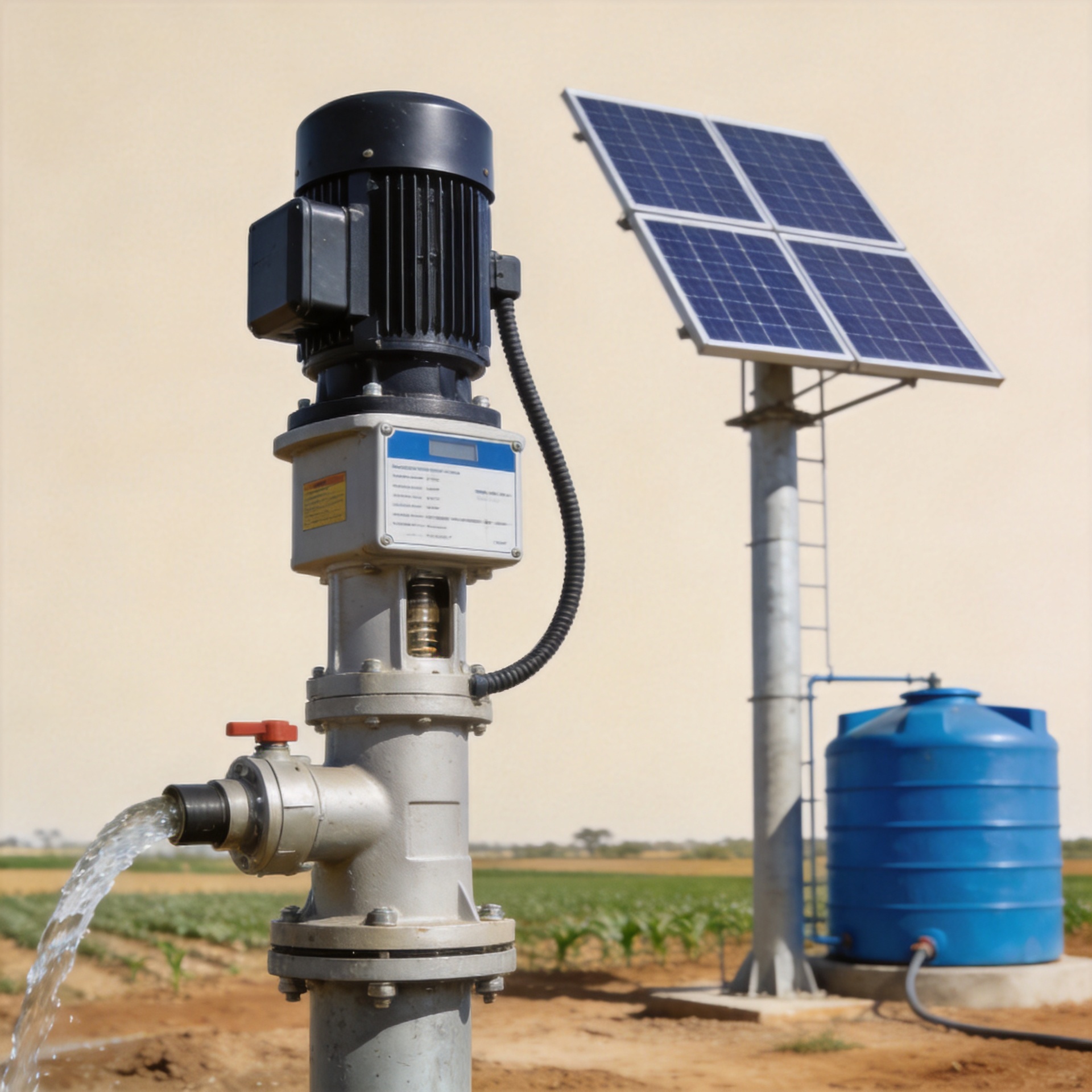
Remote farms do not all need the same hydraulic layout. A submersible pump is commonly considered when water must be lifted from a deep borehole or well. A surface pump may suit a pond, canal, shallow well, or storage reservoir when suction conditions are appropriate. The choice should follow the source geometry and water quality, not only the purchase price.
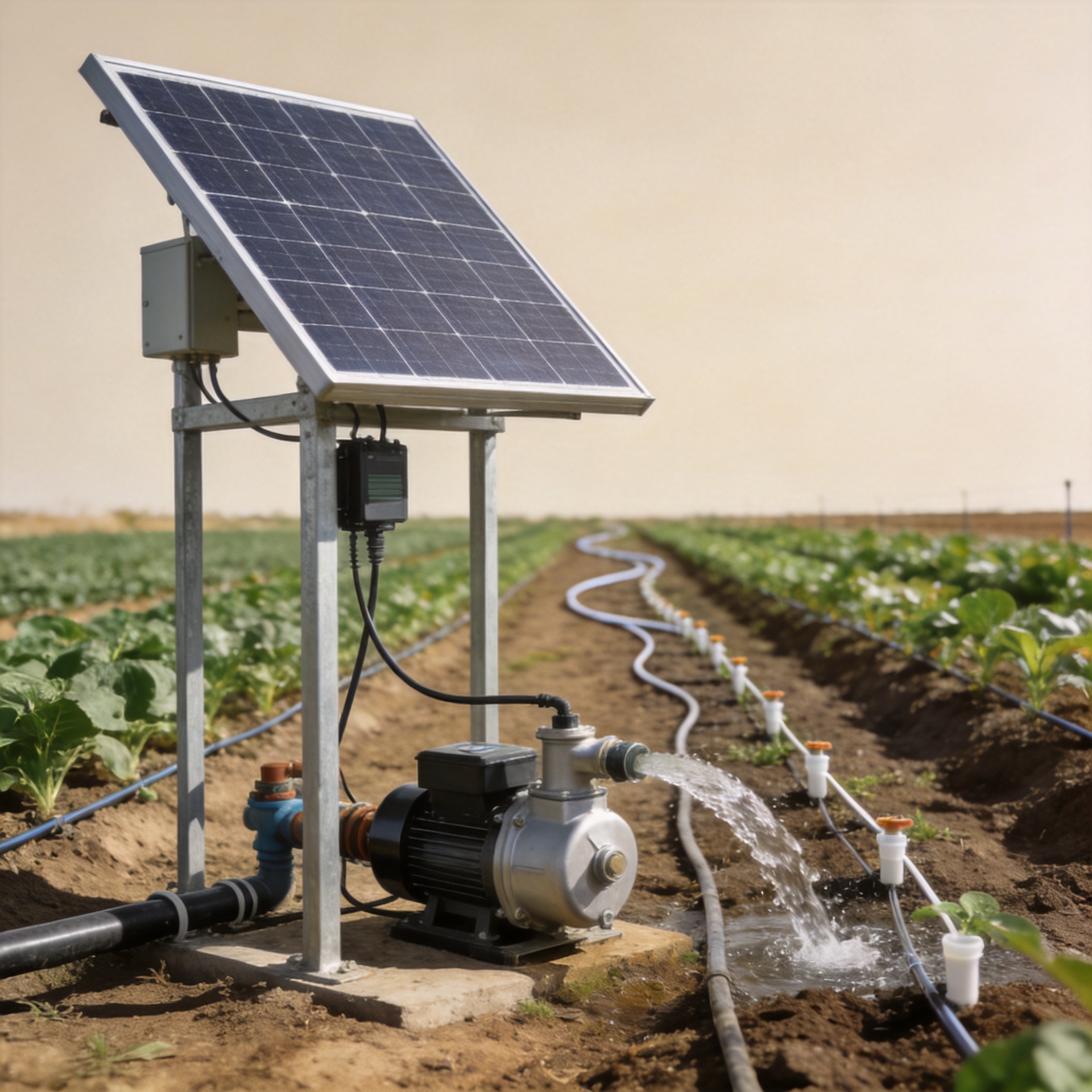
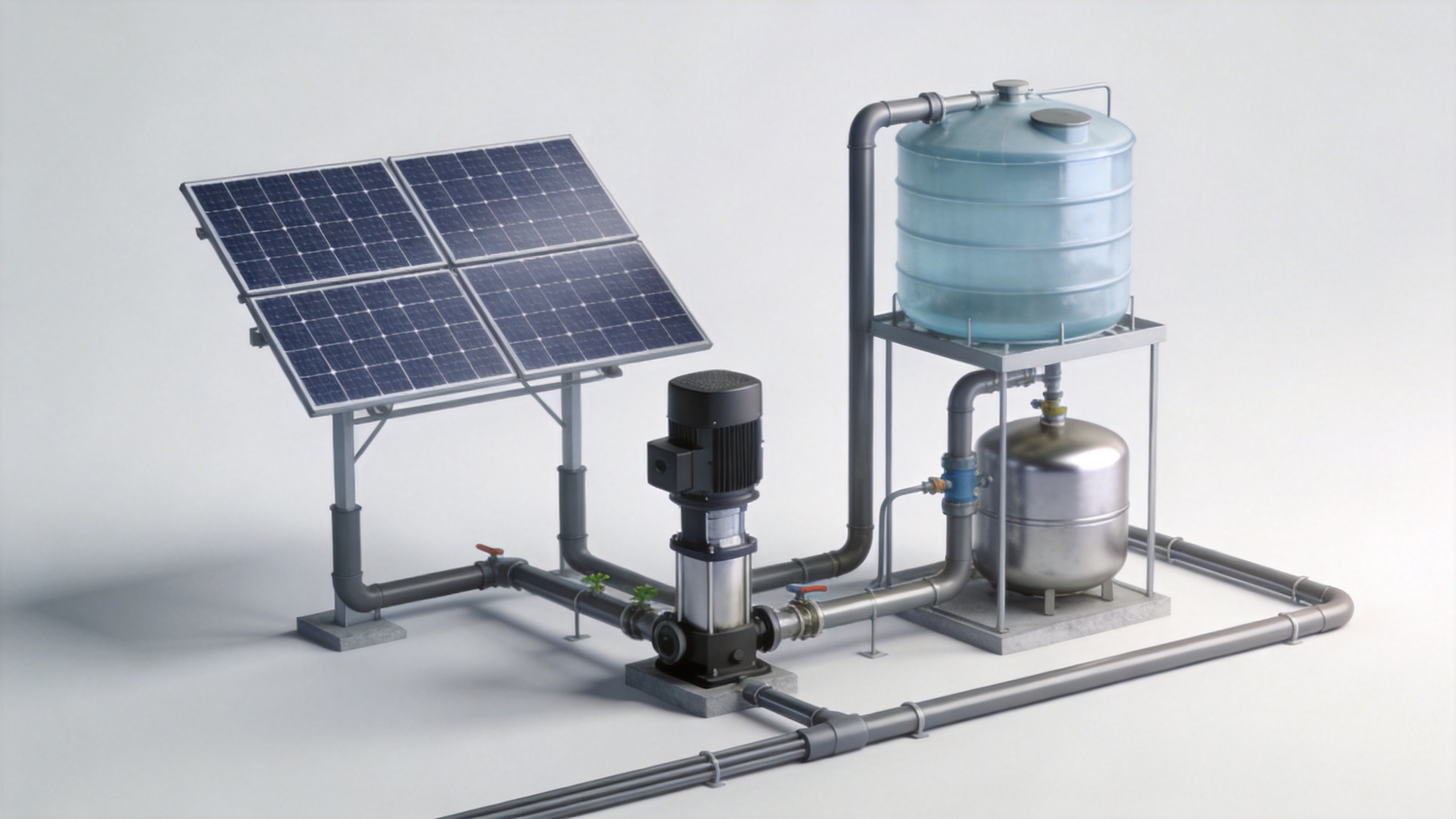
A typical off grid solar agriculture pump system includes PV modules, a pump, a pump controller, cabling and protection, pipework, a delivery tank or reservoir, and optional sensors. The controller helps the pump operate across changing irradiance and can support dry-run or tank-level protection when those functions are included in the selected configuration. For irrigation, filtration and pressure regulation need to be planned as part of the system rather than added after the pump is chosen.
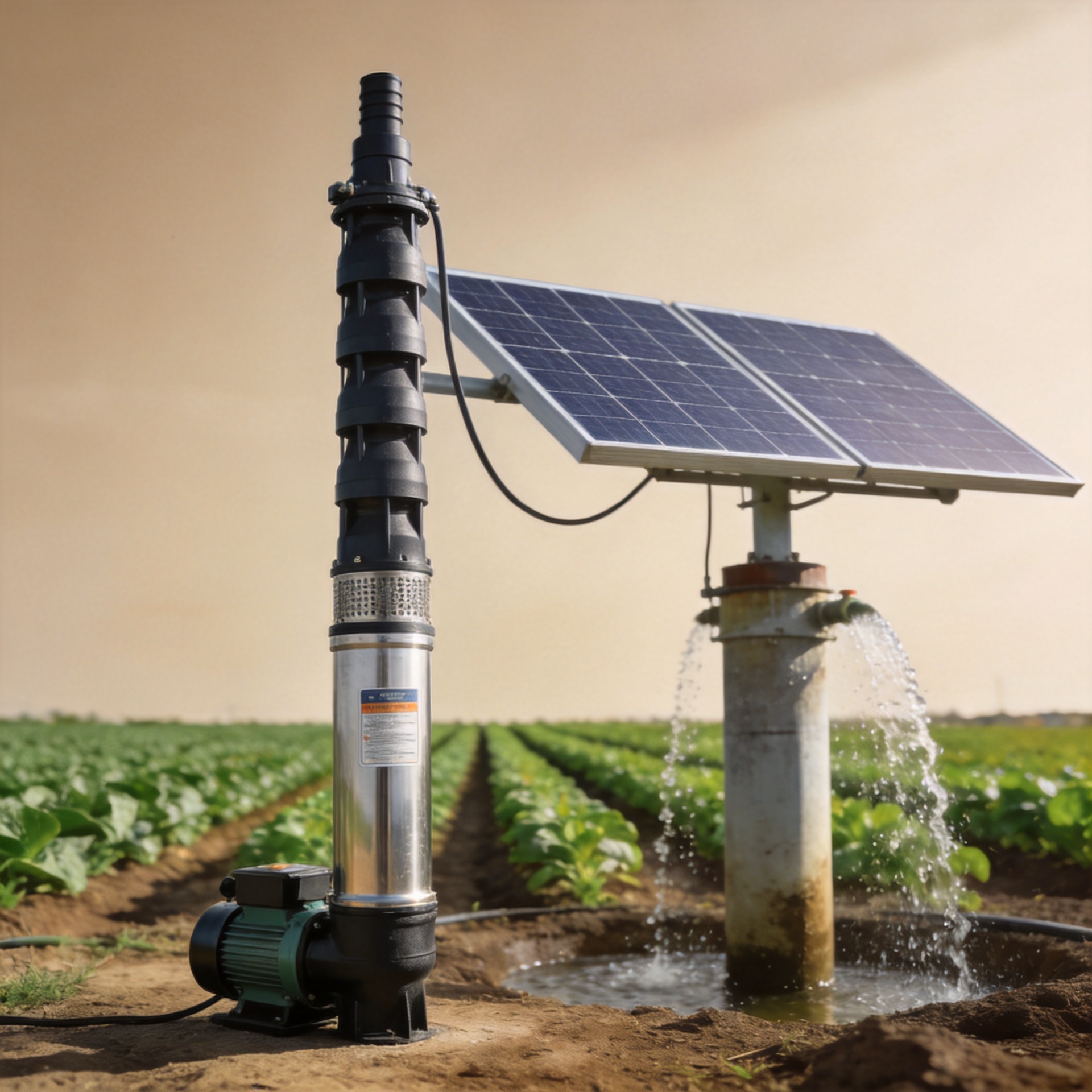
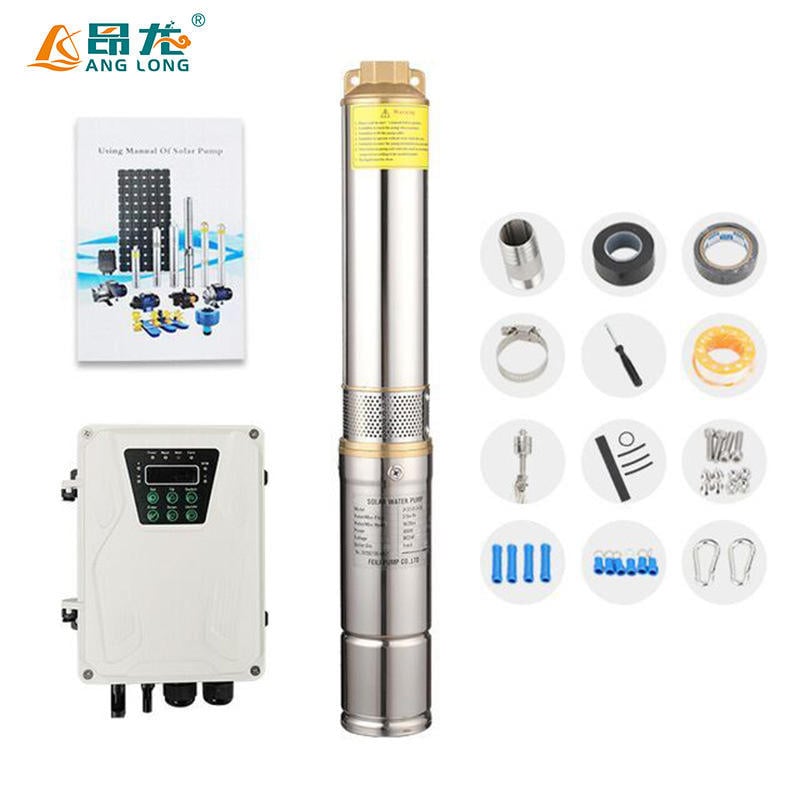
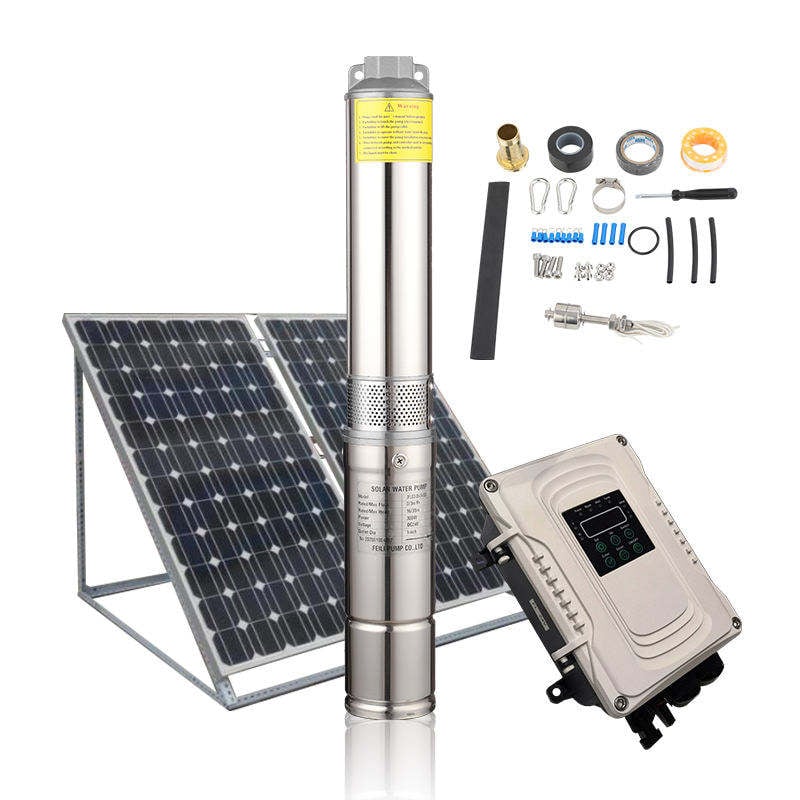
For buyers sourcing a DC submersible configuration, review the product page for Solar Water Pumps Farm Irrigation System DC Solar Submersible Pump With Battery alongside the proposed duty point. Confirm the final pump curve, materials, controller functions, cable length, and system compatibility with the supplier before ordering.
Use Water Storage to Manage Variable Sunlight
Solar output changes with clouds, seasons, panel orientation, dust, and temperature. A remote farm should therefore treat water storage as a core resilience component. When the sun is strong, the agri solar pump can fill a tank, header reservoir, or lined storage structure; the stored water can then be distributed when pumping is reduced or unavailable.
Storage capacity should reflect the farm’s critical demand, expected low-sun periods, and water-source recovery rate. It should also be protected from contamination, leakage, and avoidable evaporation. For livestock systems, consider redundancy at the trough level. For irrigation, make sure the storage elevation or booster arrangement can provide the required downstream pressure.
Do not assume that solar pumping makes water unlimited. Water-level monitoring, irrigation scheduling, and source protection are essential, especially where groundwater is the supply. A planned withdrawal limit helps protect the source and keeps the system aligned with the farm’s long-term water budget.
Compare Proposals With a Practical Procurement Checklist
At the consideration stage, ask each supplier to quote against the same site inputs. This makes an off grid solar agriculture pump comparison more useful than comparing wattage or price alone.
- Required flow at the stated TDH, with the duty point clearly shown.
- Recommended solar array size and assumptions for the design month.
- Pump type, controller functions, protection features, and cable requirements.
- Pipe diameter, filtration, valves, tank arrangement, and expected friction losses.
- Water-quality limits and maintenance requirements for the proposed equipment.
- Commissioning support, spare-part availability, warranty terms, and documentation.
Also clarify what is excluded. Mounting structures, tank foundations, trenching, electrical protection, delivery piping, and installation labor can materially affect the installed budget. A lower equipment quote may not represent the lower-cost water-delivery solution.
Plan Installation and Maintenance for a Remote Location
A well-designed off grid solar agriculture pump should be simple for the farm team to inspect. Place PV modules where shading is limited, use secure mounting, protect cable runs, and keep controls accessible but sheltered. Verify the water source before commissioning, flush lines where appropriate, and test tank-level, dry-run, and irrigation controls under real operating conditions.
Routine maintenance is usually centered on panel cleaning where dust is significant, visual inspection of wiring and fittings, filter servicing, and checks for leaks or changing well performance. Keep a basic log of pumping hours, tank levels, irrigation cycles, and source-water observations. Those records make it easier to spot a falling yield, an obstructed filter, or a source issue before it disrupts a crop cycle.
Build the System Around a Measured Water Plan
Reliable off-grid pumping projects do not begin with a catalog model. They begin with a measured water plan: daily demand, seasonal peak, total dynamic head, solar conditions, source sustainability, and a storage strategy. With those inputs, a remote farm can evaluate an off grid solar agriculture pump as a complete water system rather than a standalone device.
For buyers serving irrigation or livestock operations, a clear site-data sheet will speed up technical discussions and produce more comparable proposals. It is the practical route to a system that delivers water when the farm needs it while keeping operating complexity manageable.