 EN
Recirculating Pump vs Booster Pump: Application Differences
Choosing between a recirculating pump and a water booster pump starts with one question: is the system trying to keep water moving around a loop, or is it trying to overcome insufficient pressure at the point of use? The two pump types may look similar in a catalog, but they solve different hydraulic problems. For wholesalers, installers, and project buyers, separating those duties early prevents oversizing, unstable controls, and avoidable energy use.
In practical pump selection, the motor rating alone is not the answer. The operating purpose, required flow, total head, pipe resistance, water temperature, and control method must work together. This comparison explains where each pump fits, what performance data to request, and when a system may need both functions.
The core difference: circulation versus pressure increase
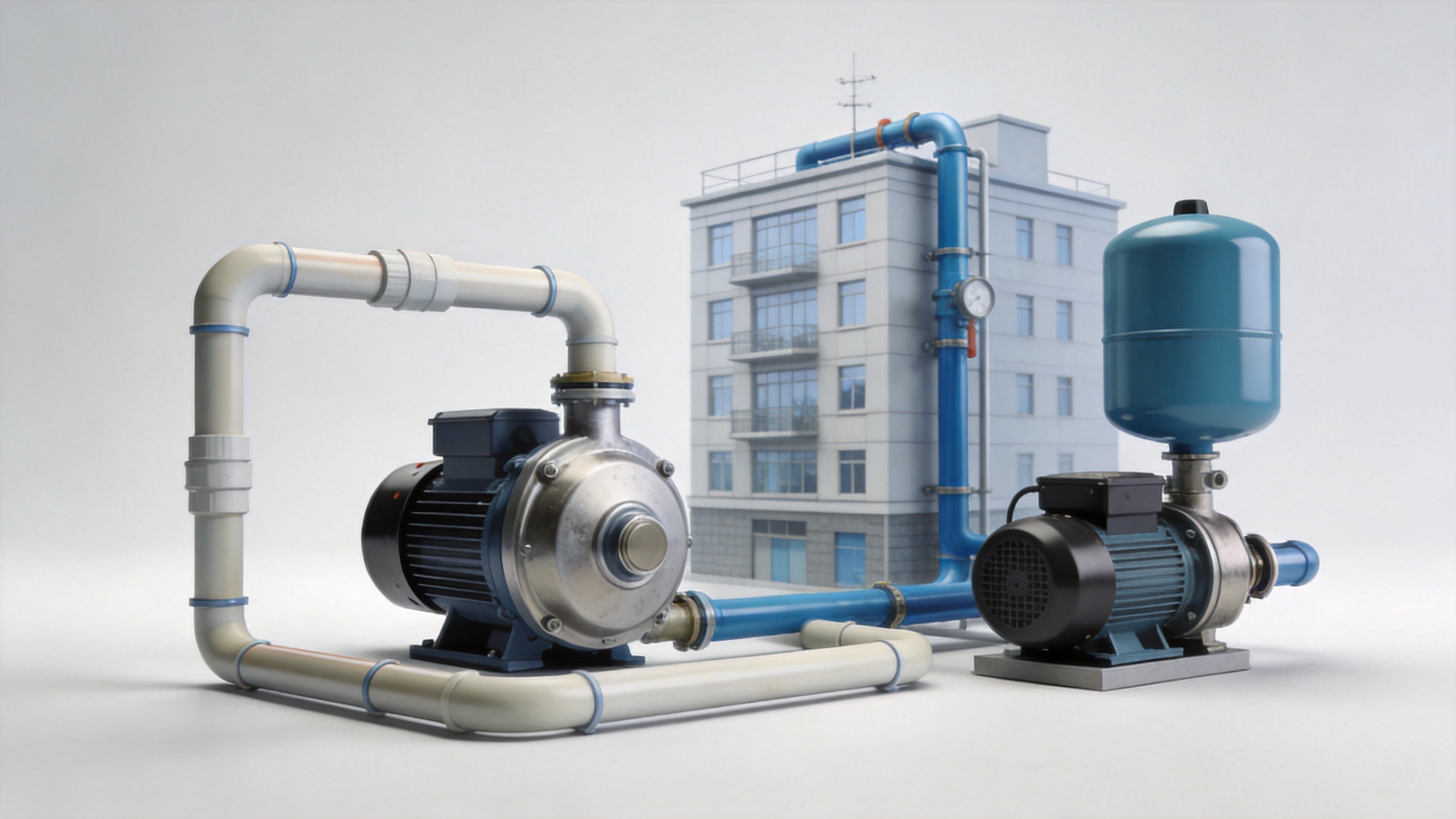
A recirculating pump is designed to maintain flow within a closed or returning circuit. Typical examples include hydronic heating loops, domestic hot-water return lines, cooling-water circuits, and process loops. Its job is to overcome friction losses through piping, valves, heat exchangers, and fittings so the fluid continues to move at the required rate.
A water booster pump, by contrast, is selected when incoming pressure is not enough for the demanded flow or elevation. It adds pressure to a supply line so water can reach upper floors, distant outlets, irrigation zones, or equipment with a defined inlet-pressure requirement. A booster application often has a changing demand profile, while a recirculation loop is normally defined by the resistance of the circuit and a target circulation rate.
How the operating system changes pump selection
| Selection point | Recirculating pump | Water booster pump |
|---|---|---|
| Primary purpose | Keep fluid moving through a loop | Raise available pressure for delivery |
| Typical system | Hot-water return, HVAC, cooling, process circulation | Building supply, irrigation, transfer, pressure maintenance |
| Main duty basis | Loop flow and friction loss | Required outlet pressure, elevation, flow, and losses |
| Common control approach | Timed, thermostatic, or continuous operation | Pressure switch, pressure tank, VFD, or demand control |
| Main risk if misapplied | Noise, excess flow, or poor heat-transfer balance | Pressure cycling, weak outlets, or excessive energy use |
This distinction matters because static lift is treated differently. In a properly closed circulation loop, the pump mainly overcomes dynamic friction; the fluid that rises also returns. In an open supply system, a booster pump may need to account for elevation, desired delivery pressure, and friction losses at the same time. That is why a booster duty cannot be selected simply by copying a circulator’s flow figure.
Common applications for a recirculating pump
A recirculating pump is appropriate when temperature consistency, ready hot water, or stable process flow matters. In a domestic hot-water return system, it sends cooled water in the line back toward the heat source, reducing the wait for hot water at remote fixtures. In hydronic heating, it moves water through emitters and heat sources so the system can transfer heat predictably. In industrial circulation, it can support a controlled loop through tanks, exchangers, or equipment.
For these applications, buyers should confirm liquid temperature, fluid compatibility, loop length, estimated resistance, target flow, installation orientation, power supply, and control requirements. A pump with more head than the circuit needs can create velocity noise, valve disturbance, and unnecessary power draw. A pump with too little head may leave remote branches under-supplied.
Common applications for a water booster pump
A water booster pump is more suitable when the system has a pressure deficit. Examples include multi-story buildings, long distribution lines, low-pressure municipal supply, irrigation networks, washdown equipment, and installations where several outlets may operate at once. The pump must deliver enough flow while maintaining the required pressure at the critical outlet.
When reviewing a booster application, start with the lowest expected inlet pressure, the elevation from pump to outlet, pipe and fitting losses, peak simultaneous demand, and the desired pressure at the outlet. Then check the pump curve at that duty point. In a project that needs an inline option, buyers can review the configuration and connection details of an inline hot water booster pump against the project’s actual pressure and temperature conditions.
Can one installation need both pump types?
Yes. A large building can use a booster package to establish adequate supply pressure and a separate recirculating pump to maintain a hot-water return loop. These pumps have linked system roles, but they should not be forced into a single compromise duty. Separating the roles makes it easier to choose the correct control logic and to diagnose pressure or temperature complaints later.
For example, a building may need pressure support for upper floors while also needing fast hot-water availability at remote bathrooms or kitchens. The booster responds to supply pressure demand; the circulator responds to loop temperature, time scheduling, or continuous circulation requirements. The correct arrangement depends on the piping design and local installation rules.
A practical comparison checklist for buyers
- Define the system objective: continuous loop flow, pressure increase, or both.
- Set the duty point: required flow and total head at the operating condition.
- Check the fluid: clean water, hot water, treated water, or another compatible medium.
- Review controls: timer, thermostat, pressure switch, tank, or variable-speed control.
- Assess installation conditions: pipe size, available space, voltage, noise limits, and maintenance access.
- Request the curve: confirm the selected point sits in a stable and efficient part of the pump curve.
For circulation-focused projects, the product page for this water-circulation pump can be used as a starting point for reviewing configuration details. Final selection should still be based on the project duty point rather than the product name alone.
Final decision
Use a recirculating pump when the priority is keeping water moving through a return or closed loop. Use a water booster pump when the priority is increasing pressure at the required flow. For building and water-system projects, document the application, flow, head, temperature, and control strategy before comparing models. That process gives distributors and installers a clearer basis for selecting equipment that matches the job rather than relying on a broad pump label.