 EN
Sewage Grinder Pump vs Submersible Sewage Pump: Key Differences
For a wastewater project, the label “submersible” describes where a pump operates, while sewage grinder pump describes what it does to solids before pumping. That distinction matters when a buyer is comparing a conventional submersible sewage pump with a cutting model. Both can lift wastewater from a pit or basin, but they are designed around different solids, pipework, and duty conditions.
For distributors, contractors, and project buyers, the most reliable choice starts with the wastewater stream and the system curve—not with a horsepower label alone. This guide compares the two options and shows where a sewage ejector pump may also fit.
The basic difference: pass solids or reduce them
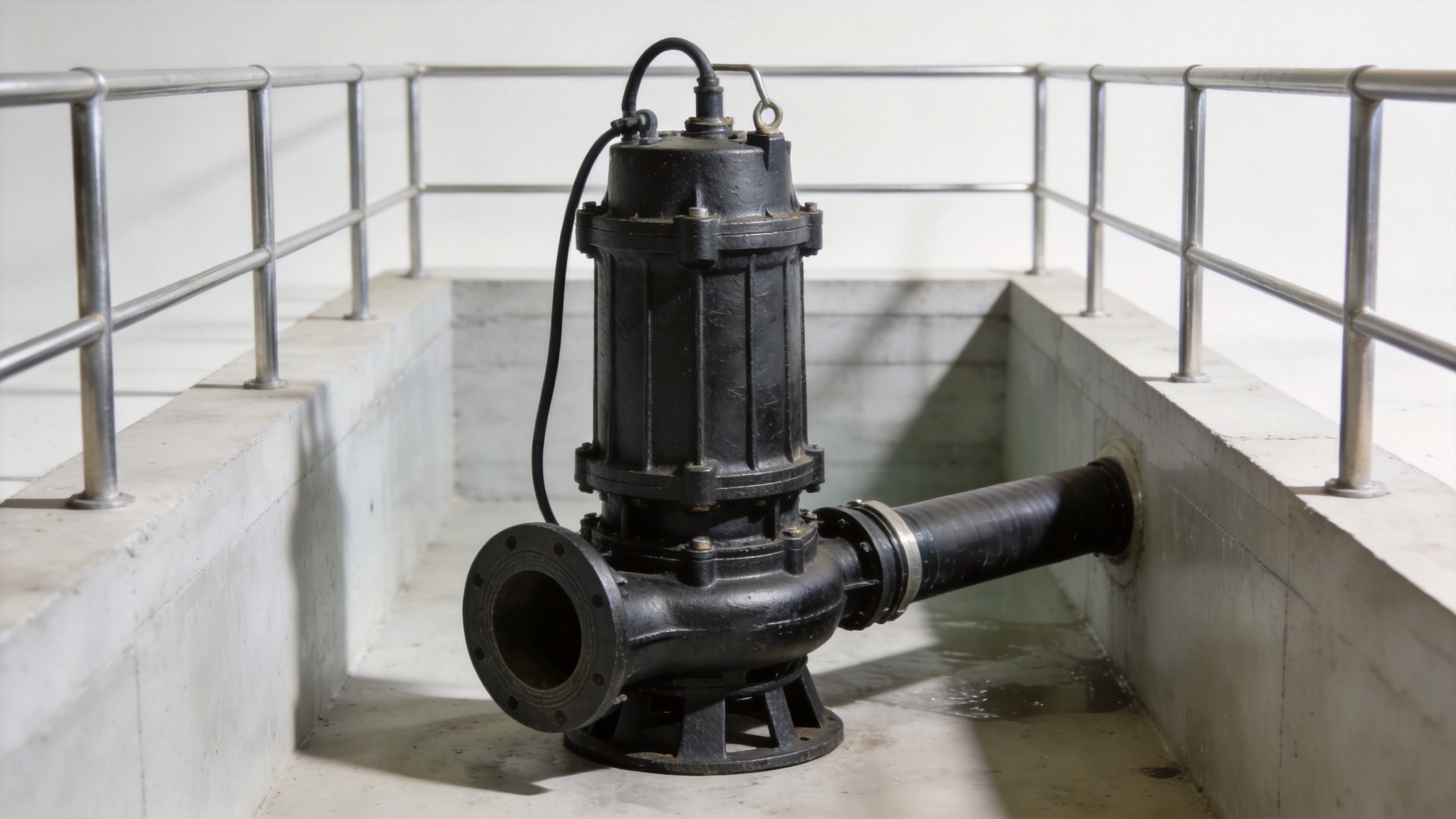
A standard submersible sewage pump is normally selected to move wastewater containing liquid and solids that are within its stated free-passage capability. Its impeller and hydraulic passage are intended to pass those solids through the pump rather than cut every item into smaller pieces. This makes it a practical choice for many lift stations, drainage pits, and wastewater transfer duties when the influent is reasonably predictable and the discharge line has enough diameter for the expected solids.
A sewage grinder pump, by contrast, adds a cutting or macerating assembly at the inlet. The cutting components reduce fibrous material and other incoming solids before the fluid enters the hydraulic section. The output is a finer slurry, which can be useful when the installation must move wastewater through a narrower pressure line or along a route with significant elevation change.
Not every submerged sewage pump is a grinder. A submersible unit may be a conventional solids-handling pump, a cutter pump, a chopper pump, or a grinder design. The correct category depends on the solids profile and the full discharge system.
Side-by-side comparison for pump selection
| Selection factor | Submersible sewage pump | Sewage grinder pump |
|---|---|---|
| Solids approach | Passes solids within the rated free passage | Reduces solids and fibrous material before pumping |
| Typical piping context | Often paired with a suitably sized solids-handling discharge line | Often considered for pressure systems and constrained pipe routes |
| Hydraulic priority | Match flow, head, and solids passage to the duty point | Balance cutting performance with pressure and duty requirements |
| Maintenance focus | Inspect impeller, seals, controls, and the wet well | Also inspect cutting surfaces and the inlet for wear or blockage |
| Primary selection question | Can the pump pass the expected solids safely? | Must solids be reduced to travel through the proposed system? |
When a sewage grinder pump is the better fit
A sewage grinder pump becomes a stronger candidate when the wastewater includes fibrous material or irregular solids that increase clog risk, and when the system benefits from reducing those materials before discharge. It can also be relevant for pressure-sewer arrangements, long discharge runs, or installations with vertical lift where piping constraints are a central design issue.
However, the cutting mechanism is not a substitute for sizing. Confirm the required flow, total dynamic head, discharge route, pipe material, valve arrangement, power supply, and control strategy. A pump that macerates solids still needs an operating point that falls within its published performance curve. It also needs service access so operators can inspect the cutting components at planned intervals.
When a conventional submersible sewage pump is enough
Choose a conventional submersible sewage pump when the wastewater stream is compatible with its solids-passage rating and the system provides a suitably sized discharge path. In these applications, moving solids intact can be the simpler approach. The decision should account for the anticipated solids size, the possibility of rags or fibrous waste, peak inflow, static lift, friction losses, and the basin’s operating cycle.
A sewage ejector pump is a related term often used for a pump that transfers sewage from a lower collection point to a gravity sewer or higher connection. Some ejector duties suit a standard solids-handling pump; others may require a grinder design. Treat the term as a description of the transfer duty, then verify the actual solids and piping conditions.
A practical procurement checklist
- Define the influent: Record liquid type, likely solids, fibrous content, and any non-pumpable materials that must be excluded.
- Calculate the duty point: Combine required flow with static lift, friction loss, fittings, and the discharge route.
- Check the pipe system: The discharge line must be compatible with the pump outlet and the solids-handling design; do not size it by assumption.
- Review maintenance access: Plan how the wet well, controls, check valve, and—in a grinder application—the cutting surfaces will be inspected.
- Confirm controls and power: Match voltage, phase, float or level controls, alarms, and backup requirements to the project.
Using product information responsibly
For projects that require a cutting-type submersible unit, review the available Cast Iron Vertical Farm Sewage Discharge Submersible Cutting Sewage Pump alongside the site’s confirmed operating requirements. Product selection should be finalized against the manufacturer’s current curve, material specification, installation instructions, and local wastewater requirements.
Final decision
The key difference is straightforward: a conventional submersible sewage pump is selected to pass allowable solids, while a sewage grinder pump is selected when reducing solids before pumping supports the system design. Start with what enters the basin, then validate the pipe route, head, flow, and maintenance plan. That process helps buyers choose a pump category that is technically appropriate instead of over-specifying a grinder or under-specifying a solids-handling unit.