 EN
Solar Deep Well Pump Specifications: What B2B Buyers Should Compare Before Ordering
For an overseas wholesale buyer, a solar powered water well order is easier to source when the supplier can explain the duty point clearly—not merely quote a motor wattage or a headline flow rate. A deep-well system is a chain: borehole conditions, required water volume, total dynamic head (TDH), pump curve, controller, PV array, cable run, and service plan all need to agree. That is where the discussion usually becomes more practical.
This guide is a procurement framework, not a confirmed performance claim for any one model. Use it to turn a broad inquiry into comparable quotations for a solar powered water well project, whether you are buying for agricultural distribution, rural water supply, or an OEM package.
1. Start with the required duty point: flow, head, and daily water demand
The first comparison is not “which pump has the highest flow?” It is the flow required at the actual TDH. Ask the project team for the desired daily water volume, target flow rate, static water level, drawdown, delivery height, pipe length, pipe diameter, fittings, and discharge pressure. TDH combines the vertical lift with friction and other system losses; a flow figure without its corresponding head is not enough for a sound comparison.
Request a pump curve showing the proposed operating point. Then ask the supplier to mark the expected flow and head on that curve rather than supplying only a maximum-head and maximum-flow figure. In solar pumping, the delivered flow can also vary with available irradiance and the electrical input. A quotation should therefore state the design assumptions behind its expected daily water output.
| RFQ input | Why it matters | What to request |
|---|---|---|
| Static and pumping water level | Defines the lift from the water source | Well depth, water level, and expected drawdown |
| Required flow and daily volume | Sets the practical duty point | Target m³/h or L/min plus daily m³/day |
| Pipe route and discharge elevation | Changes friction and total head | Pipe size, length, fittings, tank height, and outlet pressure |
| Water quality | Affects material and filtration decisions | Sand content, salinity, temperature, and any water analysis available |
2. Compare the complete solar powered well system, not only the submersible pump
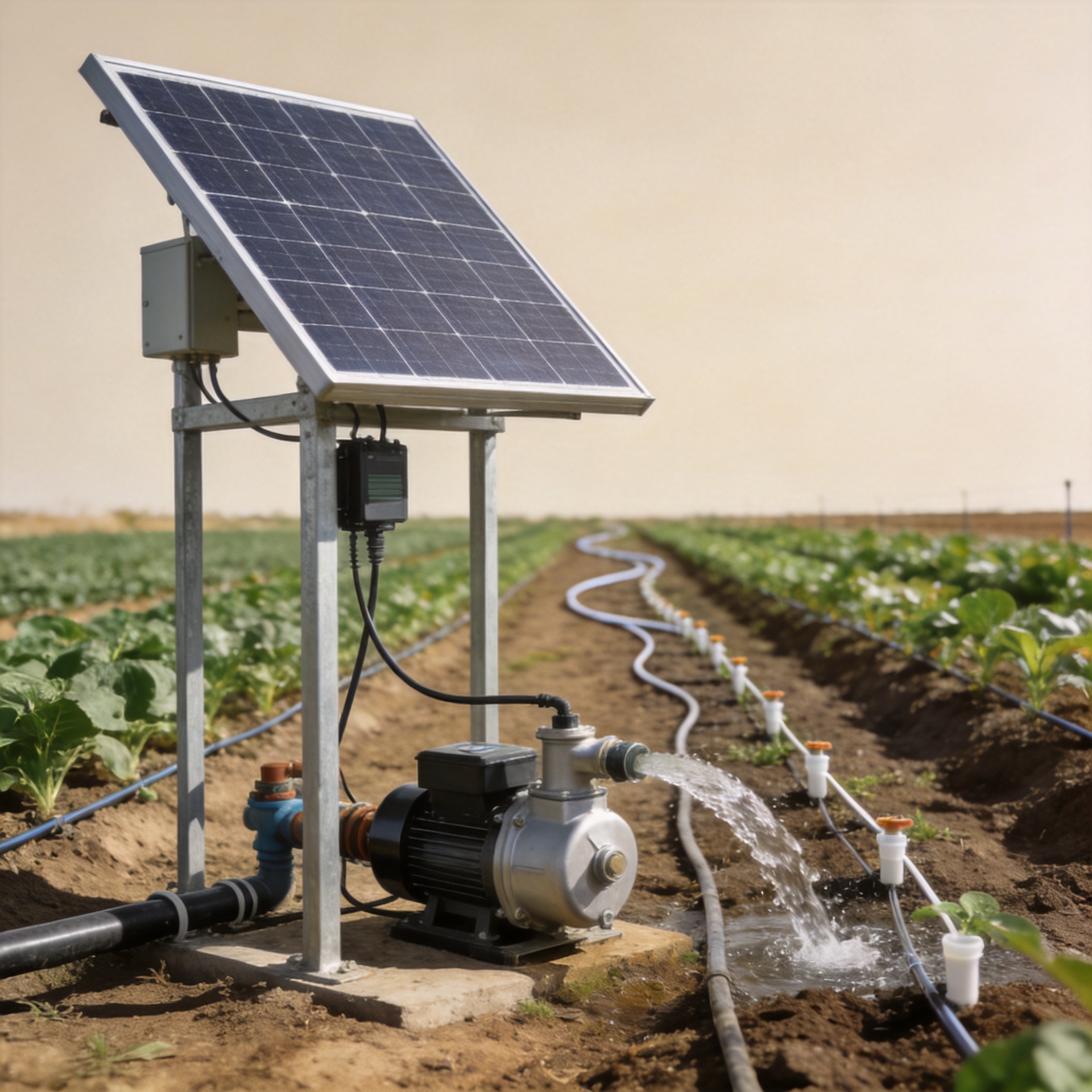
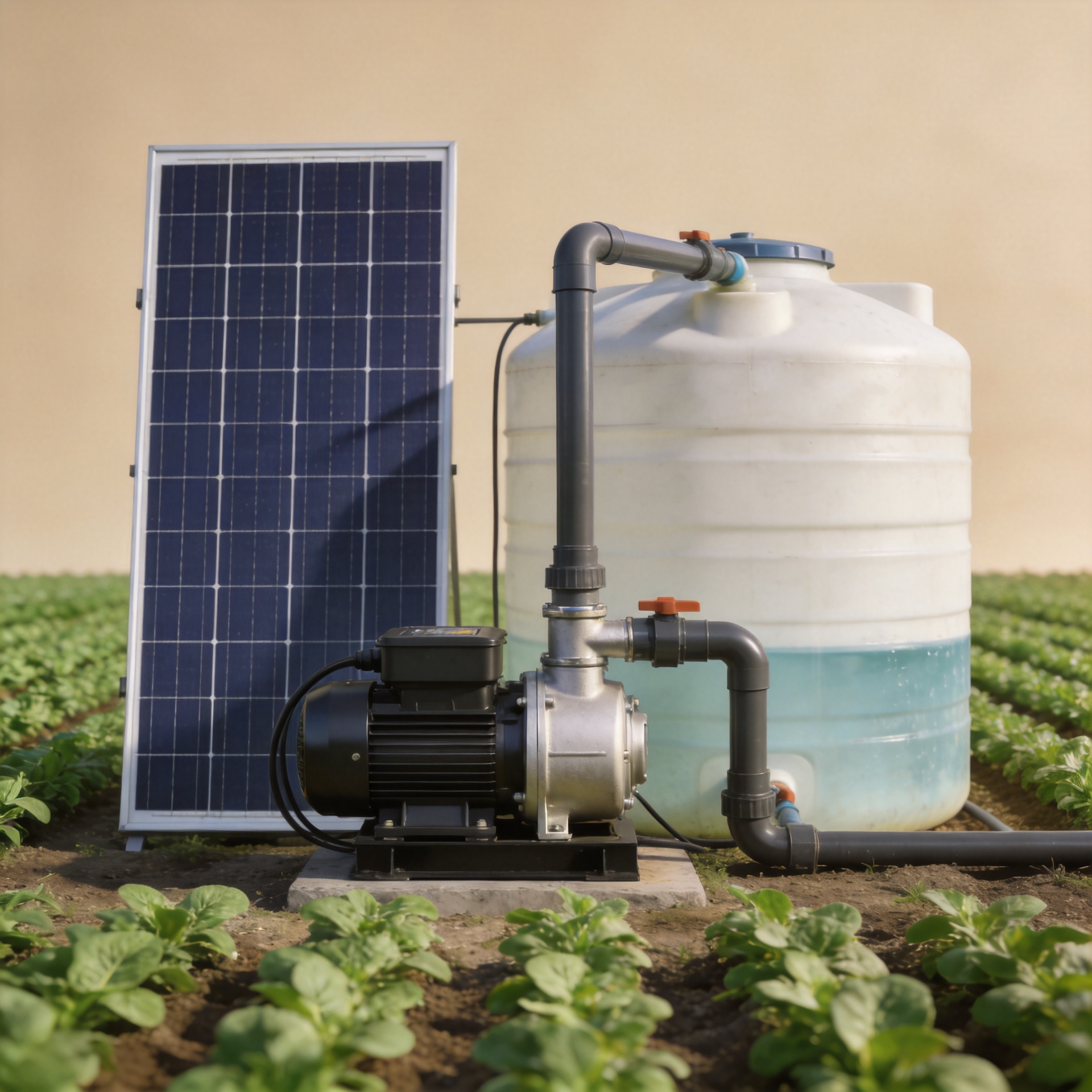
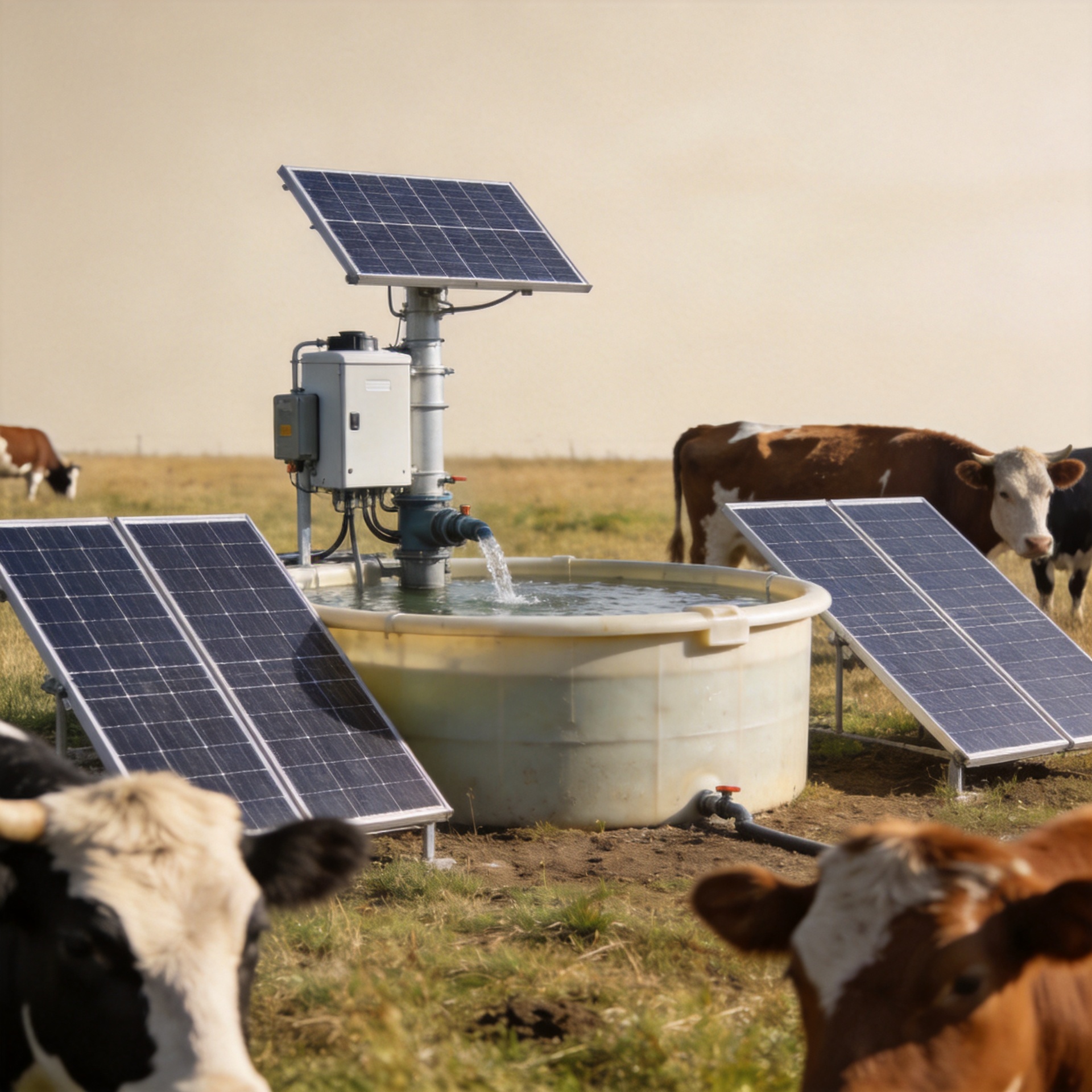
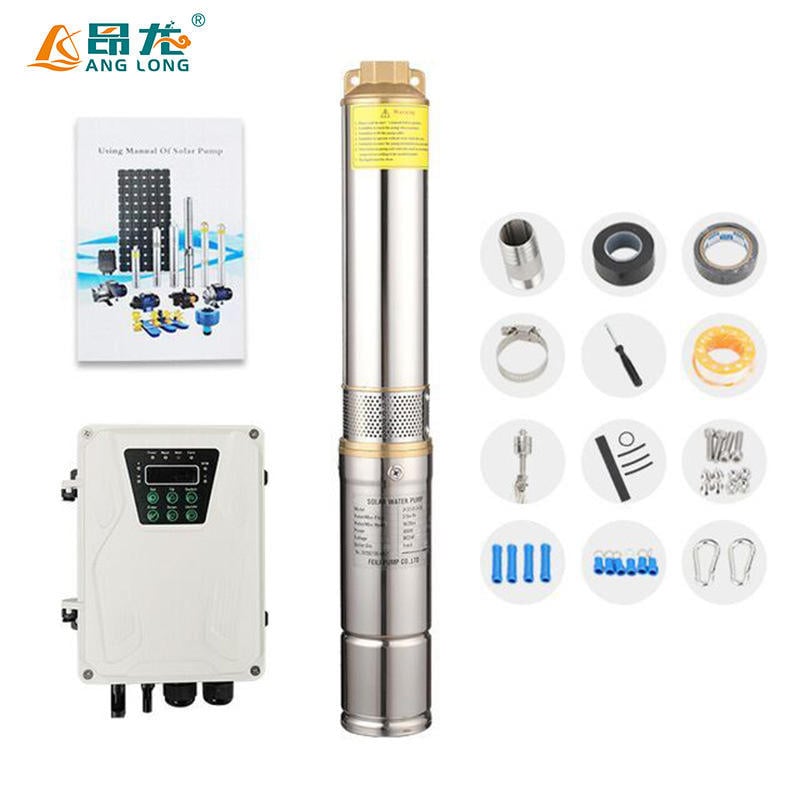
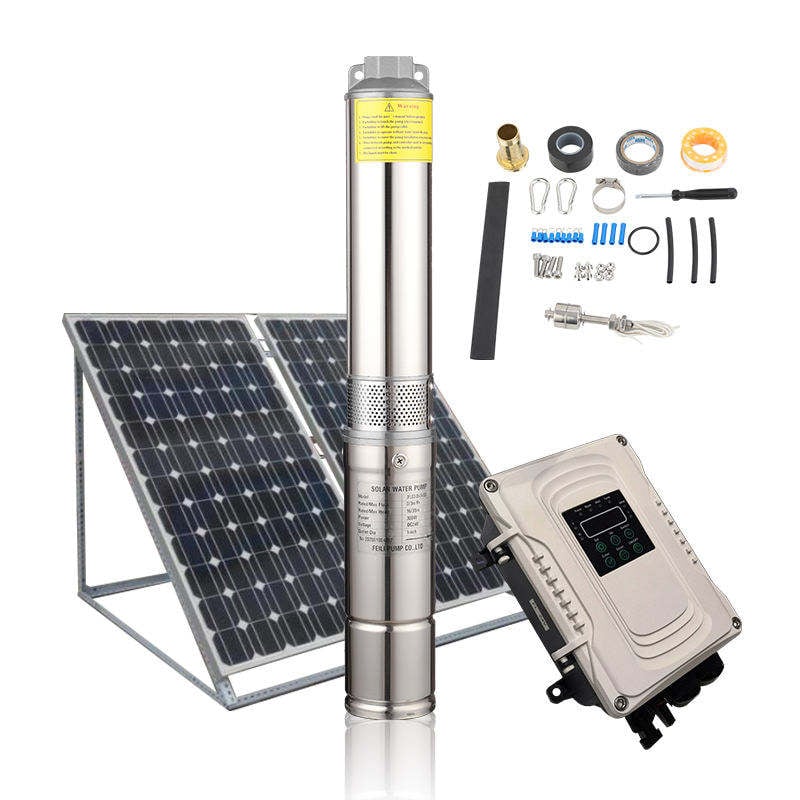
A solar powered well system should be quoted as a compatible system. Confirm whether the offer includes the pump, motor, controller, PV modules, mounting hardware, cables, connectors, protection devices, level sensors, and any AC/DC changeover equipment. If it is a pump-only quote, ask for the required input-voltage range, recommended PV power, controller type, cable-size assumptions, and compatible panel configuration.
PV sizing is especially important. Array voltage must suit the controller and pump operating range, while array power must support the selected duty point after reasonable system losses are considered. Ask the supplier to identify the design solar resource or operating month assumed for the calculation. Do not compare two packages solely by total panel watts when their pump curves, controller settings, and stated TDH differ.
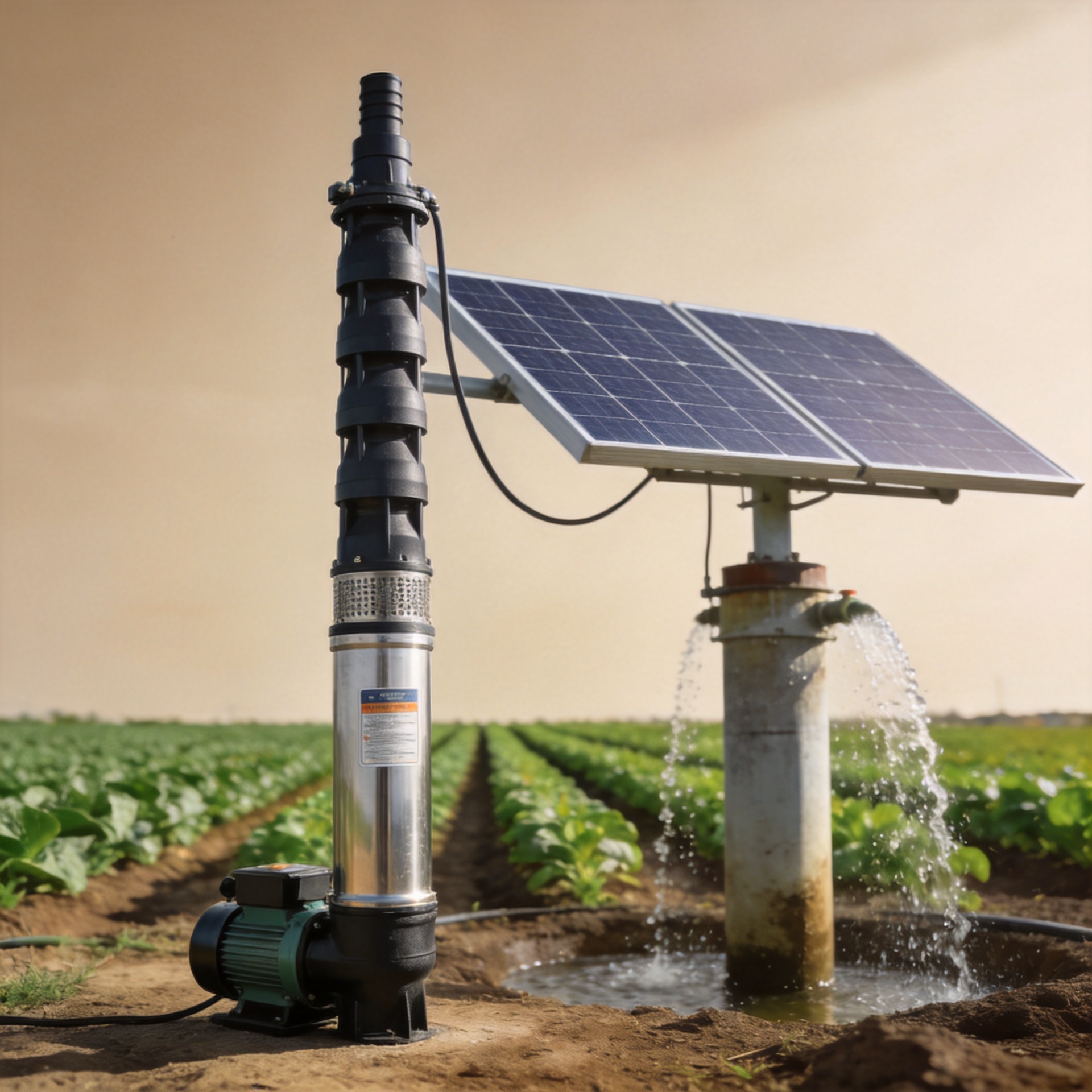
For buyers needing a product-page starting point, review the available deep-well solar borehole agricultural water pump and request the current technical data sheet for your site conditions. The page link is a product reference; final suitability still depends on a verified duty-point calculation.

3. Check borehole fit, materials, and installation constraints
A solar powered water well pump must physically fit the borehole and operate in its water conditions. Confirm the pump outer diameter against casing ID, required cooling flow around the motor, installation depth, discharge connection, cable length, and lifting arrangement. A pump that fits on paper can still create installation delays if the cable, pipe, rope, joints, or wellhead layout was not included in the order scope.
Material questions should be specific. Ask which wetted components are stainless steel, engineering polymer, or another material; then compare that against the available water analysis. Where sand is a concern, ask what intake protection, installation guidance, and wear-related limits are documented. Do not treat a generic material name as proof of suitability for every saline, abrasive, or high-temperature application.
In planning conversations, this is often the point worth checking twice: is the quoted cable length based on the actual pump setting depth and route to the controller, or is it a standard allowance? A clear answer avoids field splicing and unplanned voltage drop.
4. Evaluate controller, protection, and monitoring features
The controller is a key part of a solar powered water well package. Compare its DC input range, maximum PV input, motor compatibility, enclosure rating, cooling arrangement, and fault indications. Clarify whether it includes or supports dry-run protection, low-water sensing, tank-full control, overload protection, reverse-polarity protection, and restart behavior after low sunlight or a temporary fault.
For a distribution order, also ask whether controllers are supplied pre-programmed, whether settings can be adjusted for local projects, and what documentation accompanies the product. If remote monitoring, hybrid AC/DC input, or generator backup is required, list it as a separate comparison line. These features are useful only when their compatibility and limits are documented for the quoted configuration.
5. Compare evidence, service scope, and commercial terms before placing the PO
Decision-stage sourcing should compare evidence as carefully as hardware. IEC 62253:2011 is a reference for design qualification and performance measurement of stand-alone photovoltaic pumping systems. That does not mean every supplier or model carries the same report. Ask which test reports, pump curves, wiring diagrams, manuals, inspection records, and applicable compliance documents are actually available for the proposed model.
Then place the commercial details in the same comparison sheet: MOQ, sample policy, production lead time, spare-parts list, carton or pallet specification, labeling language, warranty terms, and customization boundaries. For OEM or wholesale programs, confirm how model codes, controller labels, cable lengths, PV combinations, and packaging artwork will be approved before production.
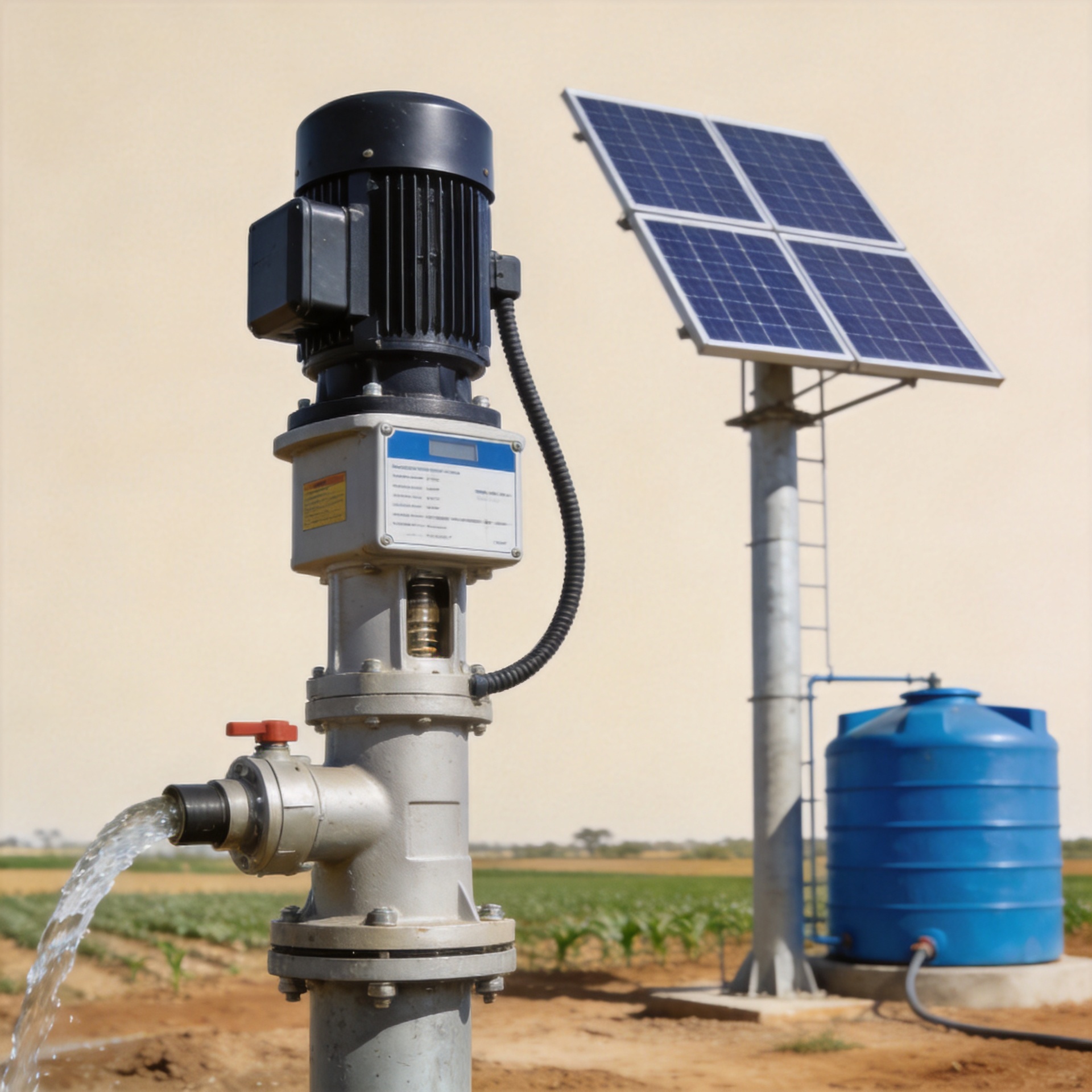
You can also compare a second product reference, the AC/DC solar booster submersible deep-well water pump, by requesting equivalent duty-point and system documentation. This makes it easier to evaluate alternatives on a like-for-like basis rather than relying on names alone.
6. A practical B2B RFQ checklist
- State the required daily water volume, target flow, TDH inputs, borehole casing ID, and water conditions.
- Request a pump curve with the intended operating point marked, plus expected daily output assumptions.
- List every system component and identify what is included versus optional.
- Confirm PV array voltage/power, controller compatibility, cable length, and protection functions.
- Request technical documents, inspection scope, spare-parts options, packaging details, and commercial terms.
- Use the same RFQ template for every supplier so the solar powered water well quotations remain comparable.
The strongest purchase decision is usually the one that links the project water requirement to a documented operating point and a complete system scope. When that chain is clear, buyers can compare a solar powered well system on performance assumptions, installation fit, and delivery readiness—not just the lowest unit price.