 EN
Solar Irrigation Pump vs Solar Sprinkler Irrigation System: Which Setup Fits Your Farm?
A solar irrigation pump can be a practical way to move water where grid power is limited or fuel delivery is inconvenient. But a pump is not automatically a complete irrigation solution. The more useful question is whether your farm only needs to lift and store water, or whether it also needs stable pressure and uniform distribution across a sprinkler network.
As an irrigation project coordinator would frame it, start with the water path rather than the panel count: source, lift, storage, pressure, pipeline, and emitters. That small shift prevents a common planning mistake—choosing a pump before confirming what the field needs at the outlet.
Start with the difference: water lifting versus water distribution
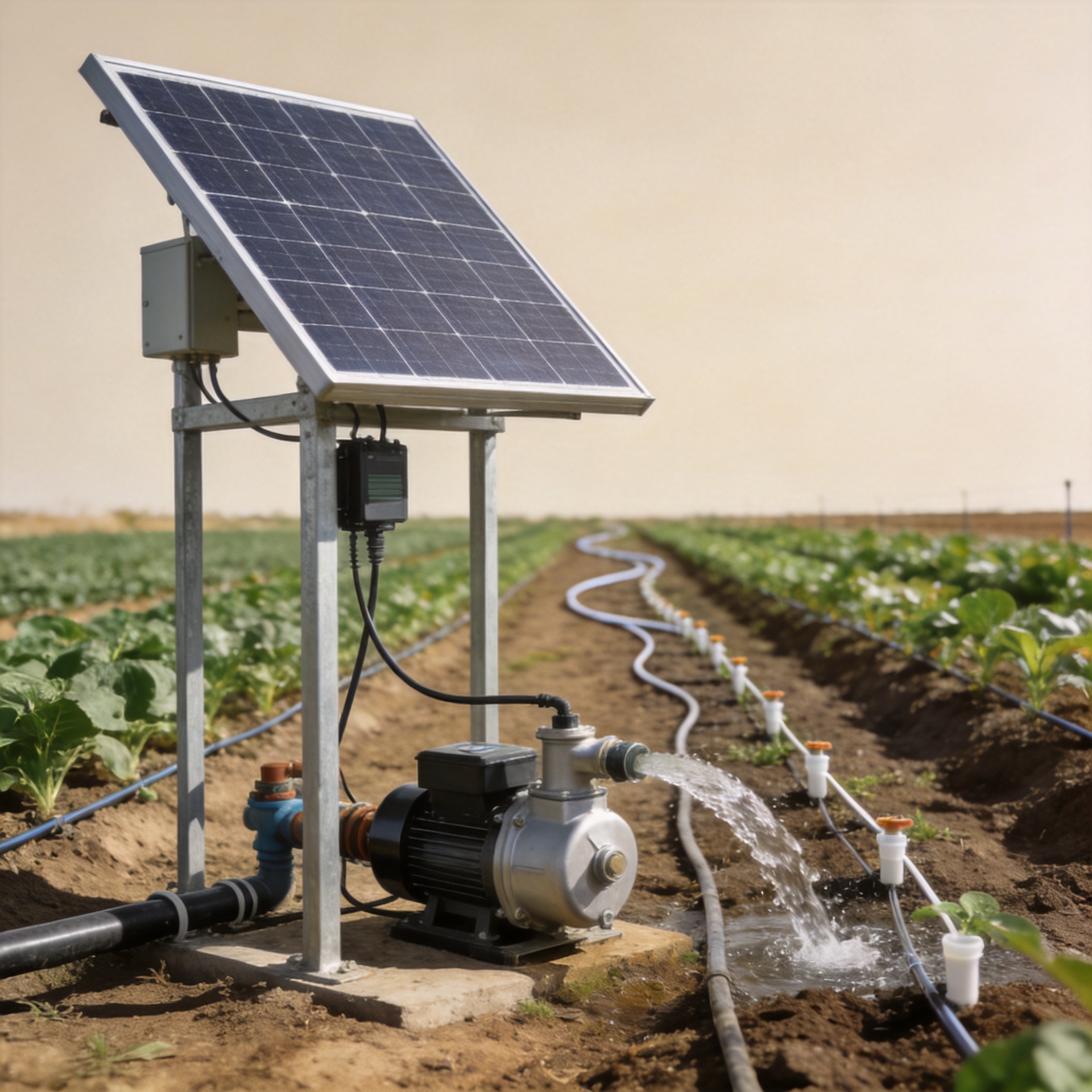
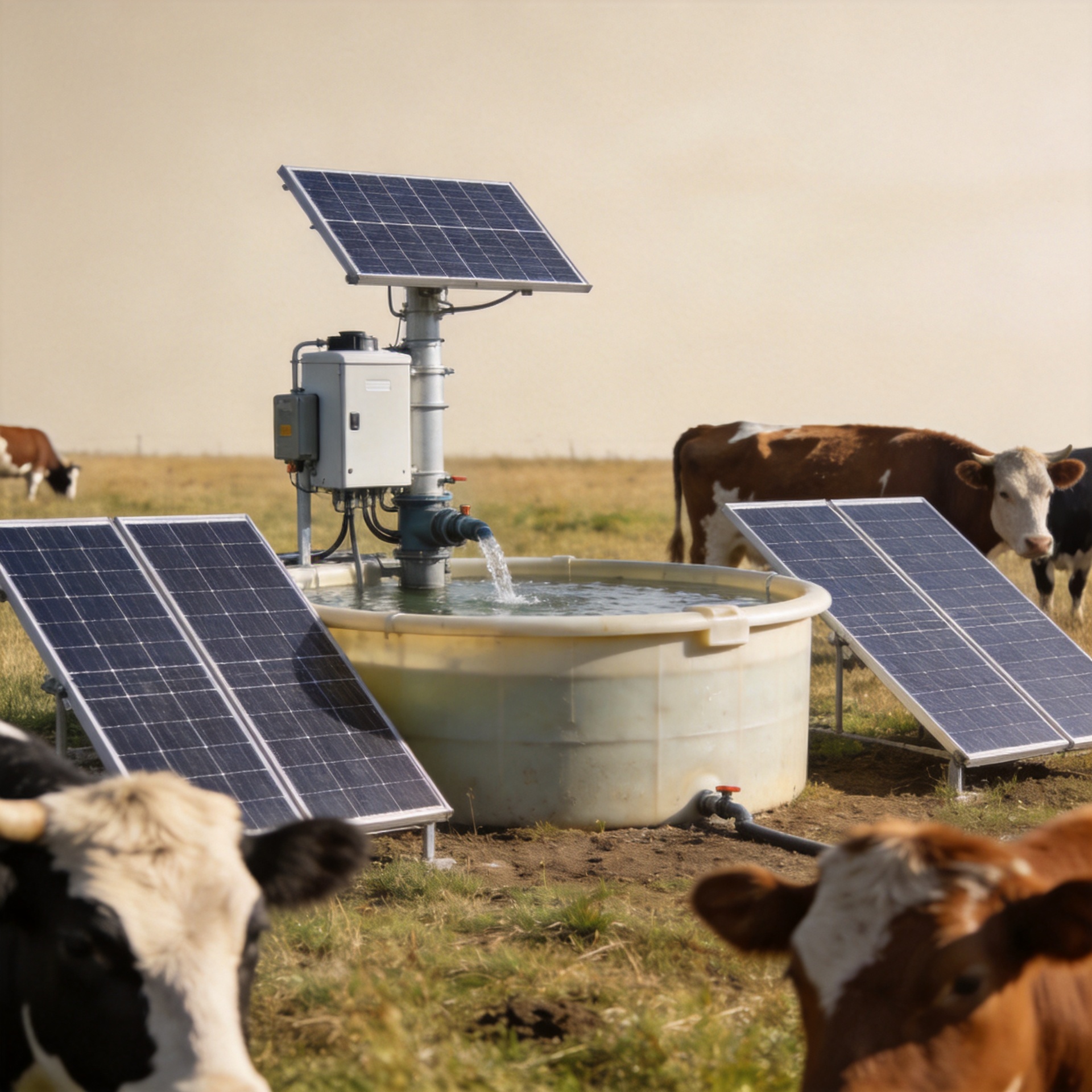
A solar irrigation pump uses photovoltaic power to lift or transfer water from a well, pond, canal, or tank. It may send water directly to a field, fill a storage tank, or feed a mainline. A solar sprinkler irrigation system, by contrast, combines water lifting with a pressurized distribution network: pipes, valves, filters where needed, sprinkler heads, and often storage or pressure-management equipment.
That distinction matters because sunlight changes through the day. When crops can be watered during strong sun and the application method tolerates variable flow, direct pumping may be enough. When irrigation must follow a schedule, cover large blocks evenly, or maintain nozzle pressure, the design normally needs more than the pump itself.
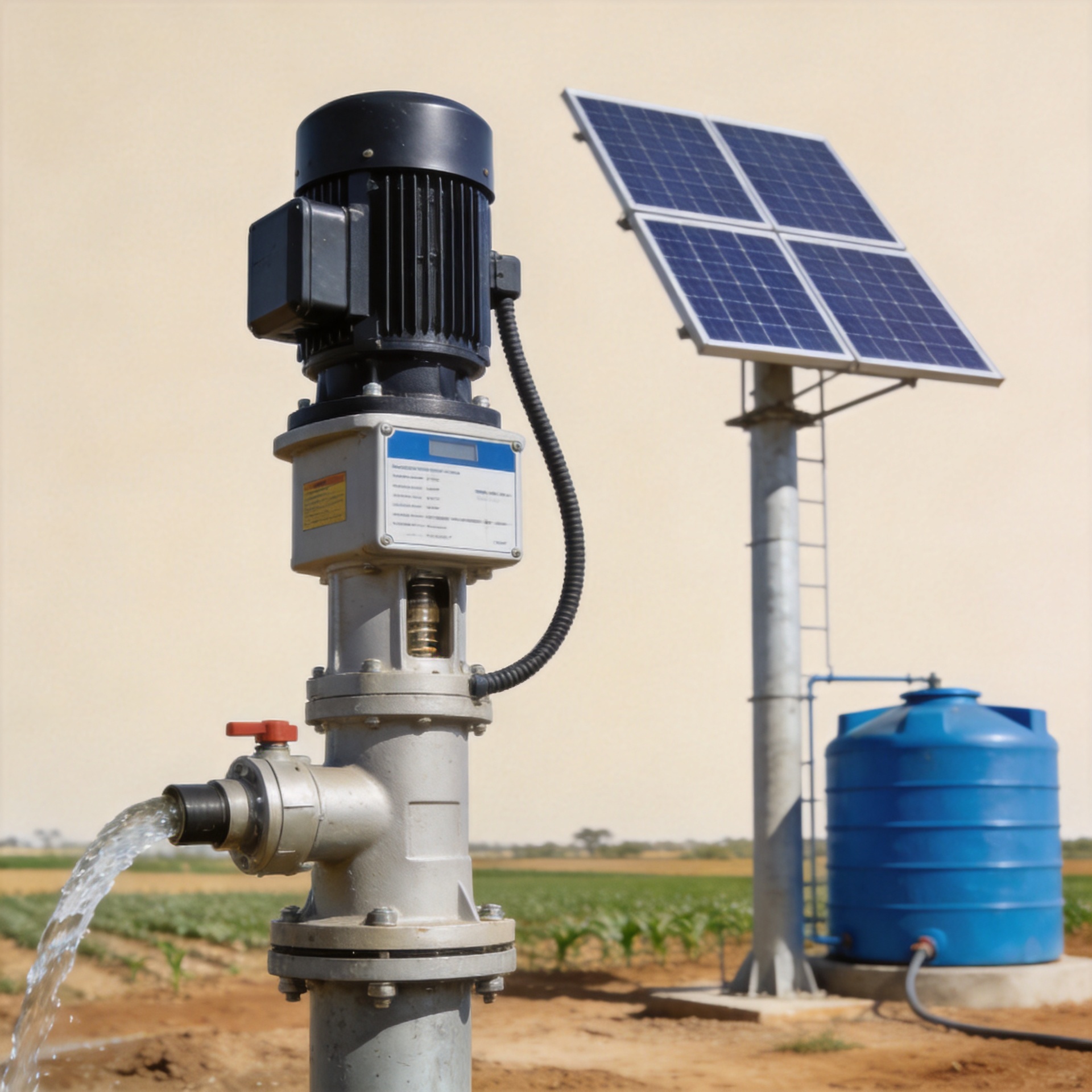
FAO guidance on solar-powered irrigation describes direct pumping as a configuration that can include PV panels, a pump, controller, optional water storage, and an irrigation method. In other words, the solar irrigation pump is one decision inside a wider water-delivery system.
Choose a solar irrigation pump when direct transfer or storage is the main job
A stand-alone solar irrigation pump is often the better starting point when the farm has a defined water source and can use water as it becomes available. It can fit wells, boreholes, ponds, and transfer applications, provided the required flow and total dynamic head are calculated from real site conditions.
- Good fit: filling a reservoir, livestock tank, header tank, or field storage pond during daylight.
- Good fit: gravity-assisted irrigation from elevated storage or a layout with modest and flexible pressure needs.
- Good fit: smaller zones that can be watered in daylight windows rather than at fixed night-time intervals.
- Check carefully: water depth, vertical lift, pipe length, pipe losses, seasonal water-level change, and the daily water volume required.
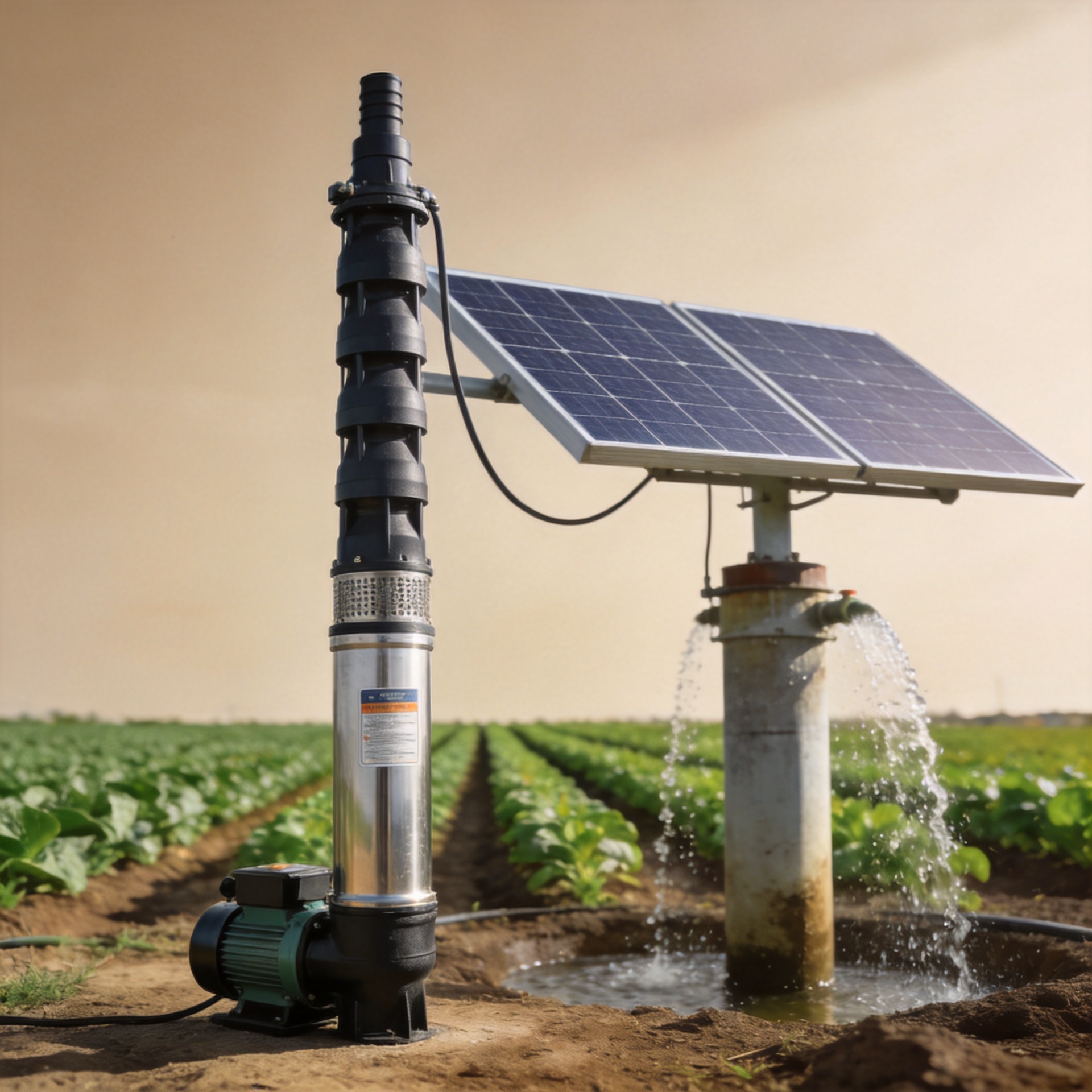
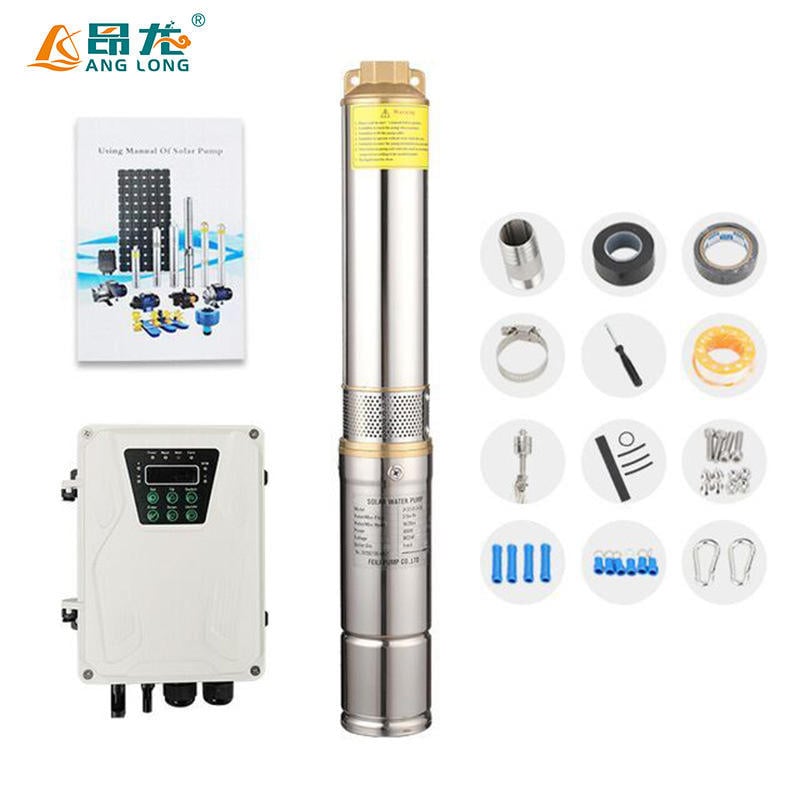
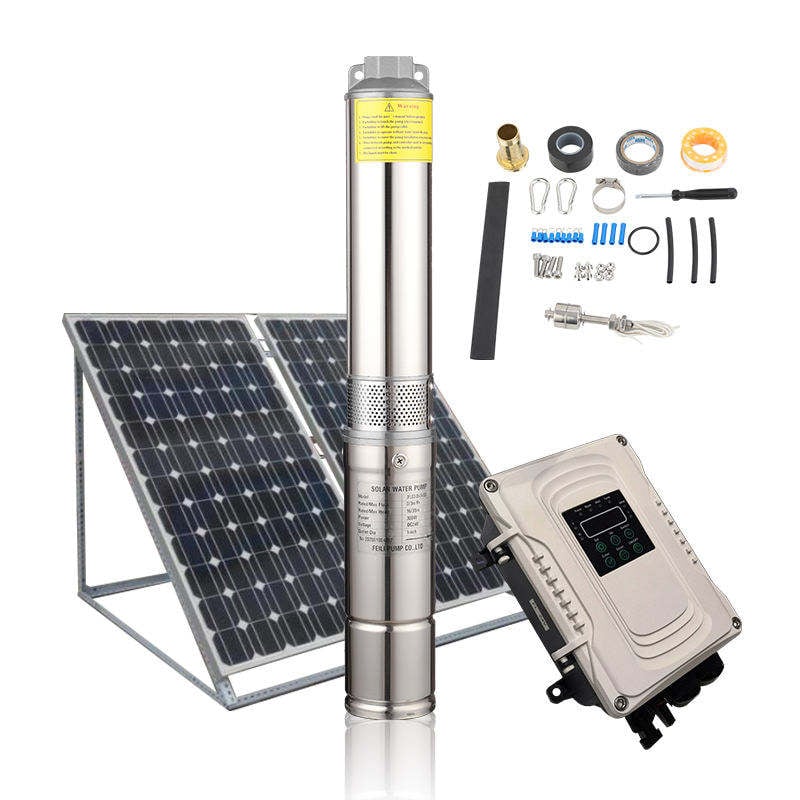
For a deep well or high-lift agricultural application, a submersible configuration may be appropriate. For example, farms comparing solar well-water lifting options can review the confirmed product category context in Anglong Factory Solar Submersible Pump Large Flow Agricultural Irrigation Dc Deep Well Pump. The final selection should still be matched to a verified pump curve and site survey; this article does not treat a product title as a performance claim.
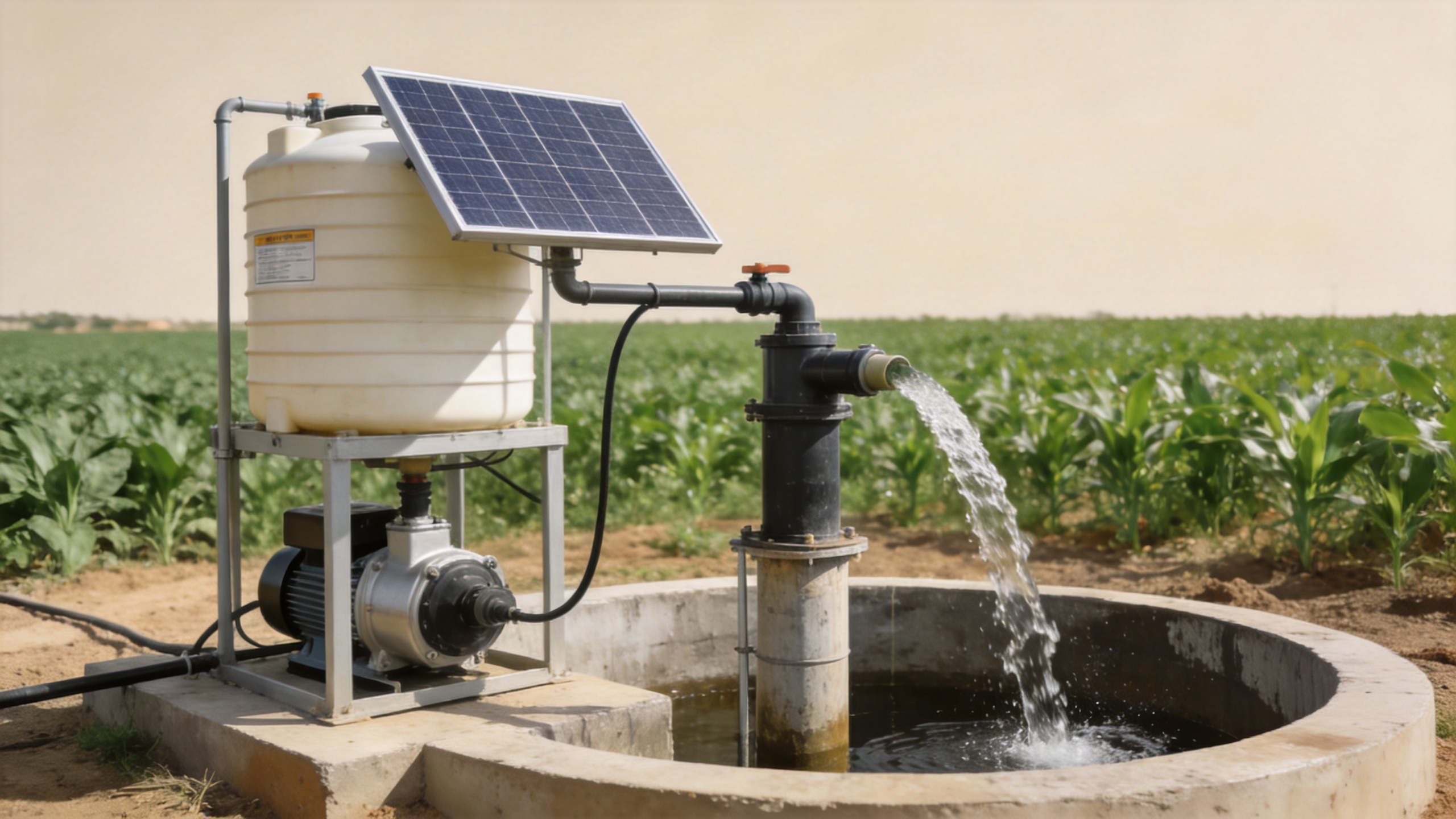
Choose a solar sprinkler irrigation system when the field needs controlled pressure and coverage
A solar sprinkler irrigation system is more suitable when the farm needs water to arrive at sprinkler heads with usable, reasonably consistent pressure. The configuration can include the solar pump, controller, storage tank or reservoir, pressure pump or pressure regulation, filtration, main and lateral lines, valves, and matched sprinklers.
This is not only a pump-capacity question; more accurately, it is a system-fit question. Sprinkler nozzle spacing, terrain, zone size, and pipe friction all influence whether water reaches the crop evenly. A USDA NRCS sprinkler-system reference uses a design uniformity coefficient of at least 85% as an example of the performance standard designers may consider. Local requirements and crop practices can differ, but the principle is useful: nominal pump flow alone does not confirm good field coverage.
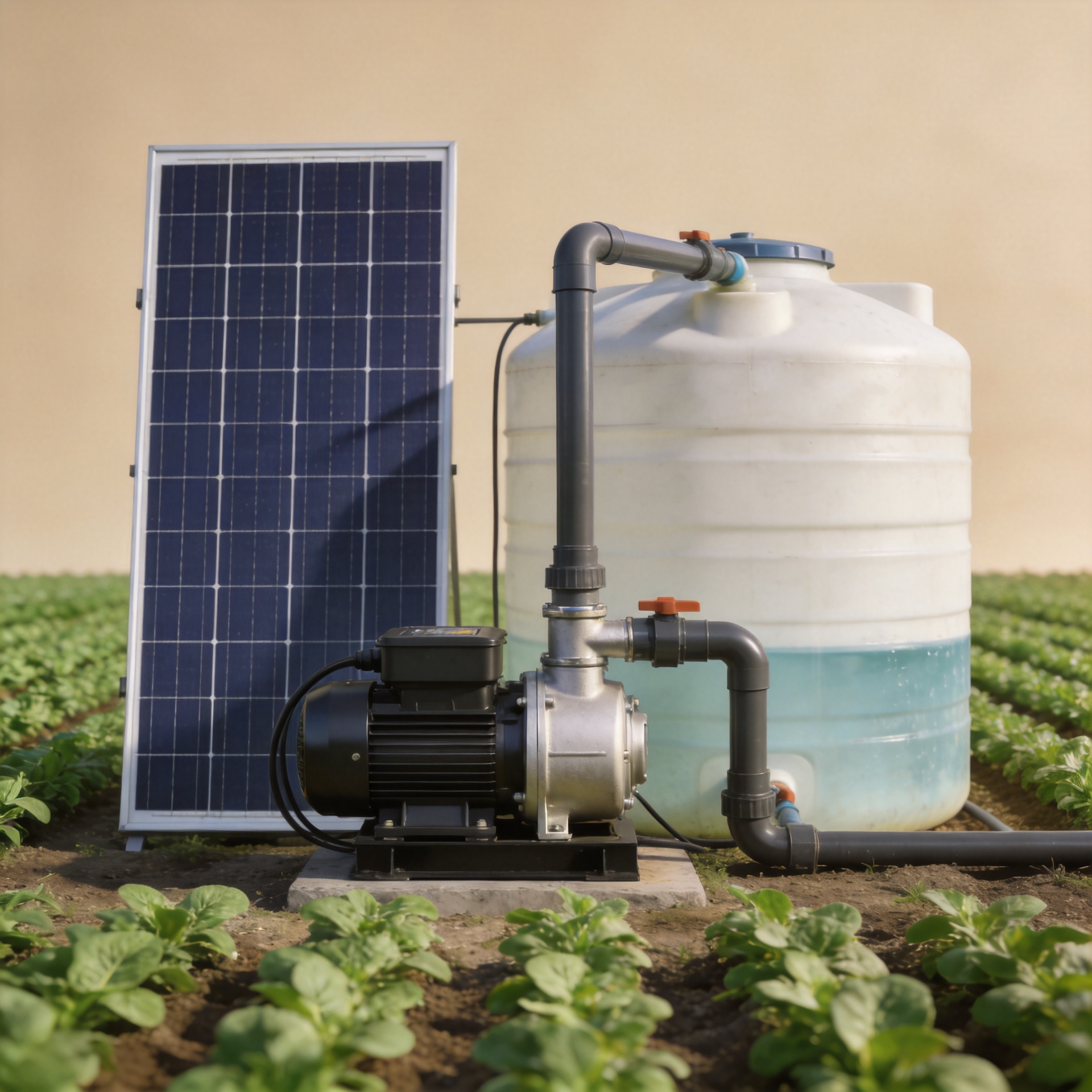
Storage can make the system easier to manage. An off-grid farm configuration described by Oregon State University separates low-flow solar well pumping to storage from a pressure pump that feeds irrigation lines. That is an illustration rather than a universal rule, yet it shows why a holding tank can decouple variable solar pumping from the steadier pressure a sprinkler layout may require.
A side-by-side farm decision table
| Decision factor | Solar irrigation pump | Solar sprinkler irrigation system |
|---|---|---|
| Primary purpose | Lift, transfer, or store water | Lift water and distribute it through pressurized sprinklers |
| Suitable field condition | Flexible irrigation timing or storage-led layout | Defined zones needing planned, uniform coverage |
| Pressure requirement | May be low or handled downstream | Central design requirement at the sprinkler heads |
| Core components | PV array, controller, pump, pipe; storage optional | Pump system plus storage/pressure control, pipes, valves, and sprinklers |
| Planning focus | Daily volume, lift, flow, and source reliability | All pump factors plus zone flow, friction loss, pressure, and application uniformity |
| Typical trade-off | Lower system complexity, but less control over delivery conditions | More coordinated design work, but better control of distribution when properly engineered |
Four questions to answer before choosing
- How much water is needed each day? Convert crop and field requirements into a daily volume before sizing the solar irrigation pump.
- Where does the water start and end? Record static water level, drawdown where relevant, elevation change, pipe route, and the highest delivery point.
- Does the application method need steady pressure? If the answer is yes, include the sprinkler network—not just the source pump—in the design calculation.
- Can water be stored when solar output is high? Water storage may be simpler than electrical storage when the objective is to align daytime pumping with a later irrigation window.
In planning conversations, this is often the point worth checking twice: a larger pump does not automatically solve a mismatched pipe network or a poorly zoned sprinkler layout. Confirm the flow and pressure needed per zone, then assess whether the solar array, controller, storage, and pump arrangement can support that operating point.
How to build a practical configuration for your farm
For farms that mainly need to raise water from a well or transfer it to storage, begin with a solar irrigation pump package sized around verified head and daily volume. A product-page reference for a solar water-pump system with battery can be found at Solar Water Pumps Farm Irrigation System Dc Solar Submersible Pump With Battery; request the applicable technical documentation before treating any configuration as final.
For larger or more structured sprinkler zones, define the distribution design first: required nozzle pressure, flow per zone, line sizes, elevation changes, and expected operating schedule. Then select the pumping and solar components around that demand. This approach may take more coordination, although it reduces the chance of buying a solar irrigation pump that moves water successfully but cannot operate the field network as intended.
The bottom line
Choose a solar irrigation pump when your core need is dependable solar water lifting, transfer, or daytime storage and your delivery method can work with flexible flow. Choose a solar sprinkler irrigation system when the farm also needs managed pressure, zoned operation, and even sprinkler coverage. The suitable option is therefore not a universal product choice. It is the configuration that matches your water source, field geometry, daily irrigation volume, and distribution method.
Before ordering, prepare a short site brief with source depth, elevation, pipe route, intended irrigation method, field area, and target operating hours. That gives a pump supplier or irrigation designer the information needed to review the system fit without relying on assumptions.