 EN
Solar Pumps for Agriculture: How They Support Irrigation and Livestock Watering
A solar pump for agriculture converts daytime solar energy into useful water movement. For a farm, that can mean lifting water from a borehole, pond, tank, or other suitable source, then sending it to drip lines, field distribution points, storage tanks, or livestock troughs. The practical question is not simply whether solar power can run a pump. It is whether the whole water system—source, lift, pipe route, storage, and daily demand—fits the farm’s operating conditions.
For irrigation and drainage planning, it helps to start with the flow path rather than the motor rating. A solar powered water pump for agriculture needs to work with the water available at the site and with the hours when sunlight is useful. This is especially relevant for remote fields and grazing areas where grid extension may be difficult or costly. The same basic approach can support crop irrigation and a solar water pump livestock system, but the delivery pattern is different.
What a solar agricultural pumping system does
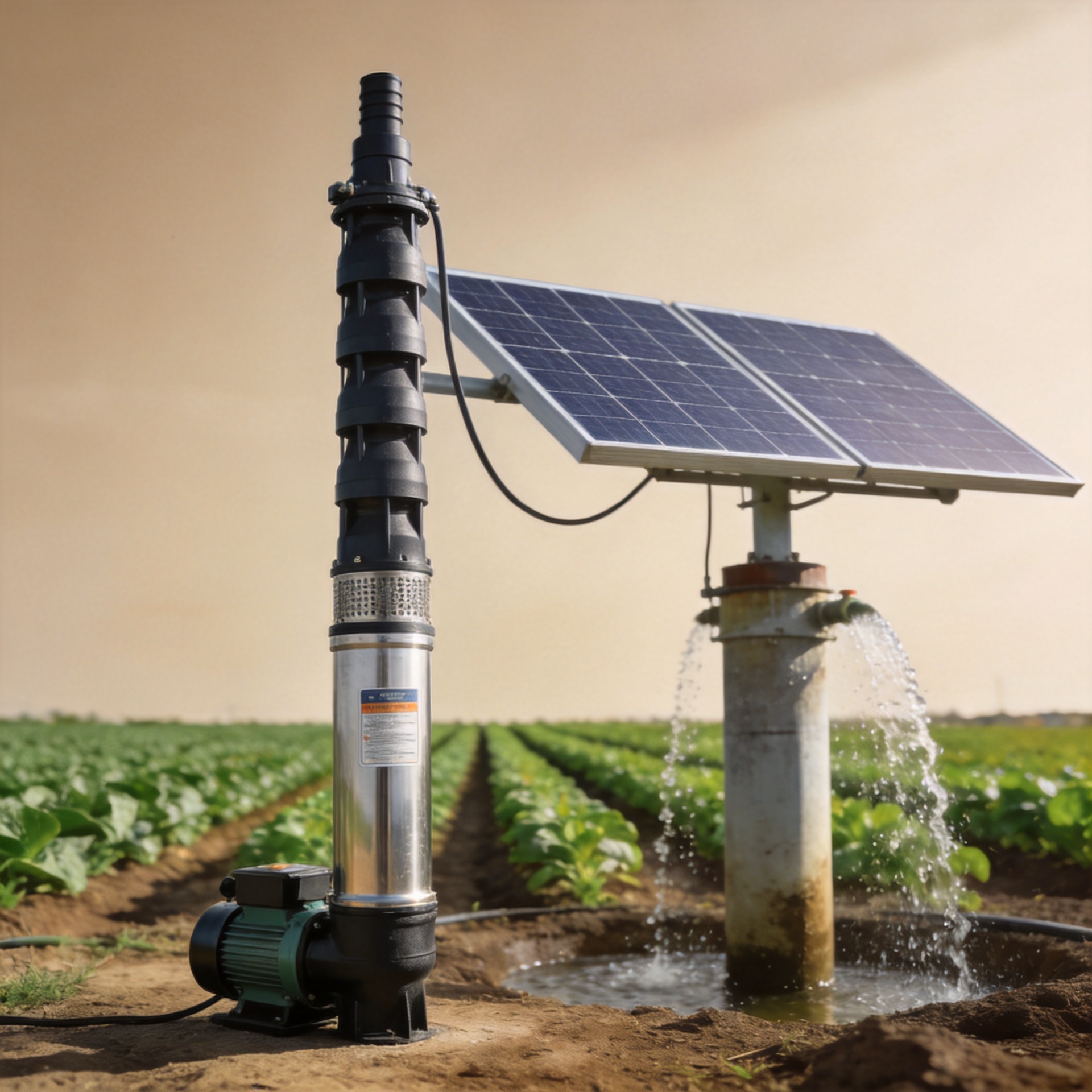
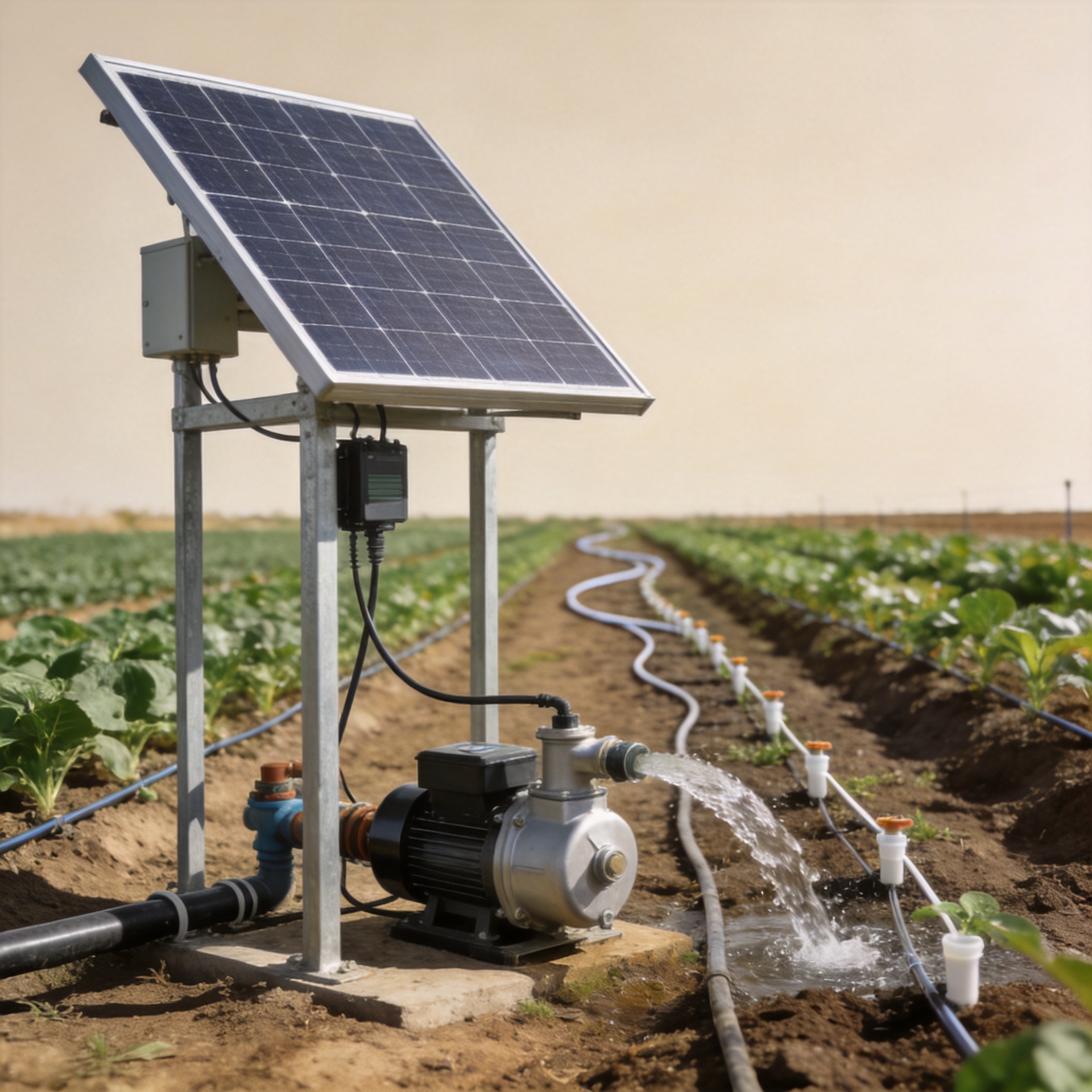
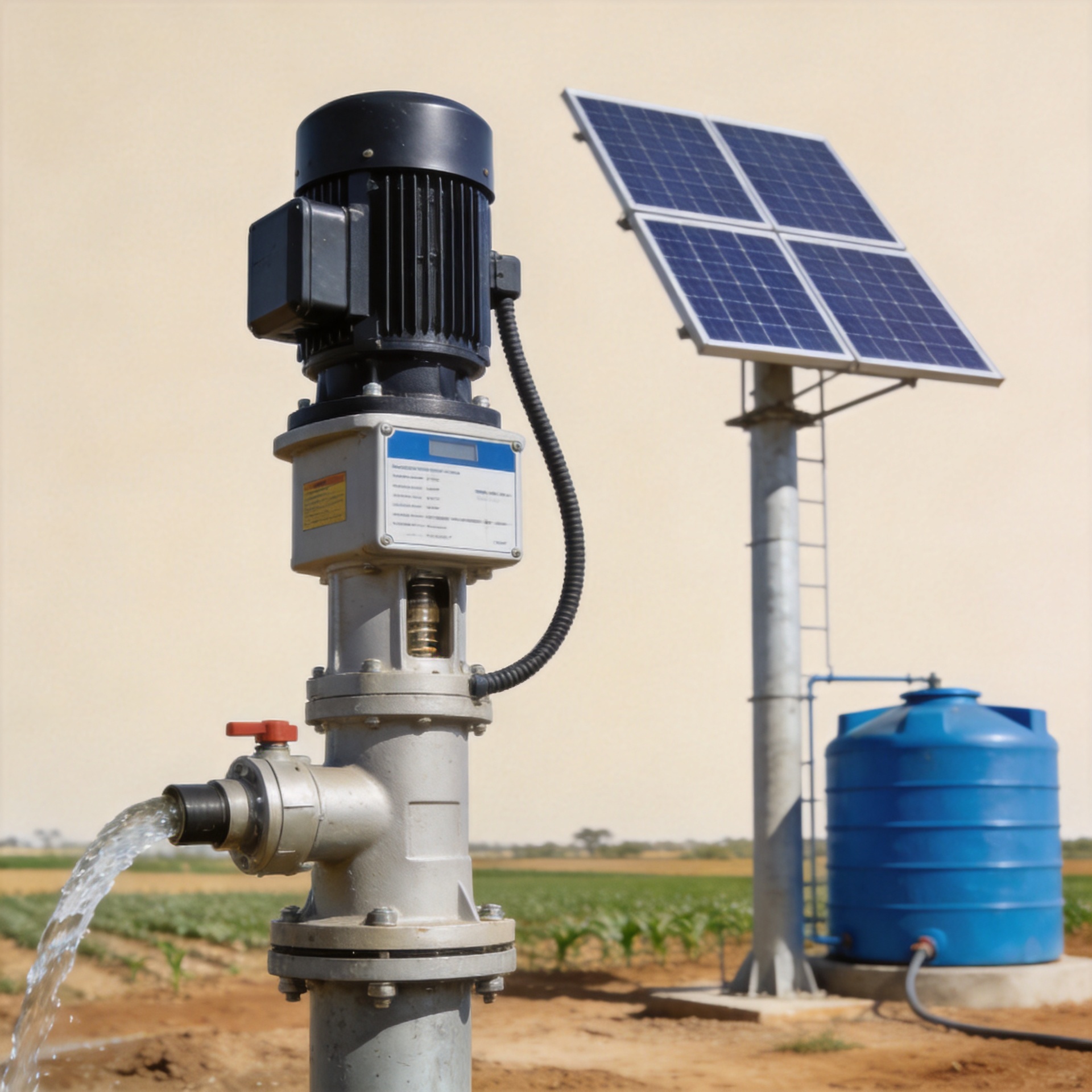
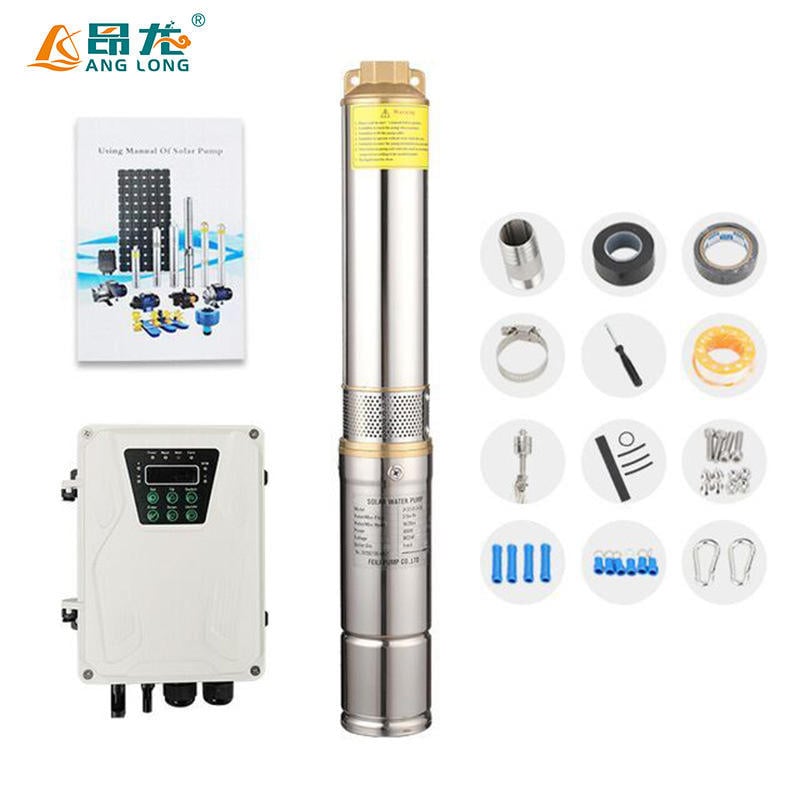
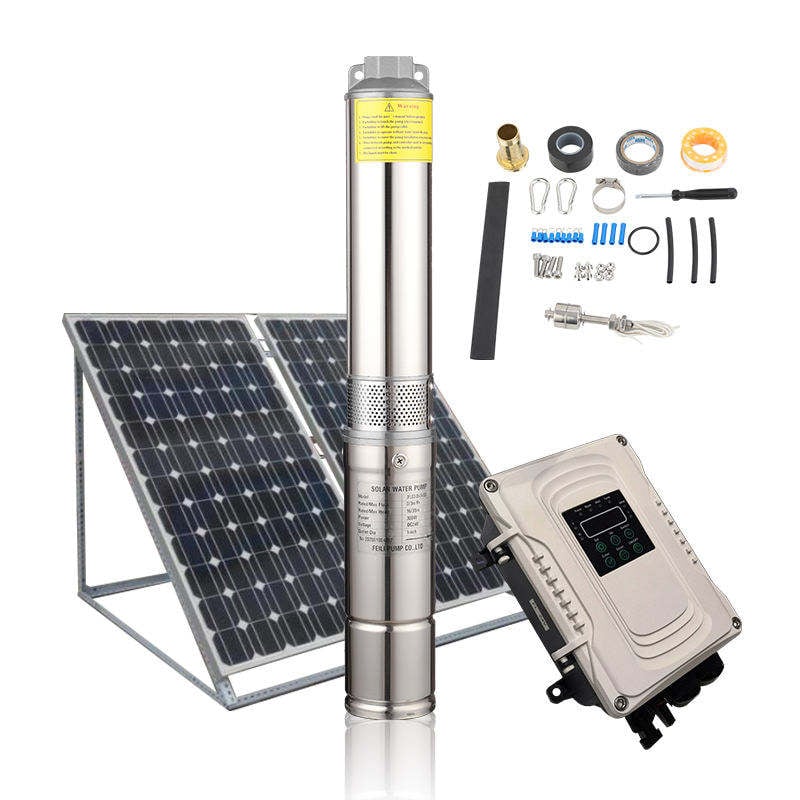
A typical solar pump for agriculture includes a photovoltaic array, pump and motor, controller, pipework, and a discharge point such as an irrigation header or storage tank. The panels generate electricity during daylight, while the controller helps match available solar power to pump operation. Depending on the source and duty, the pump may be submersible for a borehole or well, or configured as a surface-transfer option for an appropriate water source.
This is not only a pump-capacity question; more accurately, it is a system-fit question. A farm team should define where water starts, how far it must travel, how high it must be lifted, and when it is needed. In planning conversations, this is often the point worth checking twice: a strong sunny-day pumping rate does not by itself confirm that a field or trough will have enough water at the time of use.
Supporting irrigation with a solar pump for agriculture
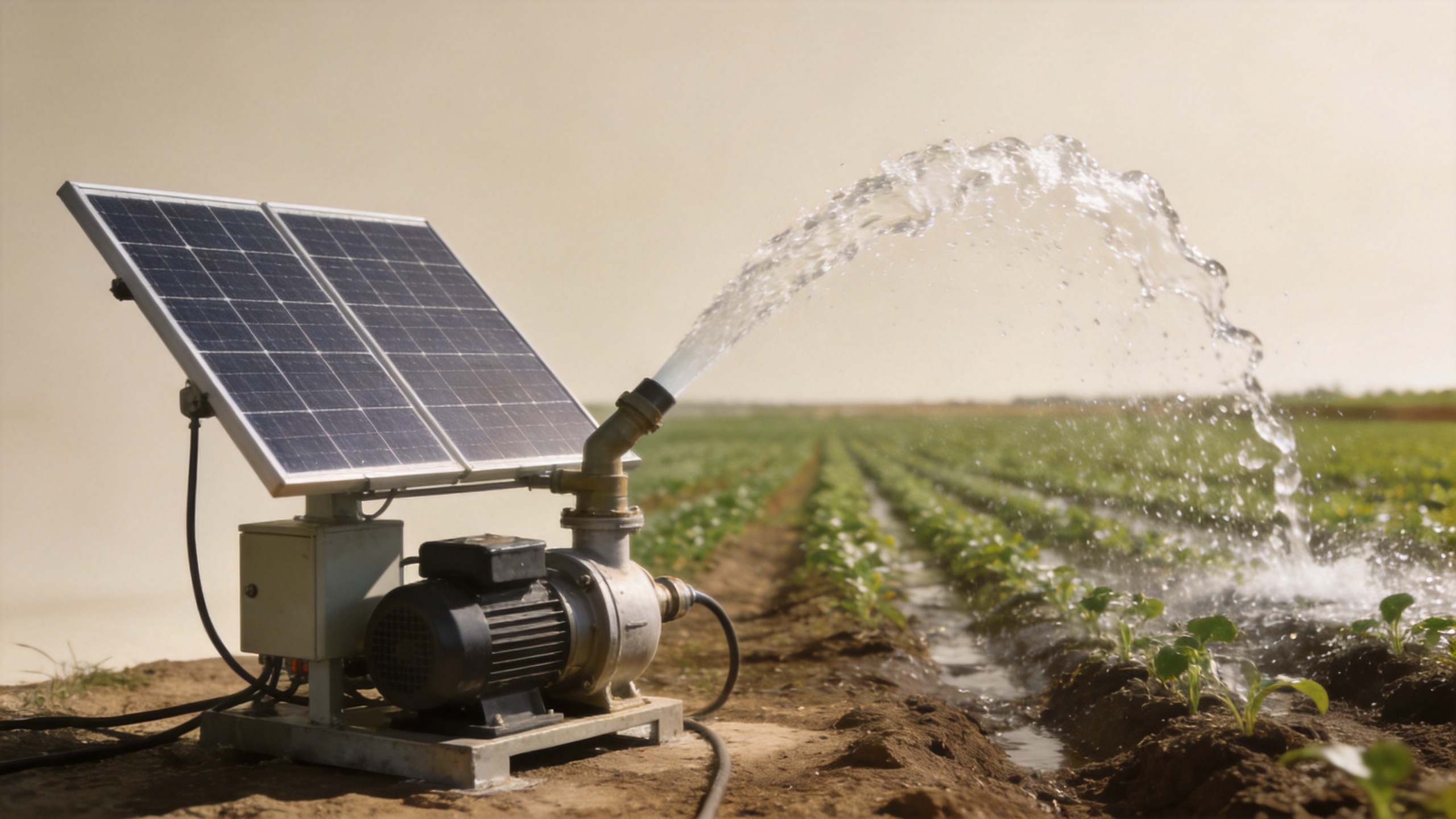
For irrigation, solar pumping is most useful when the water-delivery schedule can take advantage of daylight production or when a storage tank, reservoir, or elevated tank can hold water for later distribution. FAO guidance on solar-powered irrigation notes that these systems can be used from decentralized small-scale applications to larger irrigation settings, including vegetable gardens and orchards, with surface water or groundwater where suitable.
Start with the crop-water plan. Identify the irrigated area, irrigation method, peak seasonal demand, source yield, vertical lift, and the pressure or flow requirements of the distribution network. Drip irrigation, for example, may require a different operating arrangement from open-channel delivery or a large transfer line. If the available solar pumping window is shorter than the farm’s daily irrigation window, water storage can separate pumping time from irrigation time.
A useful field checklist includes:
- the dependable water level and yield at the source;
- total lift from source to delivery point, including elevation changes;
- pipe length, diameter, bends, and distribution losses;
- the volume needed during the highest-demand part of the season;
- storage capacity and the method used to distribute stored water; and
- controls that protect the pump when water levels are low or storage is full.
Shift from catalog comparison to site-condition comparison. A larger pump is not automatically a safer choice when pipe losses, source recovery, or downstream irrigation demand have not been confirmed. Ask a supplier to clarify the operating point, controller compatibility, and the conditions needed for the stated performance.
Using solar water pumping for livestock
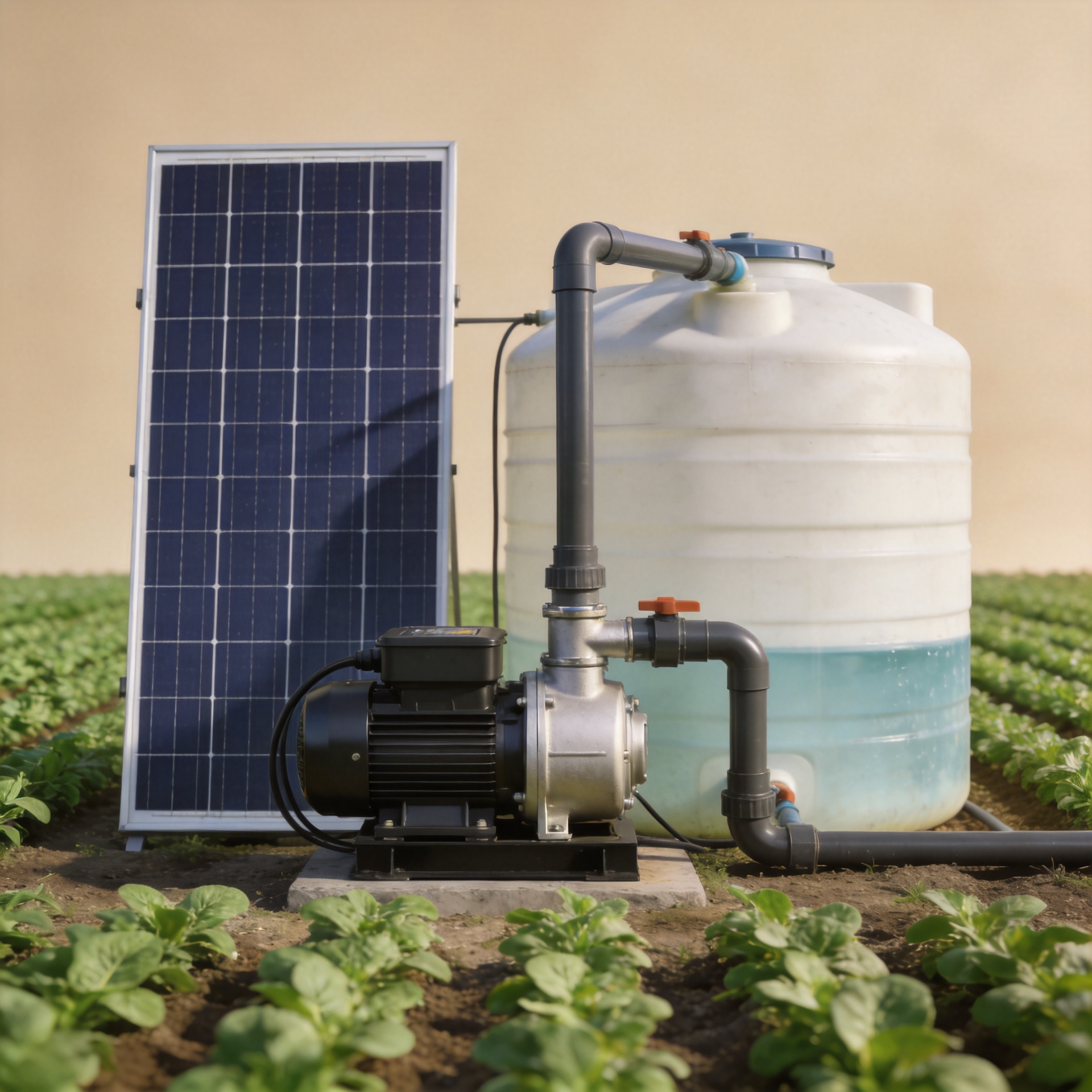
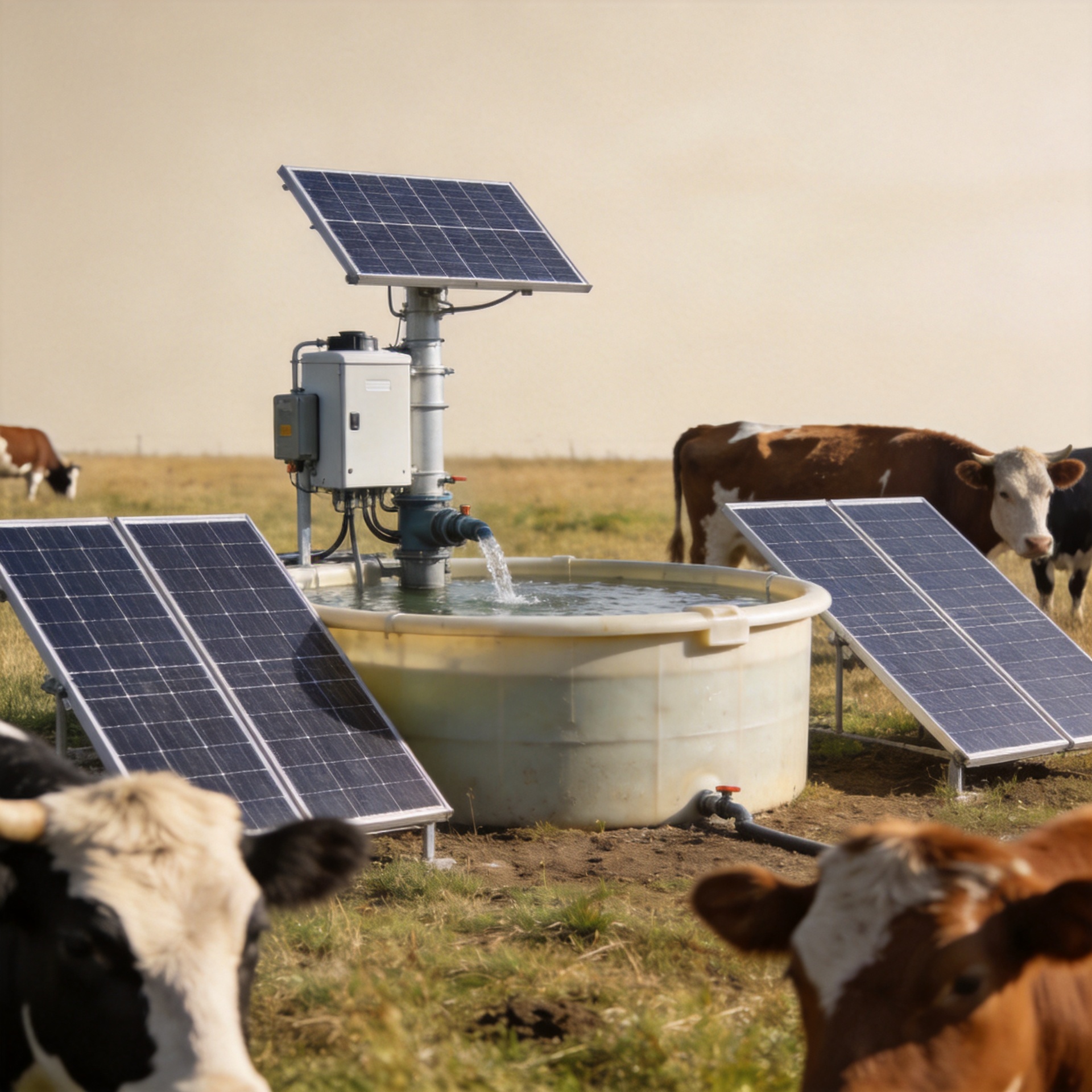
A solar water pump livestock setup commonly moves water to a storage tank that then feeds stock tanks or troughs. This arrangement is valuable because animals need water beyond the brightest pumping hours. Industry guidance for livestock watering commonly describes a solar array, pump, controller, and storage tank as the core system; storing water is often simpler than relying on batteries when the goal is to cover night-time use or periods of lower sunlight.
For livestock, begin with the highest expected water-use period, not the average day. Herd size, species, weather, pasture rotation, trough location, and the distance from source to drinker all affect the design. If an elevated storage tank can provide adequate pressure, gravity distribution may reduce the need for an additional booster stage. If it cannot, the system design should state that constraint early rather than assume that a solar pump alone will solve every delivery issue.
Can your team confirm the daily water demand, the source recovery rate, and the reserve volume required for cloudy periods? Those questions help turn a general solar water pump livestock concept into a site-specific planning brief.
Choosing the water source and pump arrangement
Different sources create different selection questions. A deep well or borehole typically calls for attention to pump setting depth, static and pumping water levels, well yield, and vertical lift. A pond, canal, or tank transfer application needs a clear view of water quality, intake protection, seasonal level changes, and the route to the storage or irrigation point. These are planning factors, not confirmed product specifications.
Where a deep-well arrangement is being considered, review the available product information for an Deep Well Solar Borehole Agricultural Water Pump. For another product-page reference, see the AC/DC Solar Booster Water Pump for Agriculture. Confirm the published data sheet and the site duty before treating either product as a final recommendation.
Plan storage, controls, and seasonal change
Storage is the bridge between variable solar input and a steady water requirement. For irrigation, it can allow daytime pumping and scheduled distribution. For livestock watering, it can maintain a reserve after sunset or during cloudy weather. A float switch or level control can help stop pumping when a tank is full, while low-water protection can help prevent unsuitable operation at the source. The exact control logic depends on the installation and should be verified with the selected equipment documentation.
Also allow for seasonal change. Water demand can rise in hot weather, source levels can fall, and livestock may move to different pasture areas. Treat those changes as design inputs, not as afterthoughts. A successful first run does not prove every seasonal condition is covered.
A practical next step for farm water planning
A solar pump for agriculture can support irrigation and livestock watering when the pump is planned as part of a complete water system. Map the source, daily demand, lift, pipe route, storage requirement, and distribution method. Then compare pump and controller options against that documented duty. This gives farmers and distributors a clearer basis for discussing solar powered water pump for agriculture solutions without overstating what a single component can deliver.
Before finalizing a purchase, request the relevant pump curve, recommended operating range, controller information, installation requirements, and support documentation for the actual source and water-delivery layout.