 EN
Solar Water Pump System for Agriculture: A Buyer’s Component Checklist
Buying a solar water pump system for agriculture is not simply a matter of choosing a pump and adding panels. For an overseas wholesale buyer, the more reliable starting point is to turn the farm’s water demand, source conditions, field layout, and operating window into a single component checklist. That approach makes it easier to compare quotations and explain the specification to downstream customers.
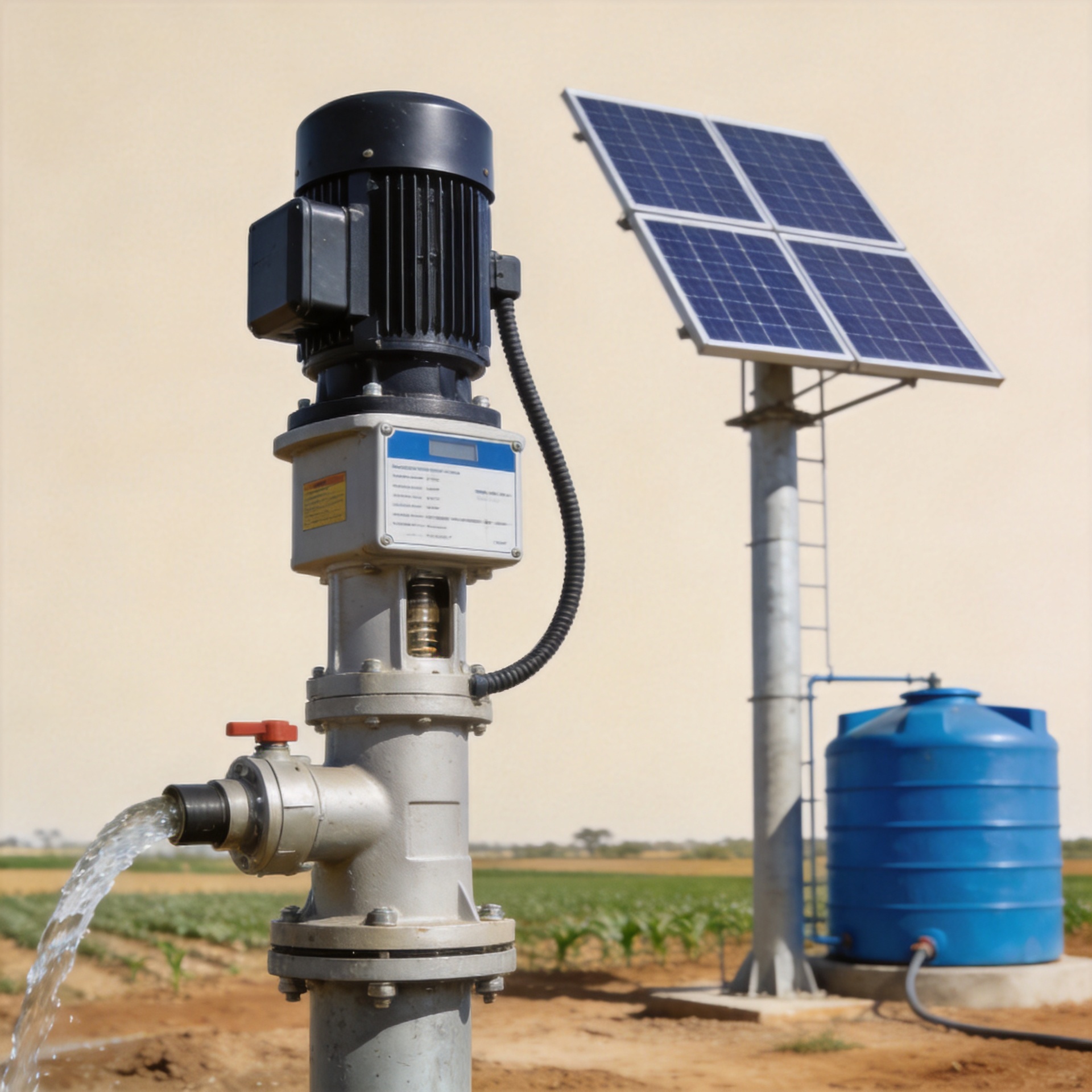
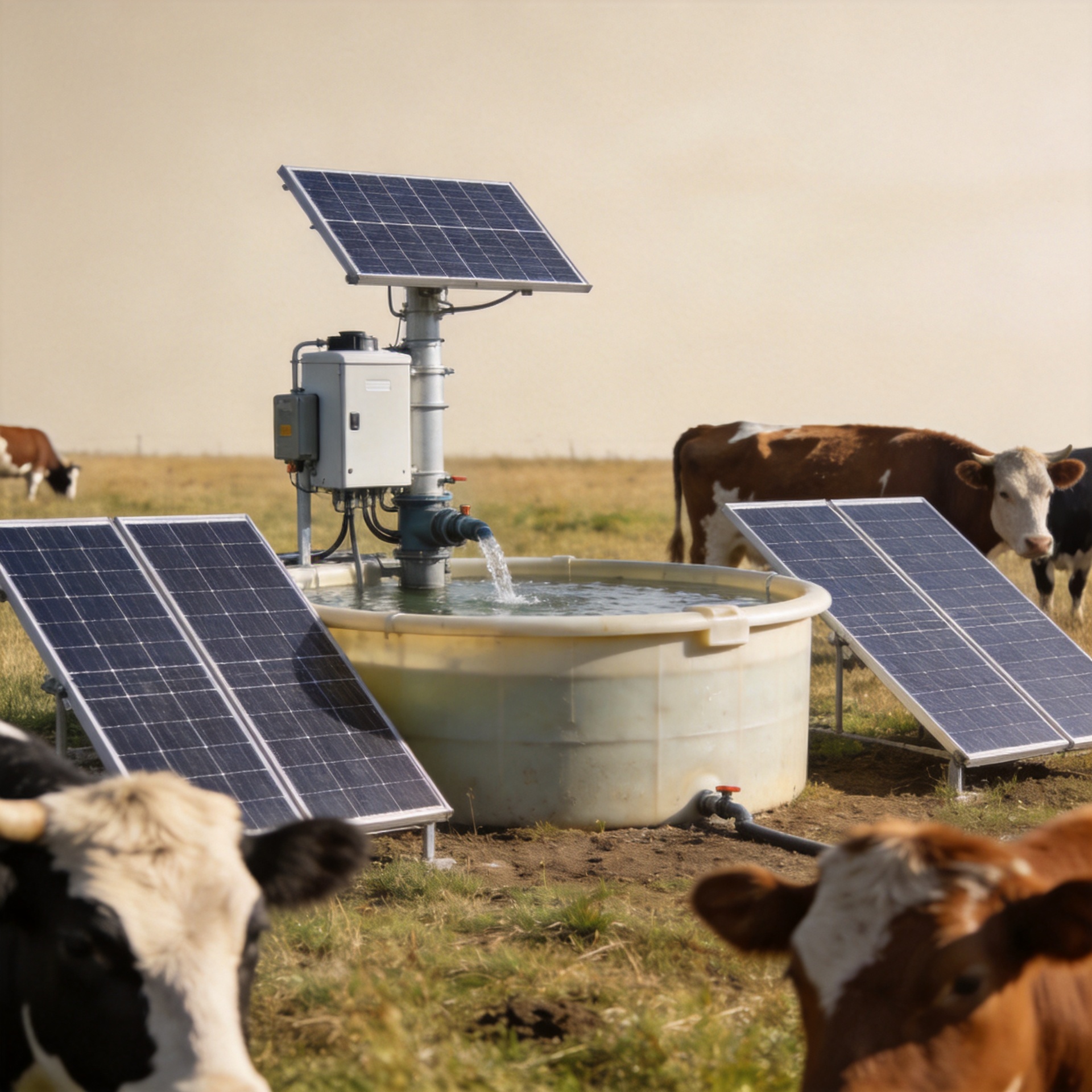
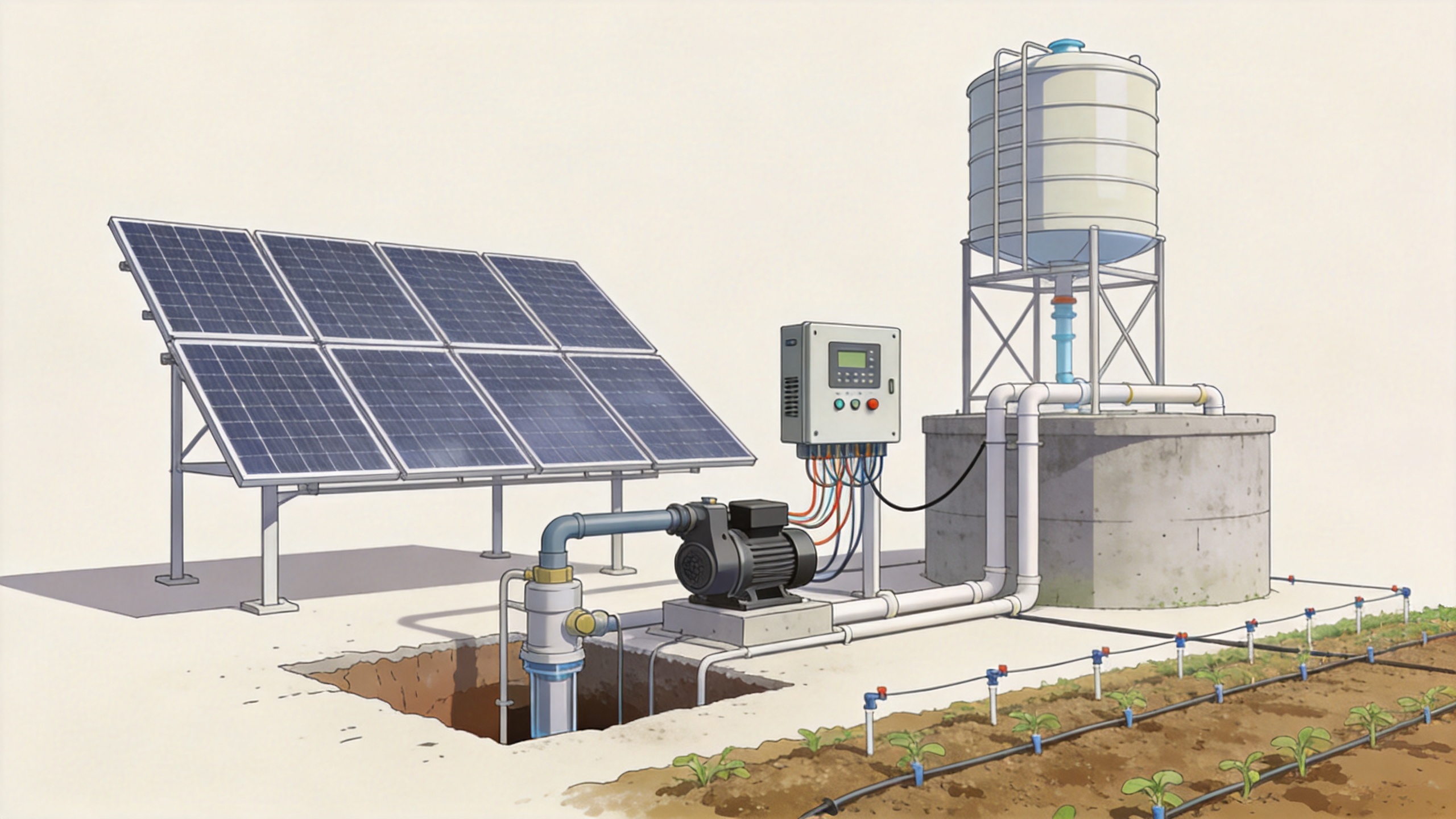
A solar irrigation system normally connects a photovoltaic (PV) array, mounting structure, controller, pump, water storage or delivery point, and distribution network. The pump matters, but every component must be compatible with the same hydraulic duty. Use the following checklist before asking suppliers to size a solar pump system for agriculture.
Start with the water duty—not the catalog
The first procurement question is: how much water must reach the field, where, and during which part of the day? Record the daily irrigation volume, required flow rate, crop area, irrigation method, water source, and likely seasonal peak. Then document the vertical lift from the water level to the delivery point, the pipe length and diameter, and important bends or valves. These inputs determine total dynamic head (TDH), which is more useful than choosing by motor rating alone.
Move from a single performance number to the whole water path. A larger pump is not automatically a safer choice if the head, pipe friction, or available solar hours have not been confirmed. Ask the supplier to state the assumed flow, head, water-source level, and daily operating window in the quotation.
1. Pump and motor: match the water source and duty
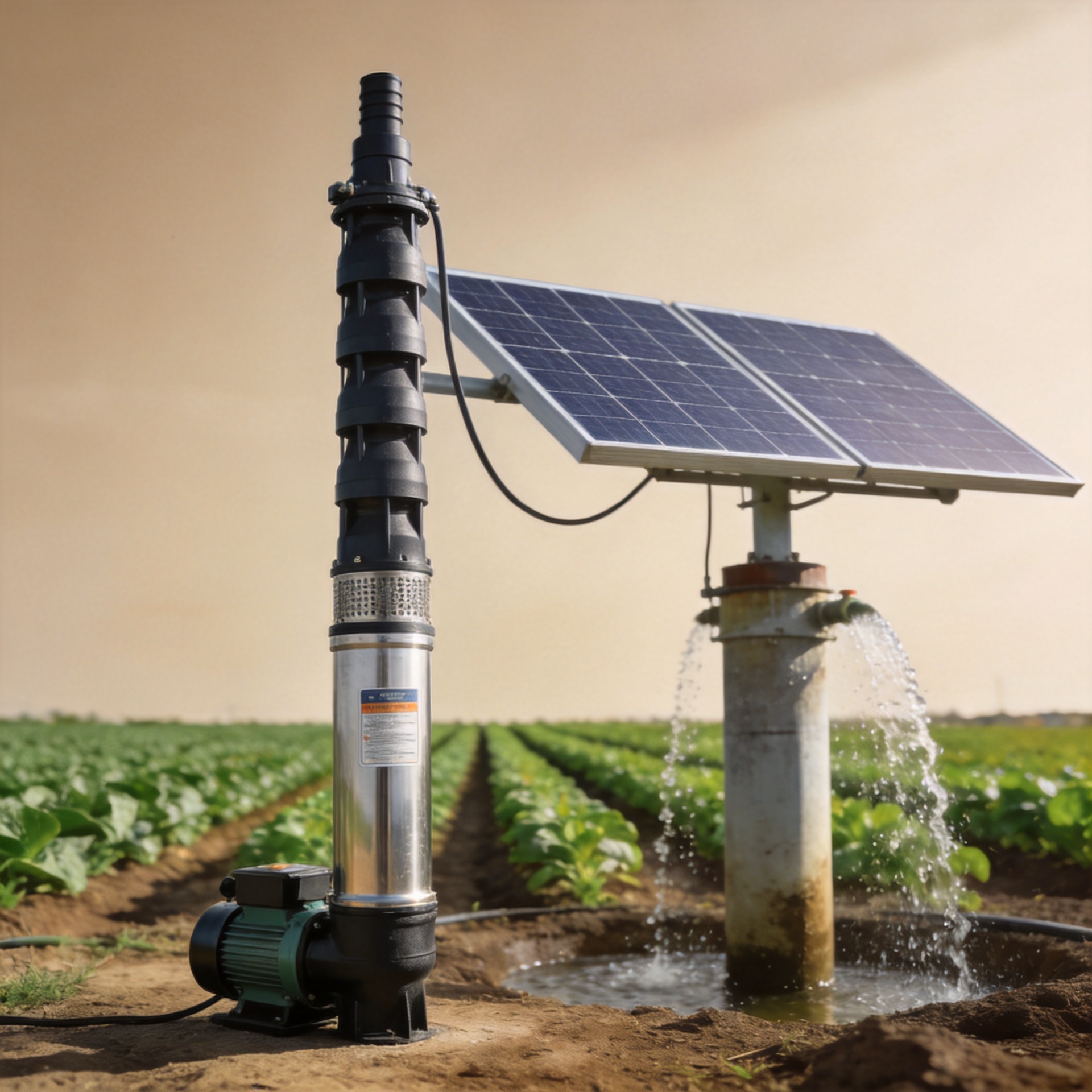
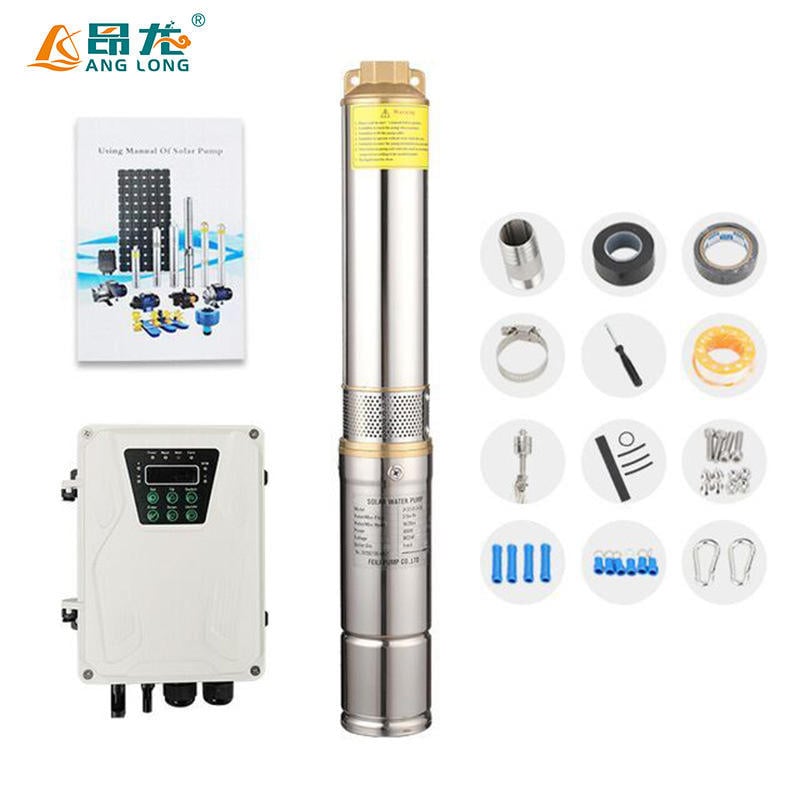
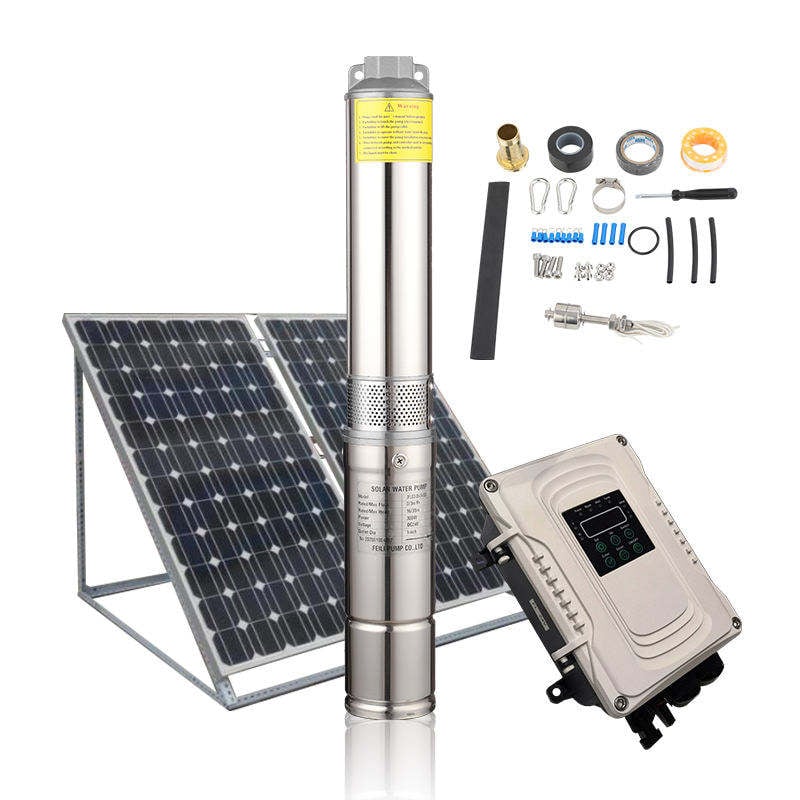
Choose the pump type only after defining the source. A submersible design may suit a borehole or deep well, while a surface pump may suit a pond, canal, or shallow source when suction conditions are acceptable. The buyer’s checklist should request a pump curve, recommended operating range, motor voltage, cable requirements, and any stated protection for low-water or dry-running conditions.
For example, Angdong’s catalog includes a solar submersible pump for agricultural irrigation and deep-well applications. It can be a relevant product category to review when the water source is a well, but its suitability should still be confirmed against the actual duty point and installation details.
- Confirm: source type, static water level, expected drawdown, and water quality.
- Request: flow-head curve, operating voltage, cable length, and installation instructions.
- Clarify: whether the pump will feed the field directly or fill a storage tank first.
2. PV array and mounting: size for water delivery during available sun
PV modules provide the energy, but their capacity should be matched to the pump/controller combination and the site’s solar resource—not selected as an isolated wattage target. Ask for the proposed module quantity, module rating, array wiring configuration, mounting angle, structural arrangement, and the design assumptions used for seasonal sunlight and daily water volume.
Fixed mounting is often the simpler option, while tracking or hybrid arrangements add system considerations. The right comparison is not “more panels versus fewer panels”; it is whether the array can help the system deliver the planned water volume during the relevant irrigation period. Confirm shading risks, cleaning access, cable routing, grounding, and lightning protection as part of the same review.
3. Controller and electrical protection: make the components communicate
The controller links variable PV output to the pump. In a solar water pump system for agriculture, it may manage starting, speed variation, low-light operation, and protection functions depending on the configuration. Some solar irrigation guidance notes that MPPT and related control features can improve operation when sunlight changes, but buyers should request the exact controller functions rather than assume they are included.
| Controller question | Why it belongs in the RFQ |
|---|---|
| Is the controller compatible with the proposed pump and PV input? | Prevents a component-level quotation from becoming a system-level mismatch. |
| Which protections are specified? | Clarifies overload, dry-run, low-water, reverse-polarity, or surge provisions where applicable. |
| How will irrigation be controlled? | Confirms whether the system uses a tank level, pressure, flow, timer, or manual operating logic. |
| Is backup power required? | Separates a direct solar arrangement from a battery, grid, or generator-assisted design. |
4. Water storage: consider storing water before specifying batteries
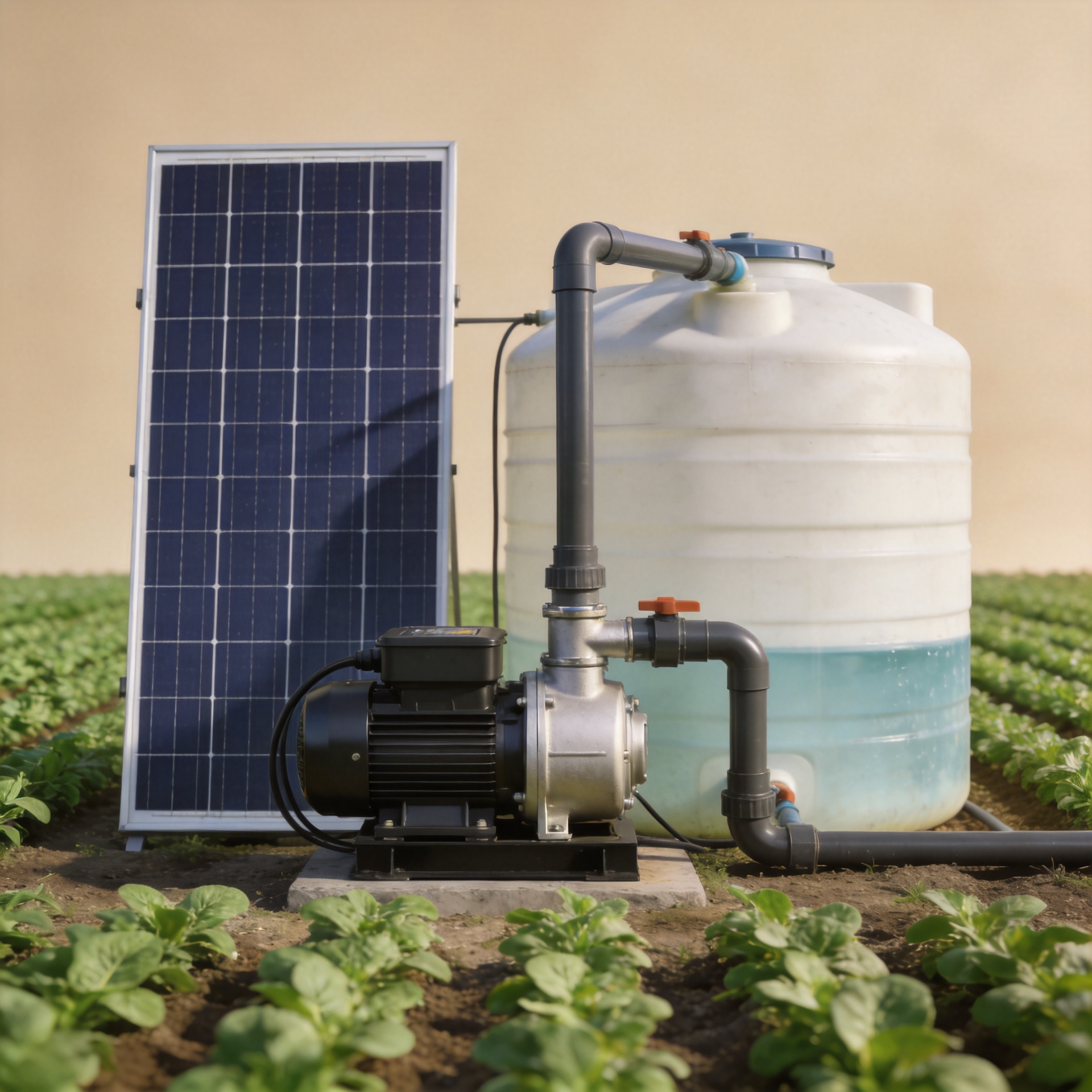
Storage is a system decision, not an accessory. An elevated tank or reservoir can let the pump move water while solar energy is available and let irrigation occur later through gravity or a separate pressure arrangement. This can reduce the need for battery storage in some designs, while other sites may need batteries or hybrid power because of nighttime demand, cloudy periods, pressure requirements, or operating continuity.
Do not treat a tank as a generic add-on. Confirm the usable volume, elevation, foundation, overflow, inlet/outlet connections, water quality requirements, and the pressure needed at the furthest field point. A farm irrigation solar submersible pump system with battery is a useful category to compare when backup energy is part of the project brief; ask the supplier to distinguish confirmed included components from optional accessories.
5. Pipes, valves, filters, and irrigation distribution: protect the designed duty
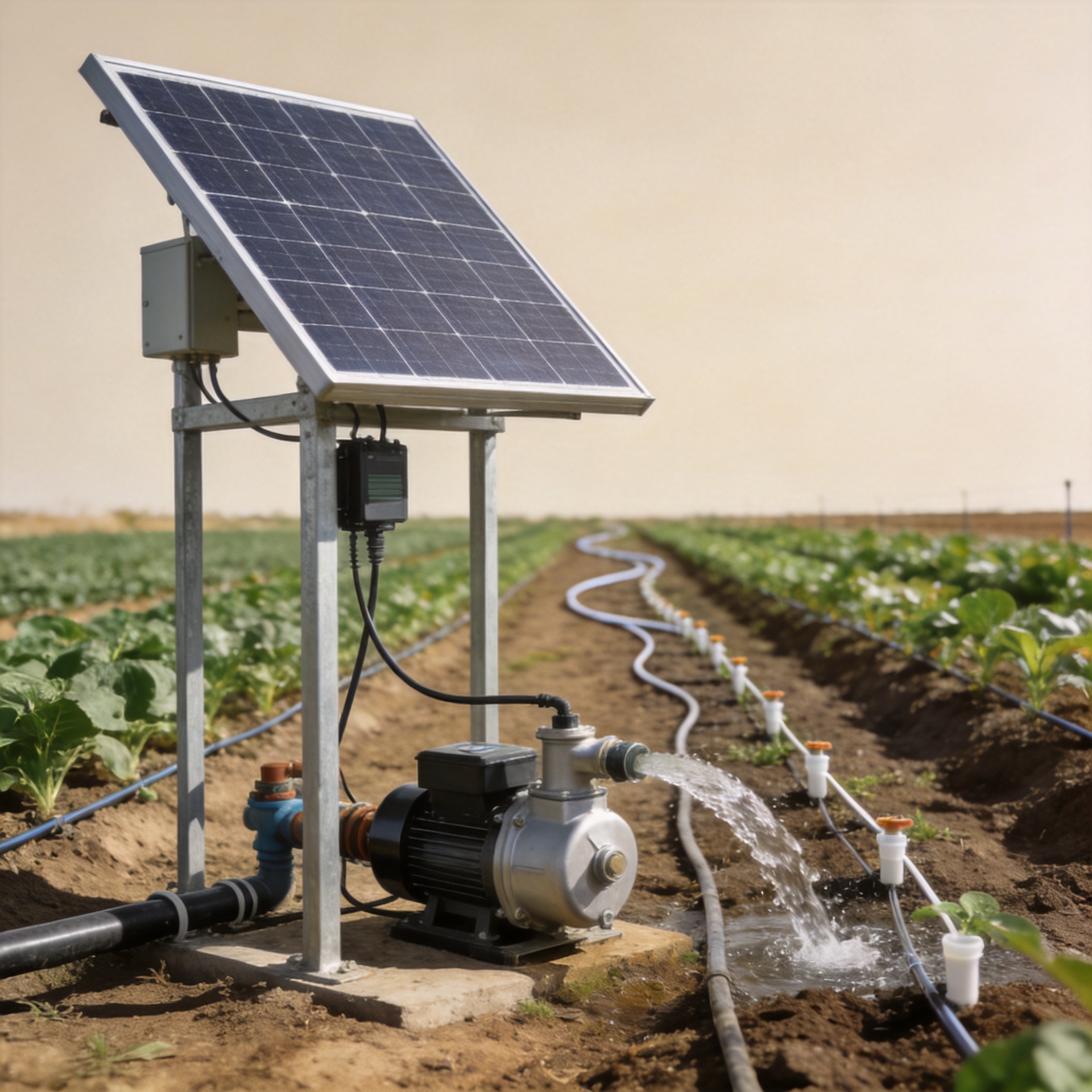
The distribution network determines whether water delivered by the pump reaches each zone at a usable flow and pressure. Include mainline and lateral pipe sizes, total route length, elevation changes, isolation valves, non-return valves, filters, pressure regulation, and the chosen irrigation method in the RFQ. Drip, sprinkler, flood, and tank-fed layouts impose different pressure and filtration needs.
A common planning mistake is to specify the pump before confirming the pipe route. Check the route from source to storage or field, including bends, elevation changes, and maintenance access. If filtration or fertigation is planned, ask how these components affect pressure loss and controller logic.
6. Documents and commercial checks to request before ordering
A comparable quotation should tell you what is known and what remains an assumption. Request a system schematic, component list with model numbers, pump curve, PV configuration, controller specification, wiring diagram, installation guidance, recommended spares, warranty terms, packing details, and commissioning support scope. For a wholesale purchase, also ask which technical details can be supplied for downstream resale or installer review.
- State the required daily water volume and peak irrigation window.
- Provide water-source level, lift, pipe route, and delivery-point elevation.
- Identify the irrigation method, field zoning, and required pressure.
- Ask for the pump curve and the proposed operating duty point.
- Ask for PV, controller, storage, and protection assumptions in writing.
- Confirm which pipes, valves, filters, fittings, cables, and mounting items are included.
- Request a drawing that shows source, pump, PV array, controller, storage, and field distribution together.
Turn the checklist into a clearer supplier comparison
The most useful solar water pump system for agriculture comparison is one that shows the same site assumptions for every supplier. Group each quote by hydraulic duty, pump and motor, PV array, controller, storage, distribution, protections, and documents. That makes omissions visible early and prevents a low initial equipment price from hiding missing system components.
Before final selection, revisit every recommendation that sounds precise but has no site data behind it. With a completed component checklist, a buyer can have a more productive technical discussion, request a matched solution, and create a clearer RFQ for the solar irrigation system.
Frequently asked questions
What components are needed for a solar water pump system for agriculture?
At minimum, review the PV array, mounting structure, compatible pump, controller, cabling and protection, delivery or storage arrangement, and irrigation pipes and controls. The final list depends on the water source, head, flow, field layout, and operating schedule.
Should an agricultural solar pump system use a battery?
Not necessarily. Some projects pump into water storage during sunlight hours and irrigate later. A battery or hybrid source may be relevant where pumping must continue without sun, where pressure requirements demand it, or where the project brief requires backup operation.
What information should I send to a solar pump supplier?
Provide the water source, water level, required flow and daily volume, total lift, pipe route, irrigation method, field layout, location, seasonal operating conditions, and any storage or backup-power requirement.