 EN
Solar Water Pump with Battery Backup: How Off-Grid Water Storage Works
A solar water pump with battery backup is often discussed as a way to keep water available after the sun drops or clouds move in. That description is useful, but incomplete. In an off-grid water system, reliable supply usually comes from two forms of reserve: electrical energy in the battery and usable water in a storage tank. Understanding how they work together helps farms, remote facilities, and water projects avoid sizing a pump around a single sunny-hour assumption.
For overseas buyers planning irrigation or remote water distribution, the practical question is not simply “How large should the battery be?” More accurately, it is whether the panels, controller, battery, pump, pipework, and tank fit the daily water demand and the site’s lift. This is a selection framework, not a final engineering specification; local solar conditions, water-source behavior, and the pump curve still need confirmation.
What a Solar Water Pump with Battery Backup Does
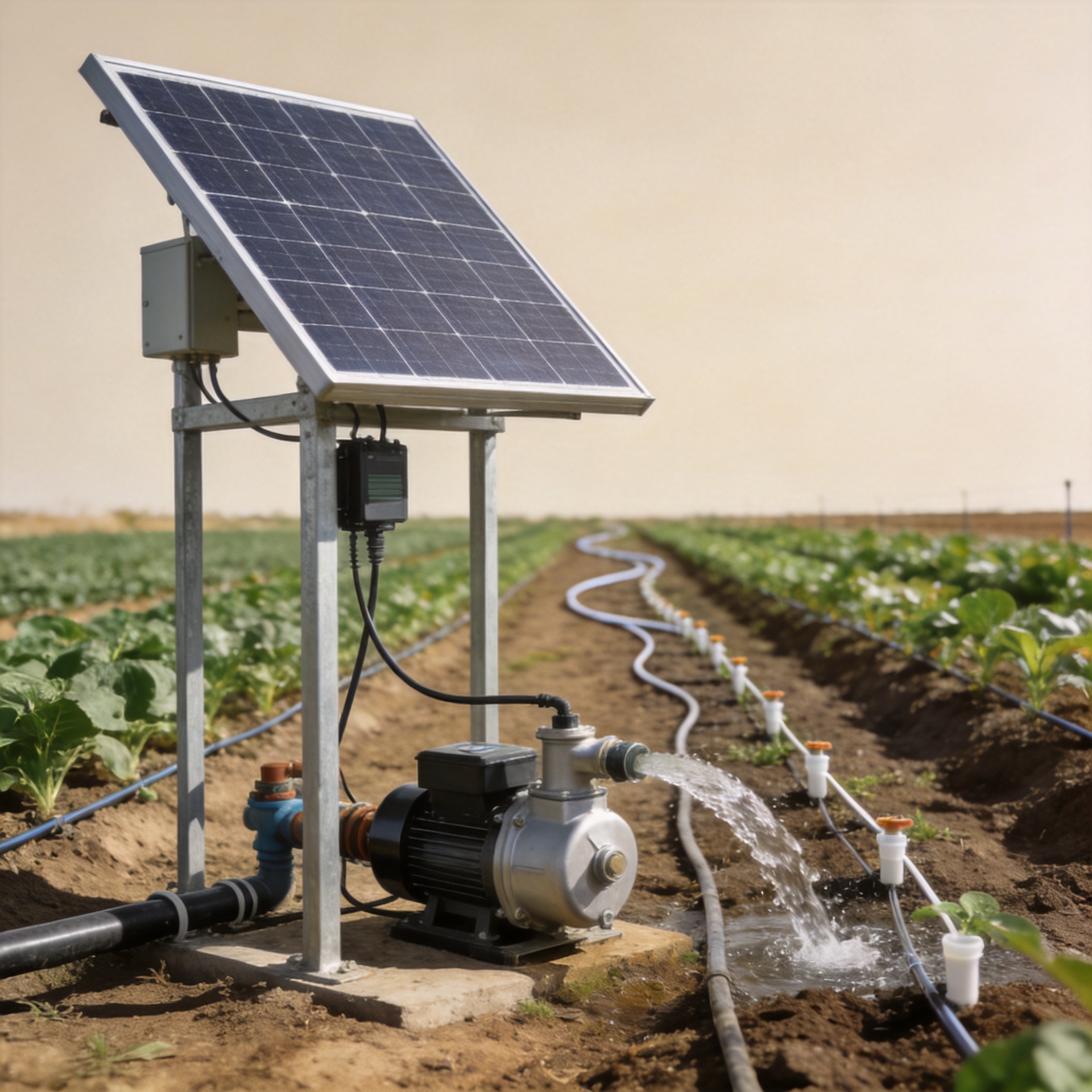
A solar water pump converts electricity from photovoltaic panels into water movement. In direct daylight, the panels can supply the pump through a controller. When the system includes a battery, surplus power may charge the battery while the pump is running or when pumping demand is lower. The controller manages charging, protects the battery, and regulates the power delivered to the motor.
Later, when solar input falls below the pump’s requirement, the controller may draw from the battery. That is the basic operating logic of a solar powered water pump with battery backup: panels generate power, the controller allocates it, the battery stores part of it, and the pump transfers water.
Battery backup does not automatically mean continuous pumping all night. Runtime depends on usable battery capacity, pump input power, controller losses, temperature, and the control settings. A system intended to move water only during planned windows may need a very different battery strategy from one expected to maintain pressure or refill a tank after sunset.
Why the Water Tank Is Often the Main Backup
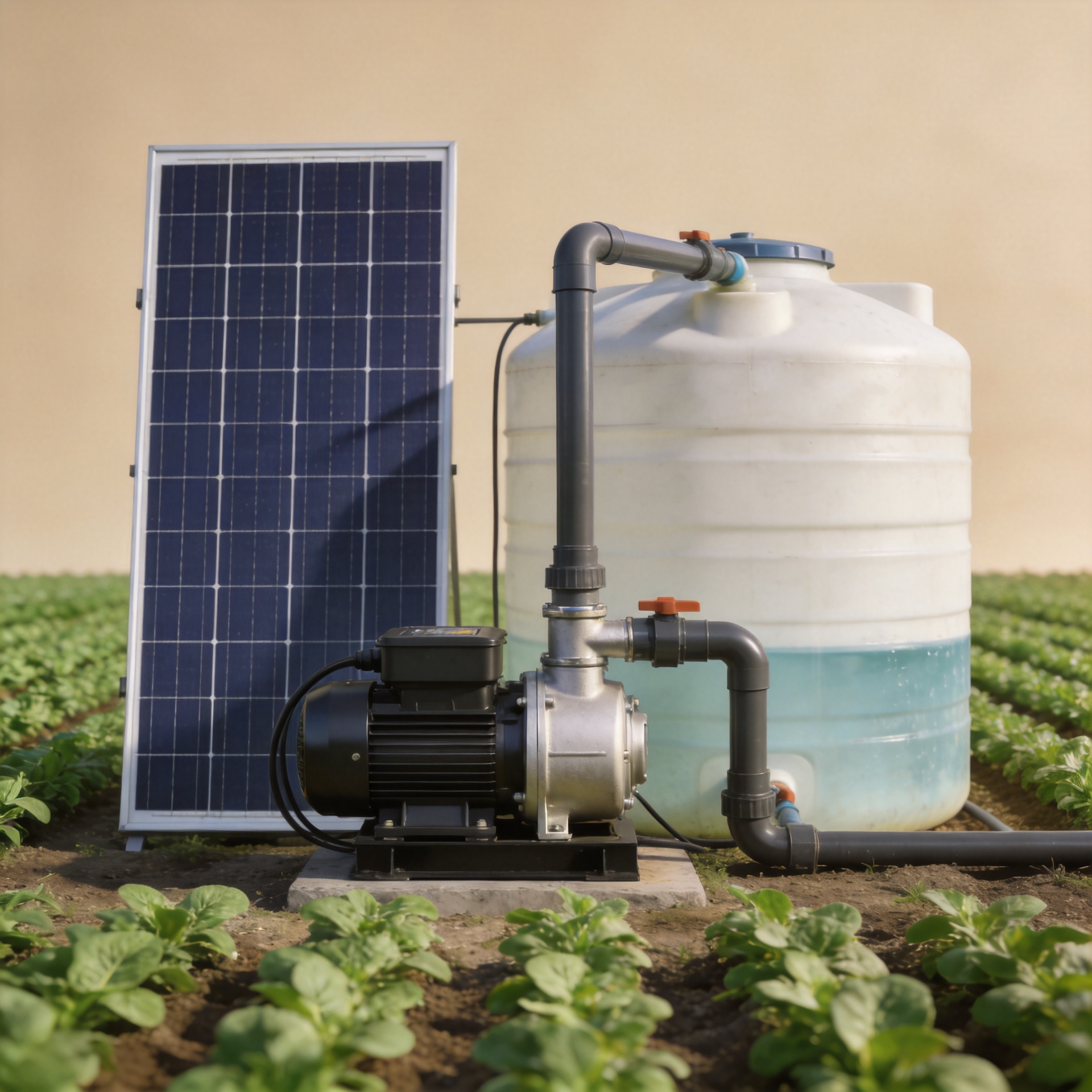
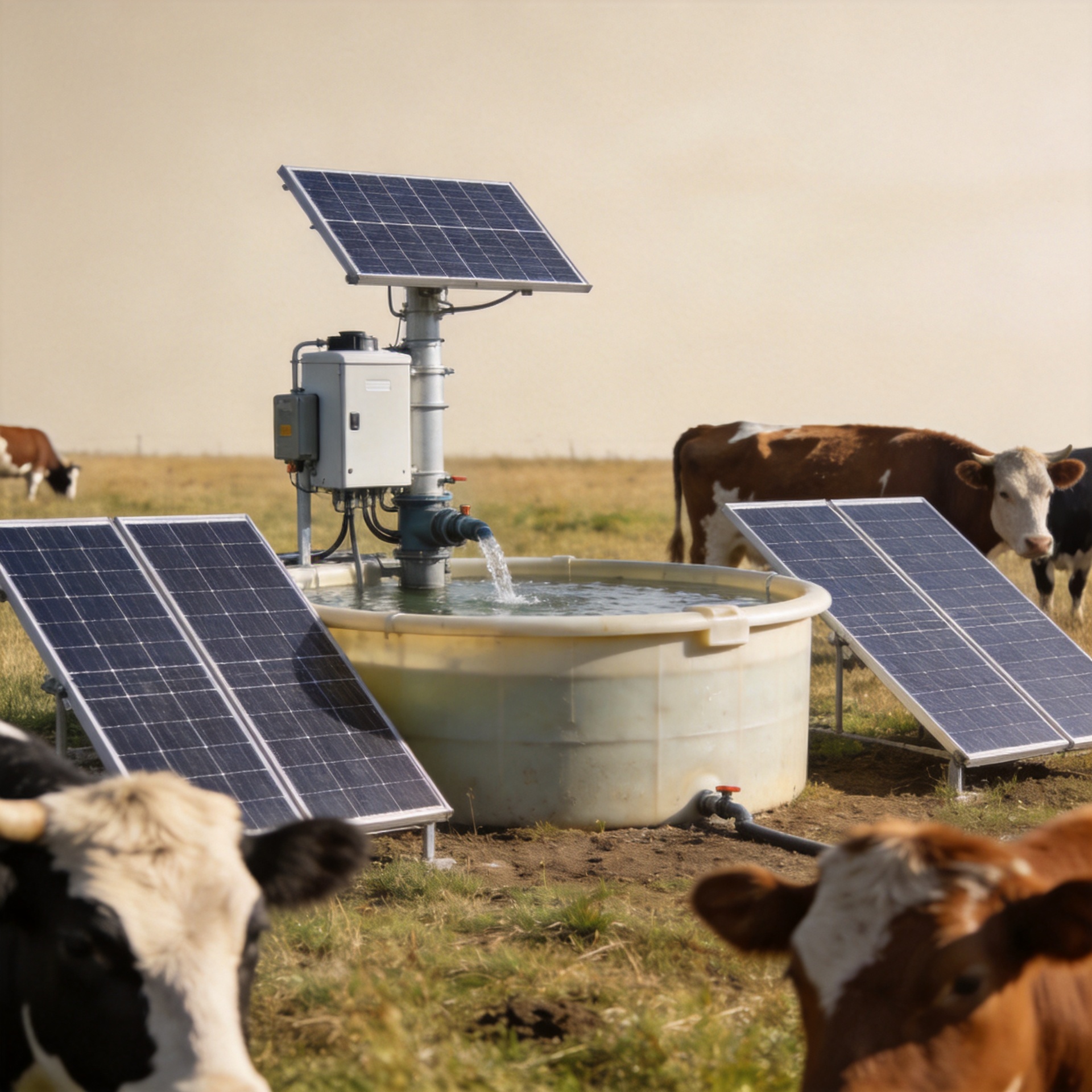
In off-grid pumping, storing water can be as important as storing electricity. A tank filled during strong sunlight becomes a hydraulic reserve: water can be released later by gravity or by a separate distribution arrangement. This can reduce the need to run the main pump whenever a tap, trough, or irrigation zone calls for water.
That is where the system becomes more practical. Rather than sizing a solar water pump with battery backup to cover every hour of demand electrically, many projects first determine how much water must be available between pumping periods. The tank then provides a buffer during low irradiance, overnight use, or short-term interruption.
| Reserve type | What it stores | Primary purpose | Key sizing questions |
|---|---|---|---|
| Battery backup | Electrical energy | Operate controls or the pump when solar input is insufficient | Pump power, required runtime, allowable discharge, charging window |
| Water storage tank | Usable water | Supply water after pumping pauses | Daily demand, autonomy period, delivery method, tank elevation |
Both reserves can be useful. The trade-off is that increasing battery capacity may add electrical storage and battery-management requirements, while increasing tank capacity changes civil works, space, structural support, and water-quality management. The right balance depends on the site.
How the Components Work Together
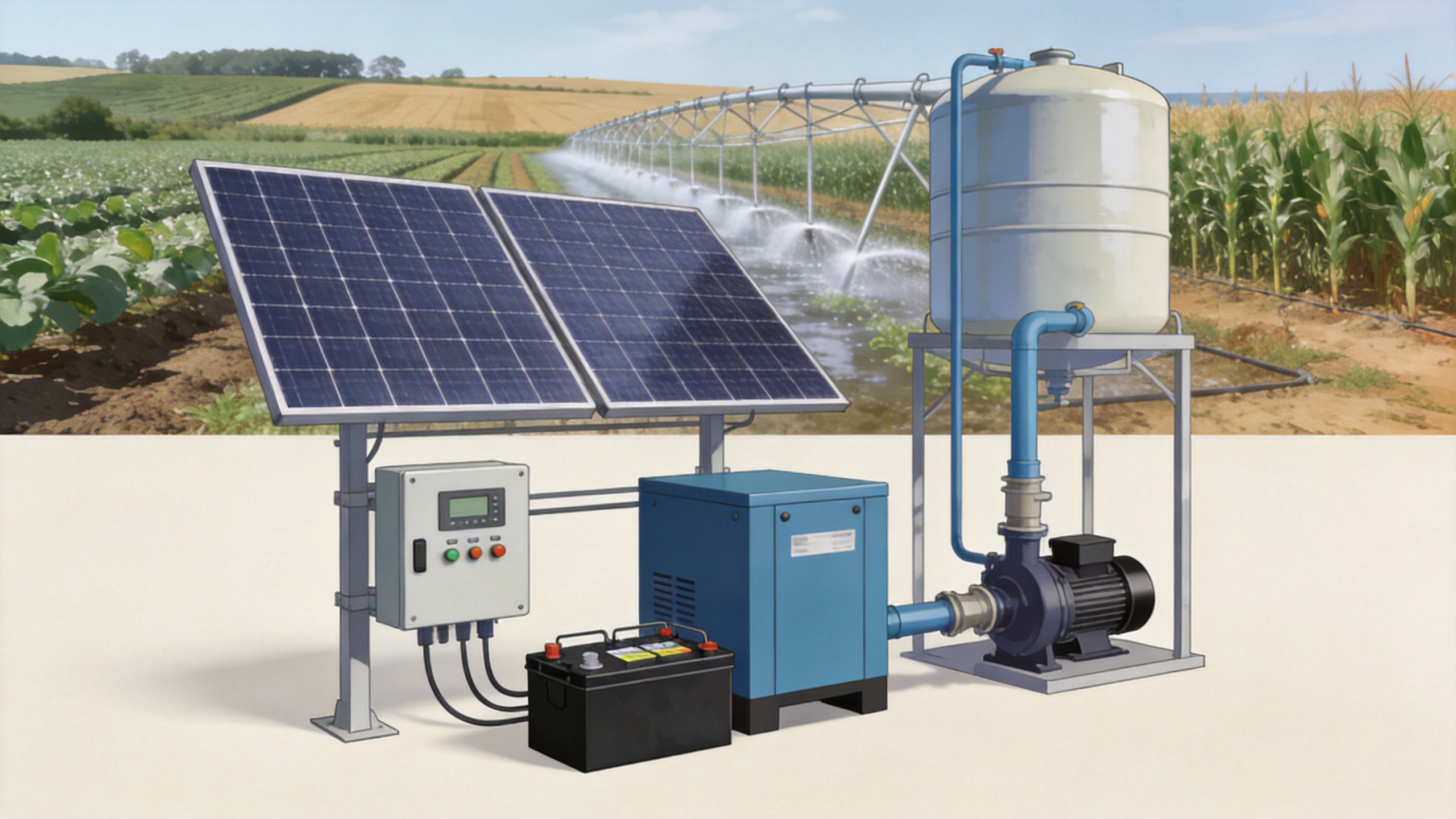
A typical off-grid arrangement follows this sequence:
- Solar panels capture available sunlight and produce DC electricity.
- A pump controller matches available power to the pump, manages start/stop behavior, and, where fitted, coordinates battery charging and discharge.
- The battery bank holds electrical energy for defined backup duties.
- The water pump lifts or transfers water from a borehole, reservoir, surface source, or cistern.
- Pipework and valves carry water to the tank and control flow.
- The storage tank receives water when pumping conditions are favorable; level controls can stop pumping at the upper set point and request water again at the lower set point.
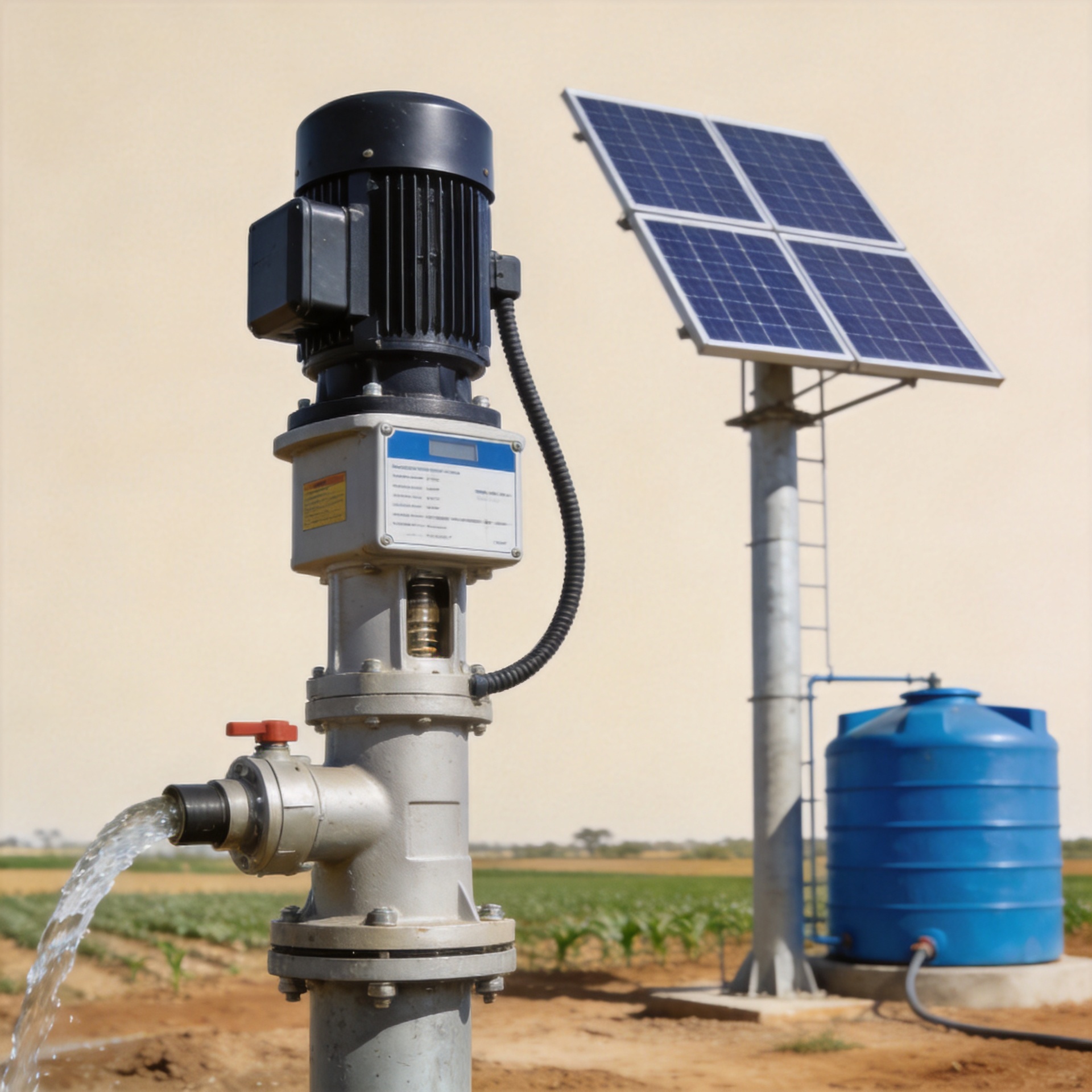
For example, a farm may pump into an elevated tank during the most productive solar hours. The tank then serves livestock points or irrigation storage later. A battery can support a controlled refill cycle when it is genuinely needed, but it should not be treated as a substitute for checking water demand and tank autonomy.
Start with Water Demand and Total Dynamic Head
Before comparing a solar water pump with battery backup, define the water job. Start with the volume needed per day and the period when that water must be available. Then map the pumping path: the water level at the source, vertical lift to the tank or discharge point, pipe length, pipe diameter, fittings, and the desired flow rate.
These inputs contribute to total dynamic head (TDH). TDH is more than the vertical distance from the pump to the tank; it also includes friction losses in pipework and fittings. A pump that looks adequate by horsepower alone can still miss the required flow when the real head is higher than expected.
- Confirm the lowest expected water level, not only the static source depth.
- Calculate the daily water requirement and the peak delivery window separately.
- Include elevation, horizontal pipe runs, fittings, filters, and valves in the hydraulic review.
- Check the selected pump curve at the expected flow and TDH.
- Plan for the critical season: low solar availability may coincide with a period of higher water demand.
If the system is for year-round use, designing from a favorable summer day can create a misleading picture. A conservative review considers the lower-sun period and the highest relevant water requirement, then confirms whether the array, pump, tank, and backup plan still fit together.
When Battery Backup Makes Sense—and When More Tank Storage May Be Better
Battery backup is particularly useful when a pump must run outside the strongest solar window, when the controller and monitoring system need continuity, or when a short refill event is important. It can also provide operational flexibility where brief weather changes would otherwise stop pumping too quickly.
However, a larger tank may be the more direct resilience measure when water can be pumped earlier and distributed later. It separates water availability from the exact moment the main pump receives electricity. For many off-grid projects, the decision is not battery versus tank; it is deciding how much each reserve should contribute.
Ask these questions before requesting a final configuration:
- How many litres or gallons are needed daily, and how variable is that demand?
- How long should the site have water if sunlight is weak?
- Must the main pump operate after dark, or can stored water serve the load?
- What is the actual TDH at the intended flow rate?
- Can the tank be elevated for gravity distribution, or is a pressure system required?
- What low-water, high-water, dry-run, and overflow protections are required?
Configuration Details Worth Checking with a Supplier
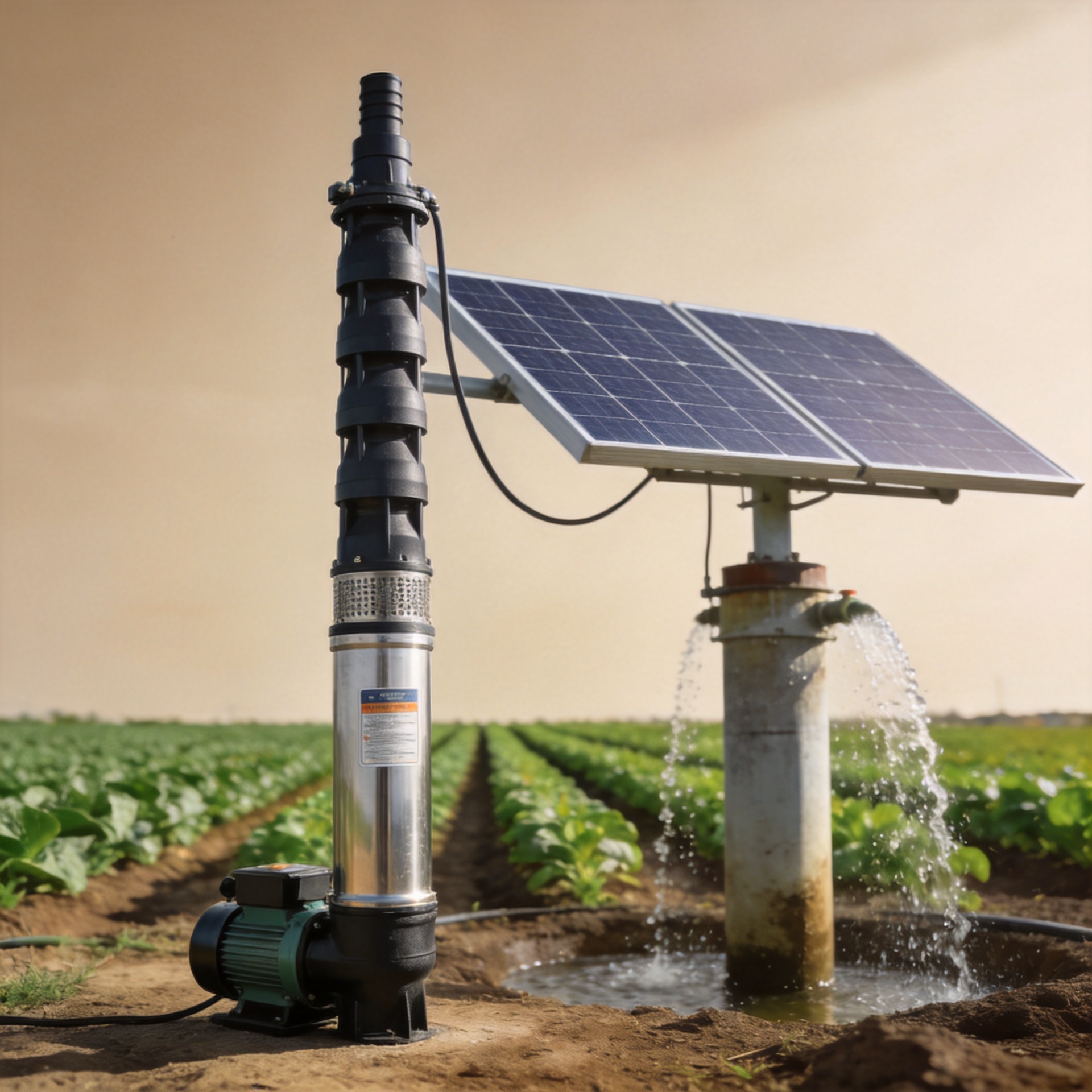
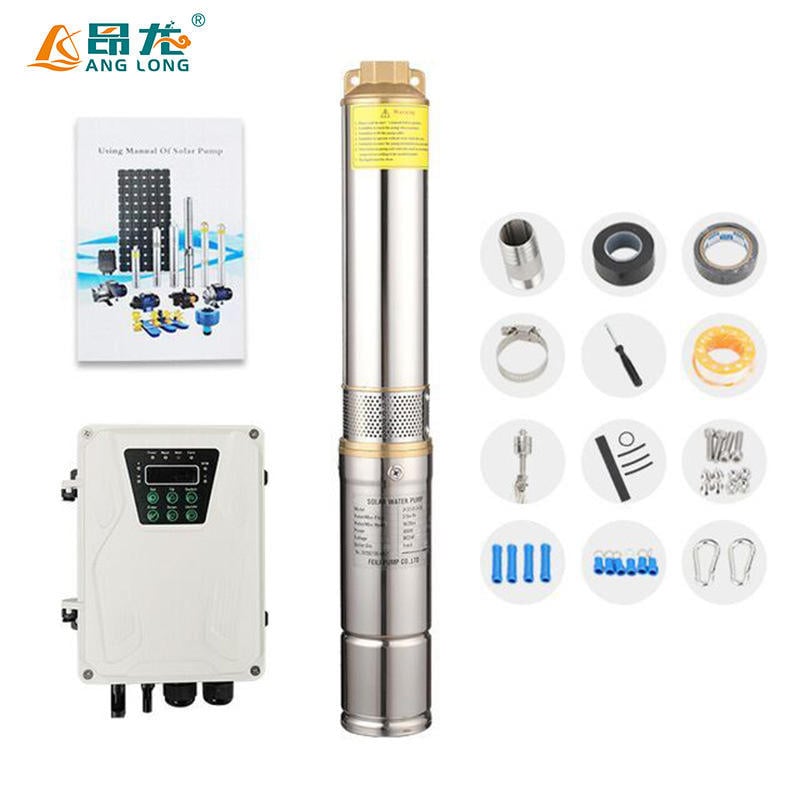
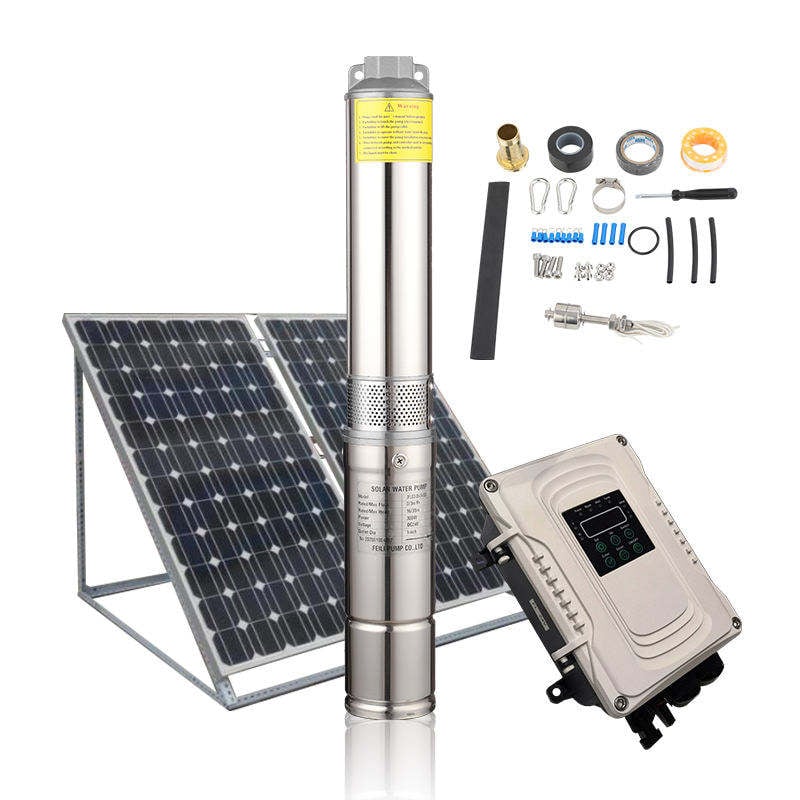
The product label alone cannot answer these site questions. When reviewing a solar-powered submersible option, request the pump curve, input-voltage range, controller compatibility, recommended PV configuration, battery operating limits, cable guidance, and the control logic for tank levels and dry-run protection. Also confirm the water source quality and the installation environment.
As a starting point for an irrigation-focused discussion, review the available solar water pumps for farm irrigation with a DC submersible pump and battery. The final selection should still be matched to documented flow, TDH, solar resource, and water-storage requirements rather than inferred from a product name.
In planning conversations, this is often the point worth checking twice: a battery-sized estimate without a tank plan can overstate electrical backup needs, while a tank-sized estimate without a pump-curve review can leave the tank slow to refill.
A Simple Off-Grid Water Storage Checklist
Use this sequence to structure a first technical discussion:
- Record the daily water requirement and when water is used.
- Measure source conditions and calculate TDH, including friction losses.
- Choose a target pumping window based on the solar resource and season.
- Set tank capacity around the desired water-side reserve.
- Define the electrical backup duty: controls only, short pumping periods, or longer operation.
- Verify the pump curve, panel arrangement, controller, battery limits, and level-protection logic as one system.
A solar water pump with battery backup is more reliable when it is designed as part of an off-grid water-storage system, not as an isolated pump-and-battery package. By treating the tank as a deliberate reserve and the battery as a targeted electrical buffer, buyers can ask clearer questions and build a more resilient water-supply plan.