 EN
Submersible Sewage Pumps: Types and Applications Explained
Submersible sewage pumps move wastewater while the pump and motor operate below the liquid surface. For facility managers, contractors, and wholesale buyers, that sealed, submerged arrangement can simplify wet-well installation and reduce priming concerns. The right choice, however, is not simply the largest unit available. Submersible sewage pumps must match the liquid, the solids, the duty point, and the layout of the pumping station.
This overview explains the common types of submersible sewage pumps, where each type fits, and the basic questions worth answering before a specification is issued. It is intended as practical category guidance rather than a substitute for a project hydraulic calculation or a manufacturer’s current data sheet.
What Makes a Sewage Pump “Submersible”?
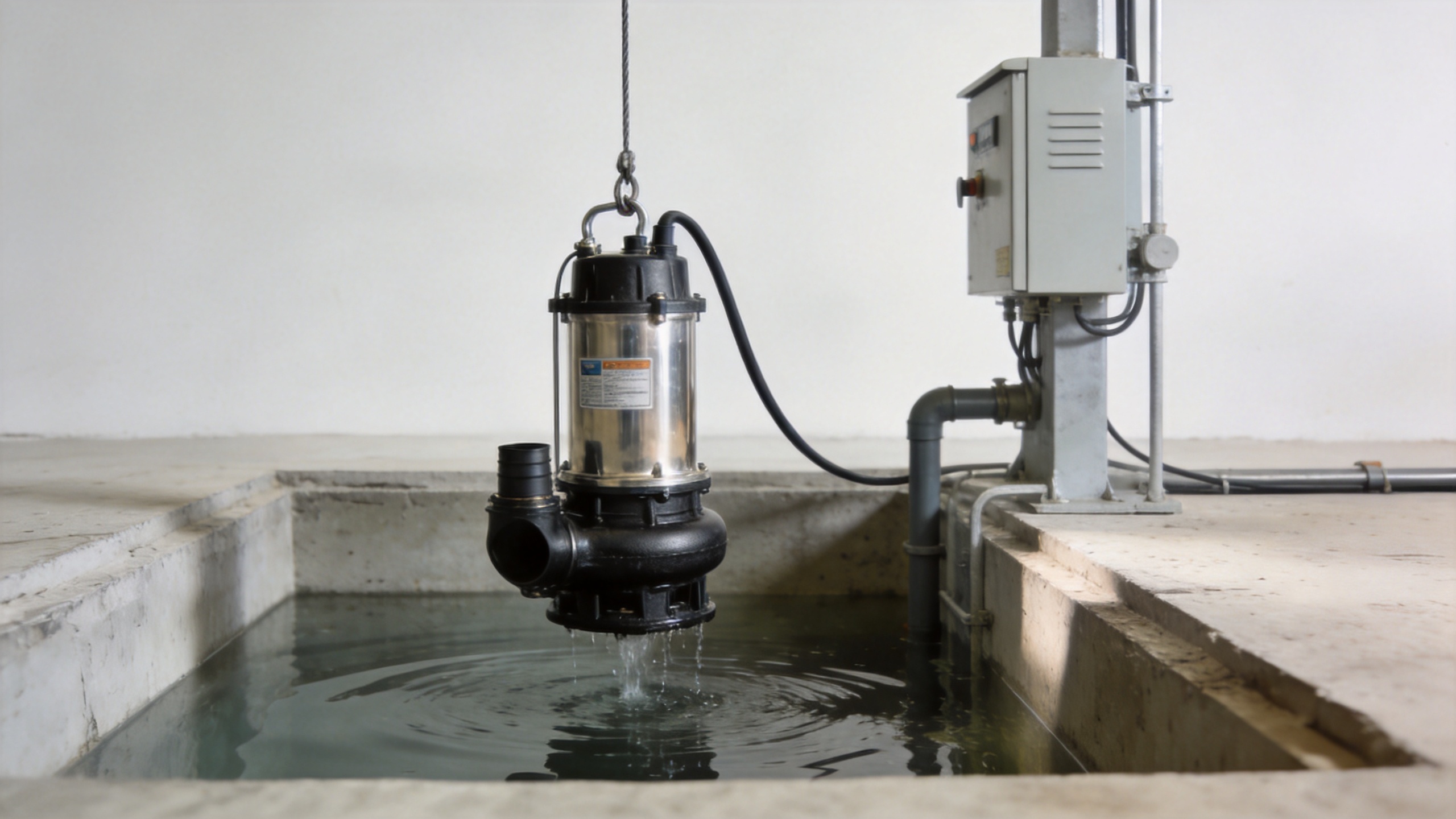
In submersible sewage pumps, the motor is sealed as part of the pump assembly and is designed to work under the wastewater level. The surrounding liquid can help with cooling in the intended installation, while a compact arrangement avoids the need for a separate dry-mounted drive above the basin. These pumps are commonly used in lift stations, building sewage pits, septic-related transfer duties, drainage systems, and industrial wastewater collection.
“Sewage” still covers a wide range of liquids. One system may carry domestic wastewater with soft solids; another may include fibrous material, process water, grit, or intermittent surges. That is why submersible sewage pumps should be evaluated by the fluid and system conditions, not by nameplate power alone.
Common Types of Submersible Sewage Pumps
Non-clog sewage pumps
Non-clog submersible sewage pumps are built around an impeller and passage arrangement intended to pass specified solids with a lower chance of blockage. They are a common starting point for municipal-style collection, commercial buildings, and wastewater duties where solids are expected but cutting is not necessarily required. The important comparison point is the manufacturer-stated solids passage and the actual material entering the basin. Fibers, wipes, and debris can behave very differently from a simple spherical solids test.
Vortex sewage pumps
A vortex design uses a recessed impeller to create a swirling flow path. Because much of the liquid passes through the casing rather than directly across the impeller, vortex submersible sewage pumps are often considered where suspended solids or delicate solids need extra clearance. The trade-off can be hydraulic efficiency compared with other designs, so buyers should compare the operating point on the published performance curve rather than assuming one impeller style will suit every duty.
Cutter and grinder pumps
Cutter or grinder submersible sewage pumps use a cutting mechanism to reduce certain stringy or difficult materials before pumping. They can be useful where the discharge line is relatively small or where the incoming waste is likely to contain fibers. A cutter is not a license to ignore the inlet conditions: abrasive grit, unsuitable debris, and poor maintenance access still affect reliability. These products should be specified for the material they are designed to cut, with service requirements discussed early.
Effluent pumps
Effluent pumps handle relatively clarified wastewater, such as liquid leaving a septic tank for a downstream transfer or dispersal stage. They are related to submersible sewage pumps but should not be treated as interchangeable with pumps intended for raw sewage. If solids are present upstream, a more appropriate solids-handling design may be needed.
Where These Pumps Are Used
Submersible sewage pumps appear wherever gravity drainage cannot move wastewater to the next point. Typical examples include:
- Residential and commercial building pits below the main sewer level.
- Municipal lift stations that transfer collected wastewater to treatment or a higher-elevation main.
- Factories and workshops collecting compatible process wastewater before treatment.
- Hotels, farms, and remote sites where wastewater must be moved from a basin to a treatment or discharge stage.
- Septic-related effluent transfer, where the liquid characteristics match an effluent-duty pump.
Application context determines the selection. A basement sewage pit with intermittent domestic flow does not impose the same demands as a continuously loaded industrial sump. For readers reviewing product categories, this submersible electric sewage water pump for wastewater is an example of a product page to review alongside the actual duty requirements and current technical documentation.
How to Match the Pump to the Job
A reliable selection process starts with the system, then narrows the type of submersible sewage pumps. Collect these inputs before comparing models:
| Selection input | Why it matters |
|---|---|
| Liquid and solids | Helps determine whether a non-clog, vortex, cutter, grinder, or effluent configuration is appropriate. |
| Required flow | Defines how quickly the basin must be emptied at normal and peak inflow. |
| Total dynamic head | Combines vertical lift, pipe friction, fittings, and discharge conditions; it sets the real operating point. |
| Solids passage and fiber risk | Guides casing, impeller, and cutting requirements and reduces avoidable clogging risk. |
| Power supply and controls | Influences motor choice, protection, float control, alarms, and backup planning. |
| Materials and environment | Supports corrosion resistance, seal selection, cable suitability, and service life in the actual fluid. |
Flow and head must be considered together. A pump that provides a high flow near zero head may not deliver the needed flow once the discharge pipe, elevation, valves, and fittings are included. For this reason, submersible sewage pumps should be checked at the projected duty point on a current performance curve.
Installation and Maintenance Basics
Good pump selection can still be undermined by a poor basin or discharge layout. Size the wet well to limit excessive starts, provide adequate inlet conditions, and keep access safe for inspection. Check that guide rails, lifting hardware, discharge connections, and isolation valves suit the selected configuration. In critical stations, duplex arrangements, alarms, and emergency power may be part of the overall reliability plan.
Routine maintenance for submersible sewage pumps should focus on the actual operating environment: inspect cables and seals, verify float or level controls, remove accumulated debris where safe, and compare operating current and run time with expected conditions. A sudden change may indicate blockage, wear, valve issues, or an altered system curve. Follow the manufacturer’s instructions and site safety procedures before servicing equipment in a wastewater environment.
A Practical Starting Point
Submersible sewage pumps are not one uniform category. Non-clog and vortex designs help address different solids conditions; cutter or grinder configurations address certain fibrous waste streams; and effluent pumps belong in clearer-liquid duties. Start with the wastewater characteristics, flow, total dynamic head, solids passage, installation arrangement, and maintenance plan. That approach gives a technical team a clearer basis for comparing submersible sewage pumps and requesting an appropriate configuration.