 EN
Surface vs Submersible Solar Pumps: How to Choose for Farms and Deep Wells
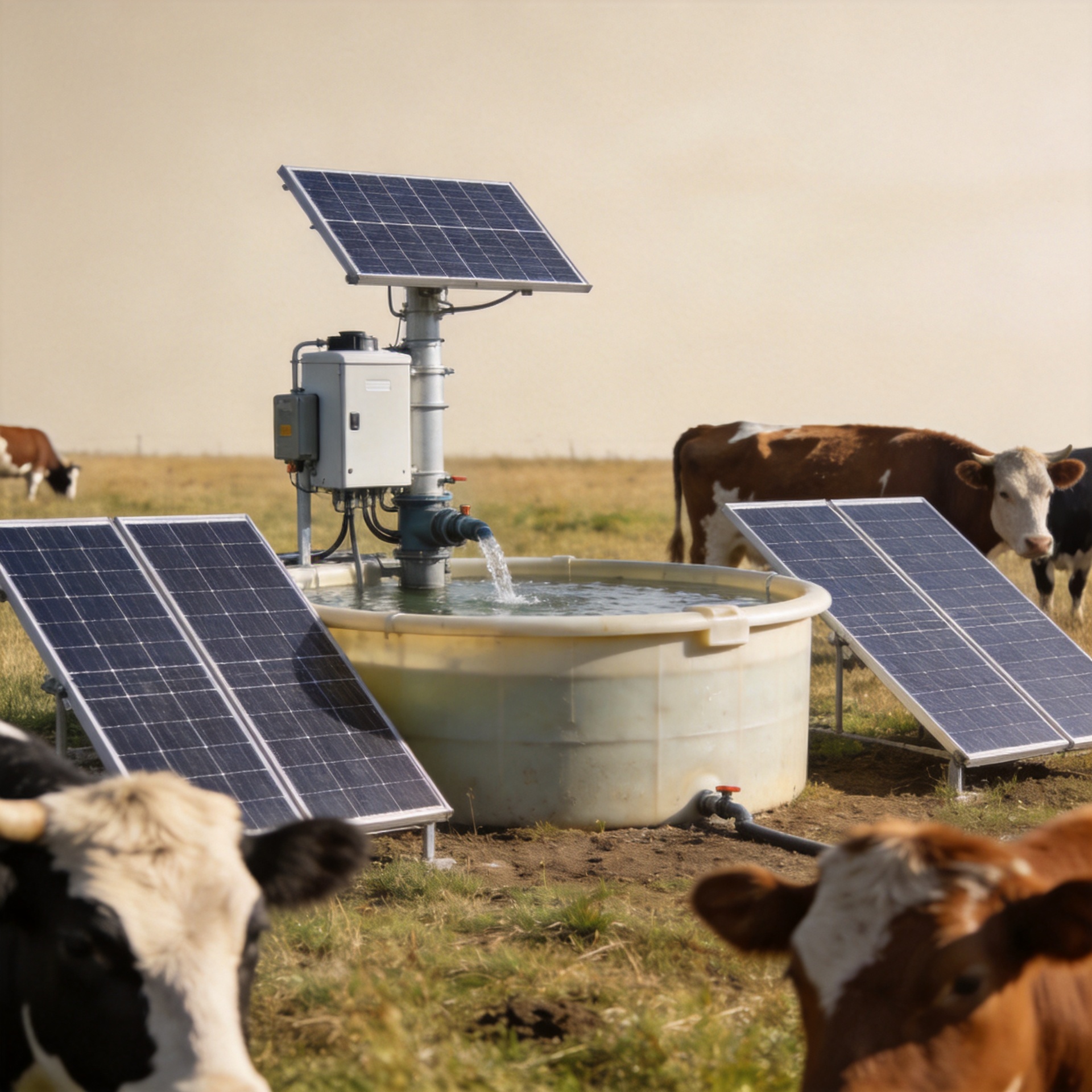
Choosing a solar powered water well system is less about picking the largest pump and more about mapping the water source, delivery point, and daily farm task. A surface unit and a submersible unit can both move water with solar energy, but they work from different positions in the system. For irrigation managers, livestock operators, and overseas buyers, the practical question is: where is the water level when the pump is running, and what pressure or elevation is needed after the water leaves the source?
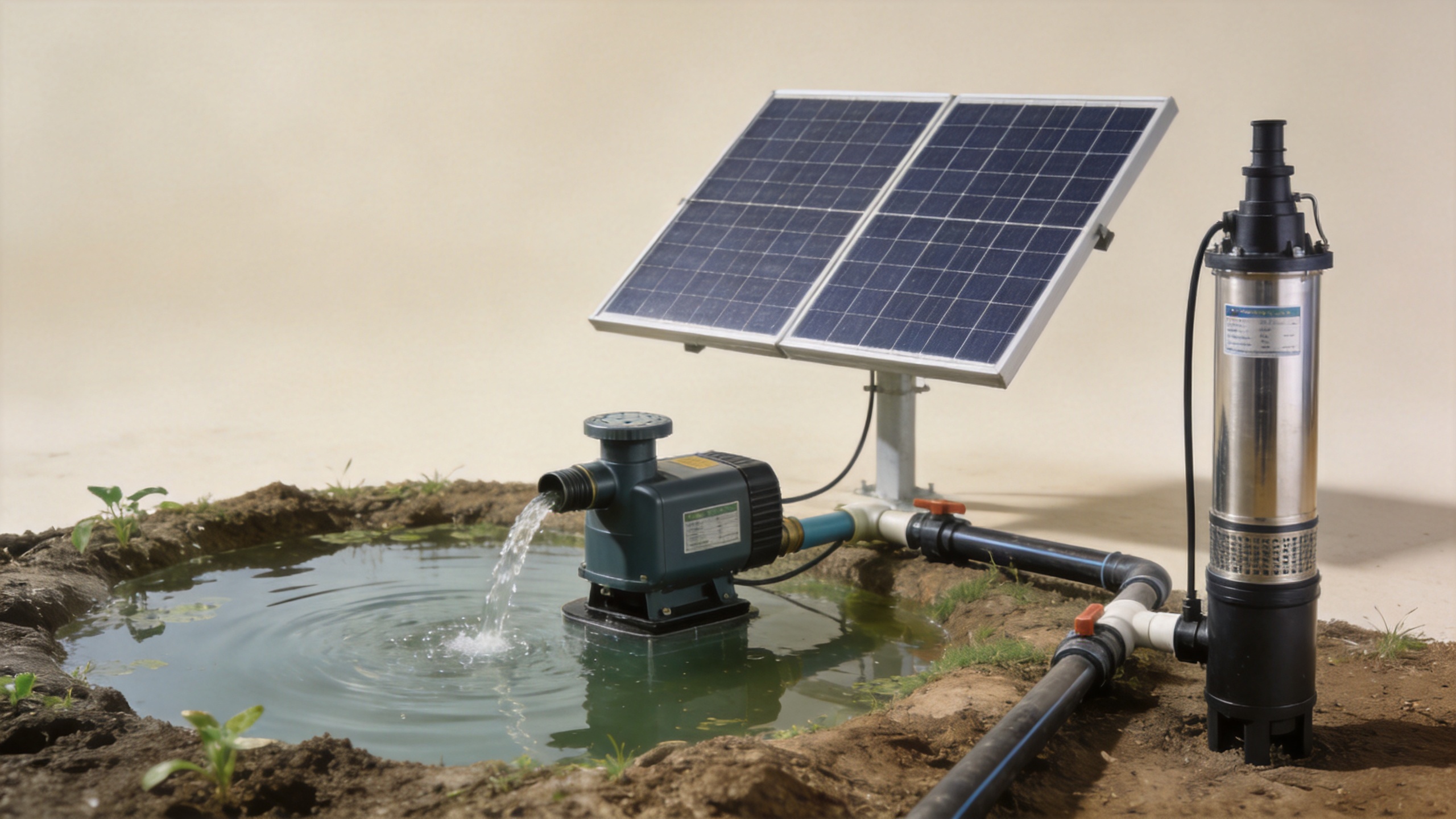
That distinction matters for solar pumps for farms. A pond-transfer setup may favor a surface pump, while a borehole with a falling water level usually points toward a submersible pump for farming. It is not only a pump-capacity question; more accurately, it is a system-fit question.
Start with the water source, not the catalog
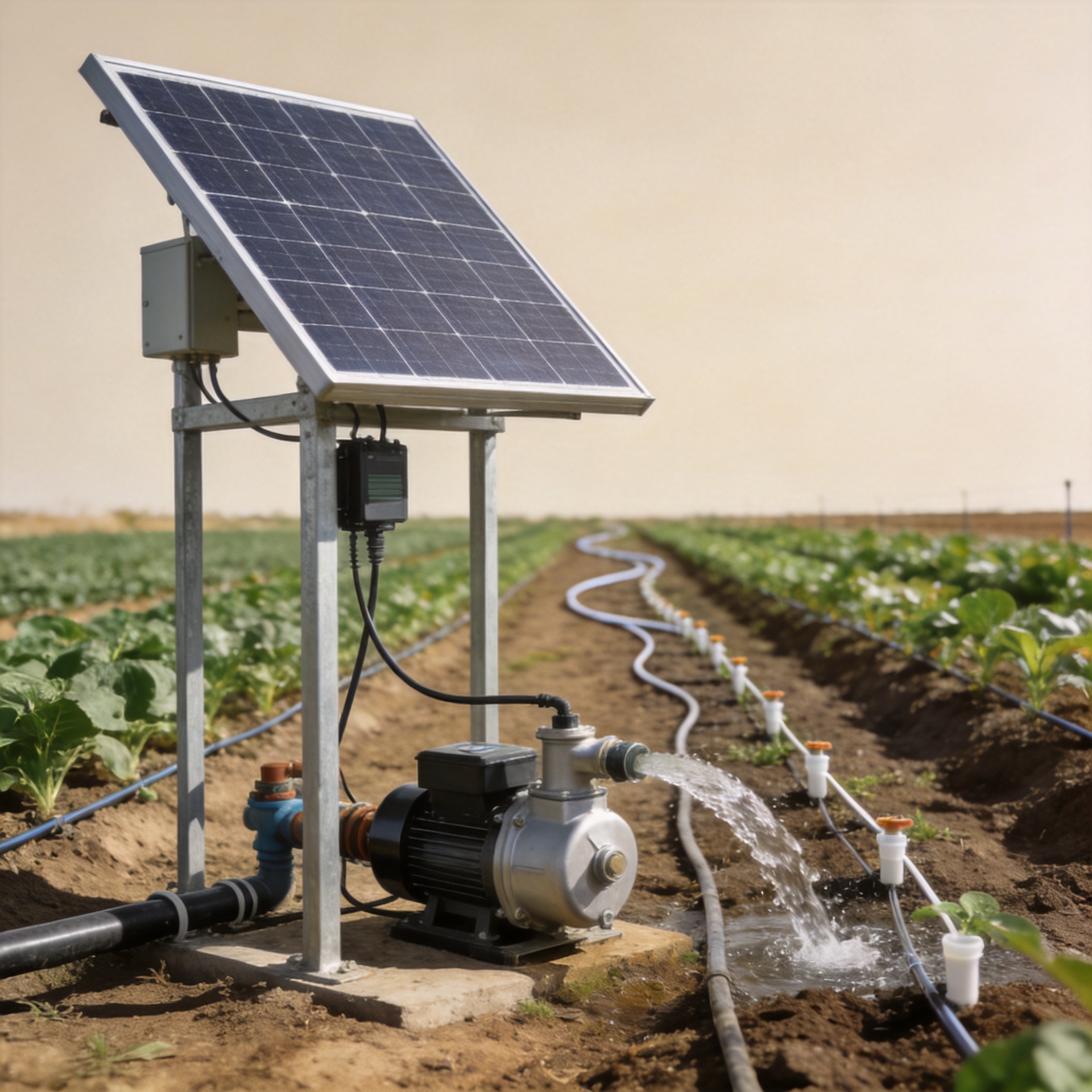
A surface solar pump stays above the water and draws water through a suction line. It can be a sensible choice when the water source is shallow, accessible, and near the pump location: for example, a canal, tank, pond, or shallow well. The theoretical suction limit for water is about 33 feet, but useful field performance is lower once pipe friction, temperature, elevation, fittings, and minor air leaks are considered. This is why a shallow-looking well should not automatically be treated as a surface-pump application.
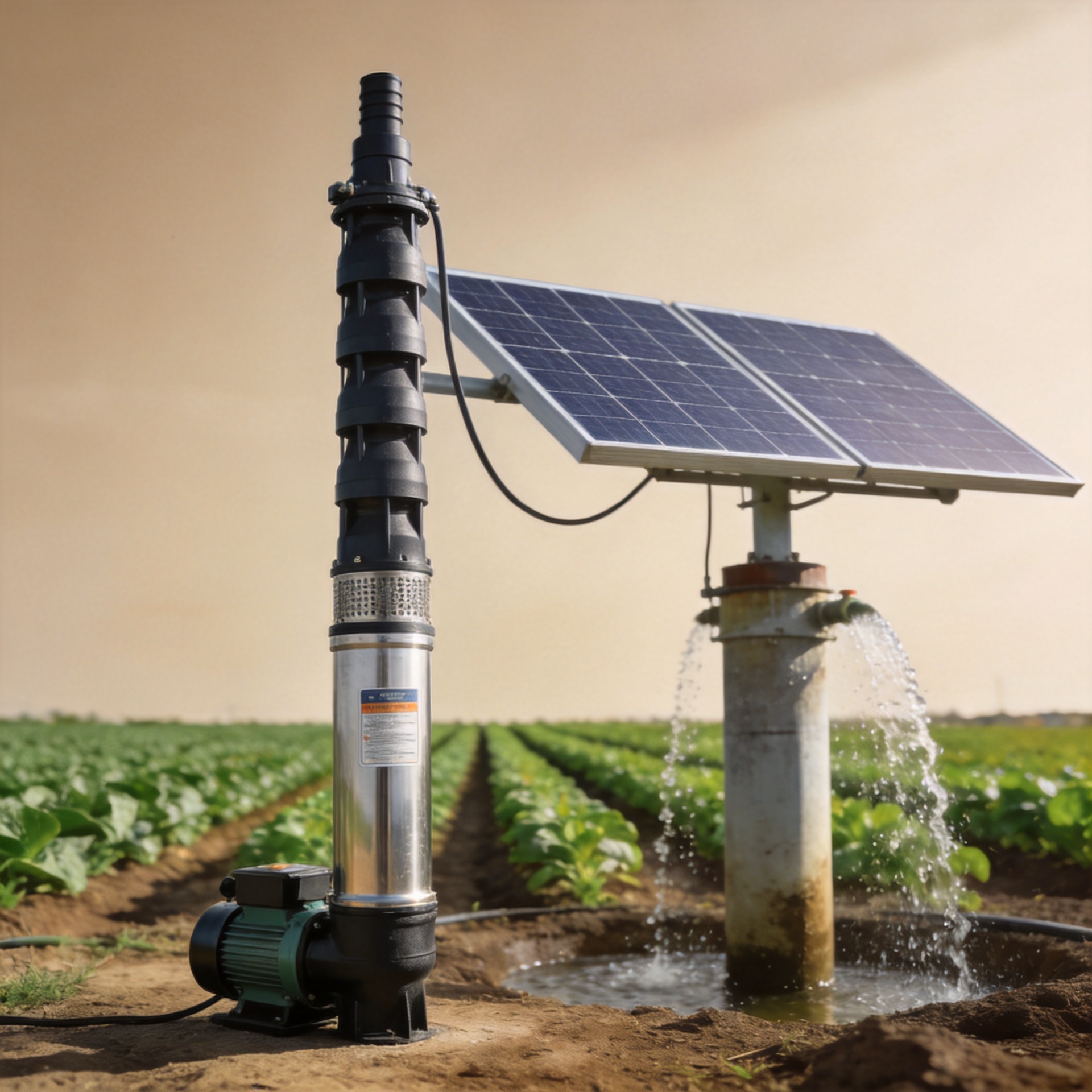
A submersible pump for farming operates below the water level and pushes water upward. That arrangement avoids relying on long suction lift, which makes it the more common starting point for deep wells, boreholes, and water sources where drawdown may lower the operating water level. Before finalizing either choice, confirm the static water level and the pumping water level rather than using total well depth alone.
Compare the two pump types by the farm job
| Decision factor | Surface solar pump | Submersible solar pump |
|---|---|---|
| Starting condition | Shallow, accessible water close to the pump | Deep well, borehole, or variable operating water level |
| How it moves water | Draws through a suction line, then pushes onward | Pushes upward from inside the source |
| Typical farm tasks | Pond transfer, tank filling, shallow-source irrigation | Deep-well irrigation, remote livestock supply, elevated storage |
| Key risk to check | Suction lift, priming, leaks, and intake conditions | Well diameter, cable length, cooling conditions, and service access |
| Selection data that still matters | Required flow, total dynamic head, pipe size and run, solar resource, control method, and daily water window | |
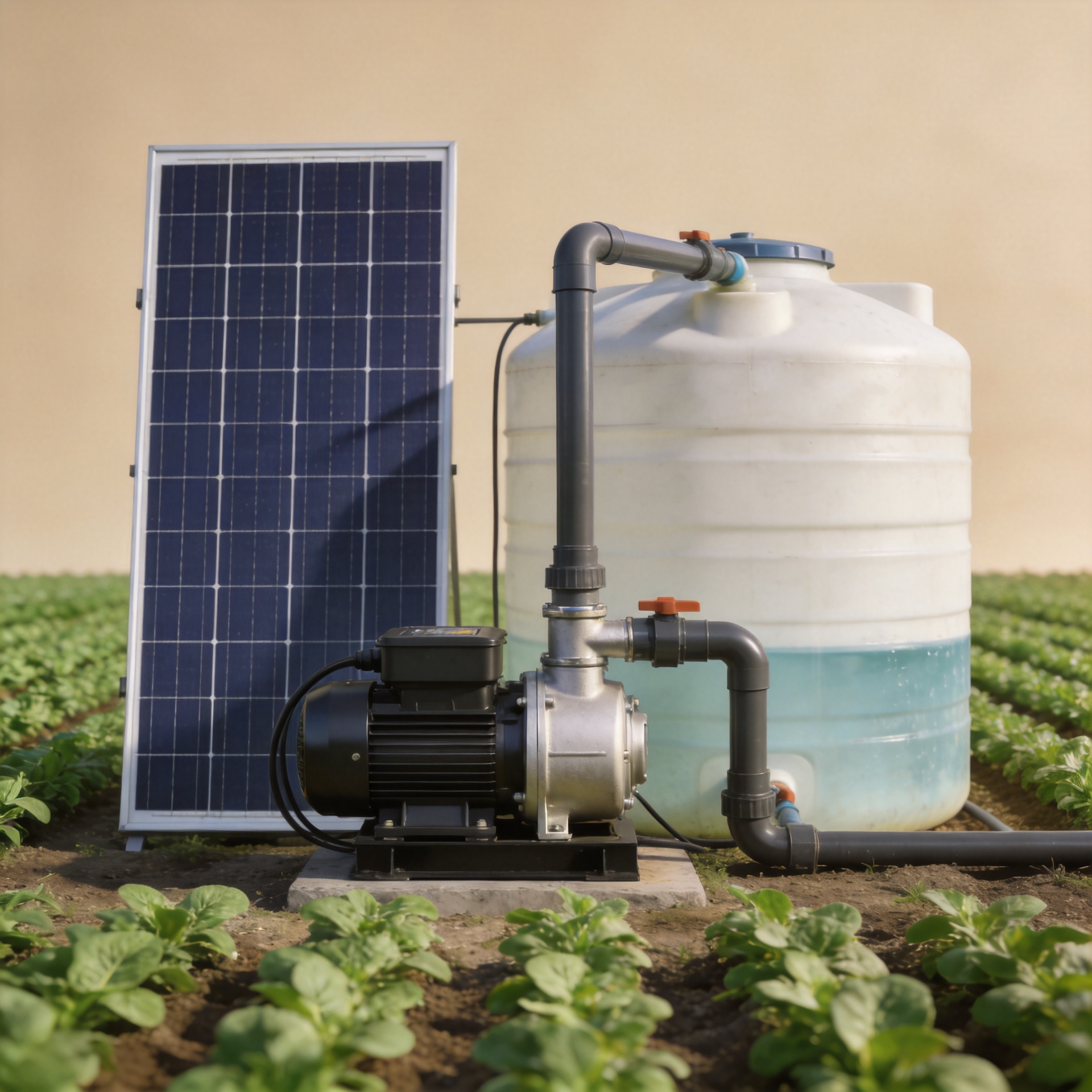
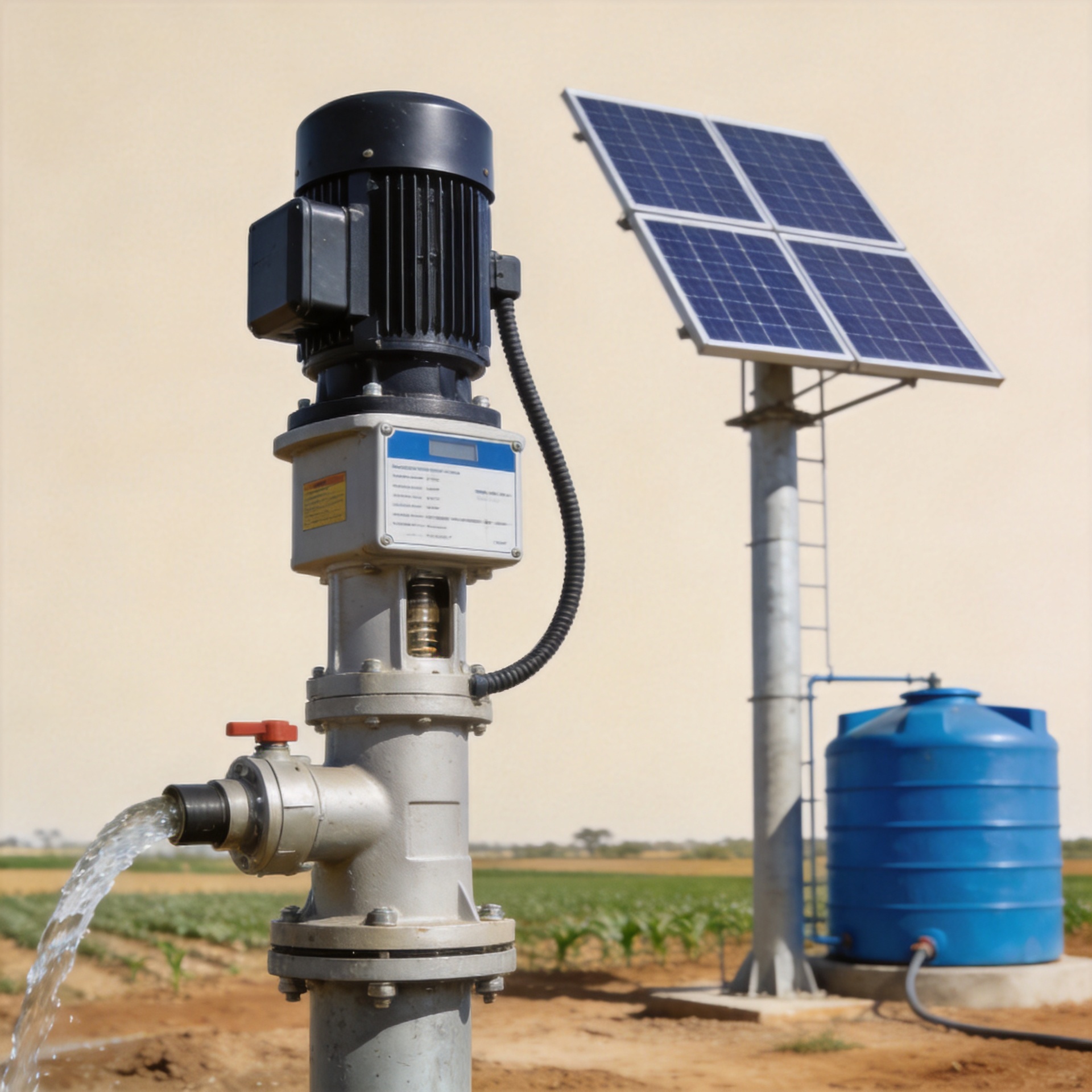
For a solar powered water well serving drip irrigation, the water source may be deep while the field is also far away or uphill. In that case, a submersible design may solve the source-lift issue, but it still must overcome delivery elevation and pipe friction. Conversely, a surface pump may be mechanically convenient beside a reservoir, yet it can be the wrong choice if the water level falls beyond its realistic suction capability.
Use total dynamic head to avoid a misleading comparison
Head is the selection language that connects the pump to the farm layout. Total dynamic head typically includes the vertical distance from the pumping water level, expected drawdown, any rise to a tank or field, and friction losses in pipe and fittings. Treating only the well depth as the requirement leaves out much of the system.
Here is a useful planning sequence for solar pumps for farms:
- Measure static water level and estimate pumping water level or drawdown.
- Mark the final discharge elevation: tank, trough, field manifold, or irrigation line.
- Record pipe diameter, pipe length, fittings, filters, valves, and the desired flow rate.
- Define the daily water volume and the hours when solar production can do useful work.
- Ask the supplier to match the pump curve, controller, solar array, and protection settings to those inputs.
This is where the discussion usually becomes more practical. A pump that can deliver a high flow near ground level may not provide the same flow after a long pipe run and elevation change. If your priority is dependable water delivery from a deep source, review operating water level and total dynamic head before choosing a submersible pump for farming.
Surface-pump advantages and limits on farms
Surface units can simplify visual inspection because the pump and controller are above ground. They may suit transfer duty from open water or shallow sources, especially when crews need straightforward access for routine checks. They can also be a practical option where the intake can be protected from debris and the suction line kept short and airtight.
The trade-off is that suction conditions are unforgiving. Long suction lines, undersized lines, poorly sealed fittings, or a water level that changes seasonally can reduce performance. Do not assume that a surface pump will remain suitable because it worked during a high-water season. Recheck the lowest expected operating water level and the real distance from that level to the pump inlet.
When a submersible solar pump is the stronger fit
A submersible pump for farming is generally the more direct route when water must be lifted from a borehole or deep well. Because the pump pushes from below the waterline, it is not constrained by the same practical suction-lift limit as a surface design. This can make it appropriate for farm water systems that combine deep extraction with distribution to tanks, livestock points, or irrigation zones.
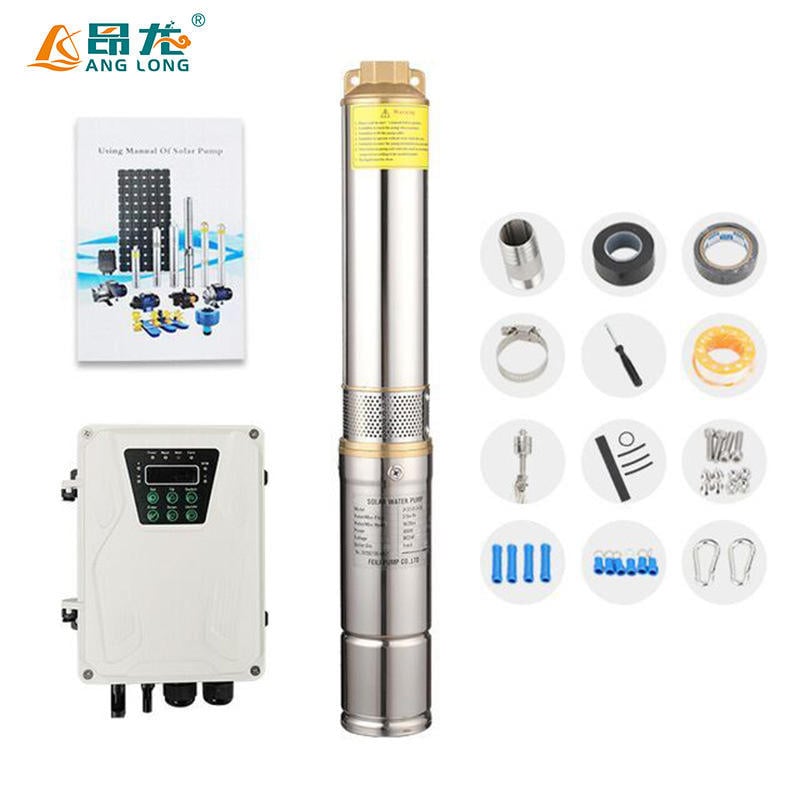
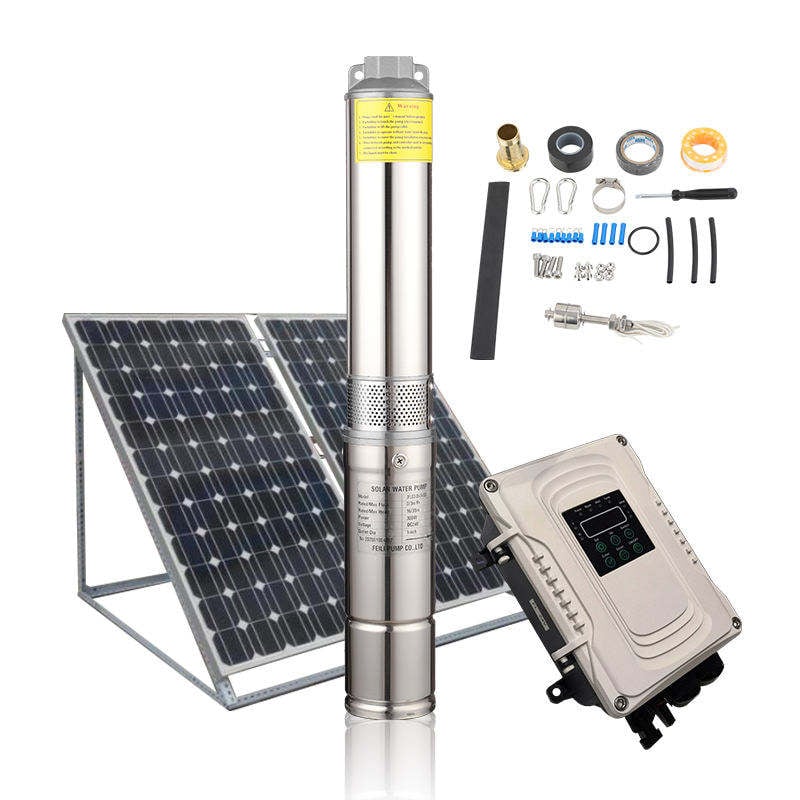
Still, a submerged installation is not a universal winner. Confirm the well casing diameter, available clearance, cable routing, controller compatibility, dry-run protection, and a realistic retrieval plan for service. For buyers evaluating deep-well options, the available product pages for deep well solar borehole agricultural water pumps and submersible deep-well water pumps for agriculture can be used as starting points for a specification conversation. Confirm the relevant data sheet before treating any listed configuration as a final project recommendation.
A simple selection rule for farms and deep wells
Choose a surface-pump path when the source remains shallow enough for reliable suction, the intake can be managed, and the main need is transfer or irrigation from accessible water. Move toward a solar powered water well submersible solution when the operating water level is deep, the source is a borehole, or seasonal drawdown makes suction uncertain.
Then make the final decision with the same four inputs: operating water level, required flow, total dynamic head, and daily water requirement. This is a selection framework, not a confirmed product performance claim. Can your team confirm those four inputs before requesting a quotation? Doing so gives the supplier a clearer basis for matching a solar array, controller, pump, and pipe system to the farm’s actual duty.