 EN
Water Booster Pump vs Jockey Pump: How to Select the Right Type
Choosing a water booster pump is not simply a question of buying more pressure. A booster package and a jockey pump can both affect pressure, yet they serve different systems, control logic, and risk profiles. For distributors, contractors, and project buyers, the fastest way to avoid an expensive mismatch is to begin with the duty: are you improving usable water flow, or maintaining pressure in a dedicated fire-protection network?
This guide compares the two categories in practical terms. It focuses on the application conditions that should be confirmed before selecting a water booster pump or a fire pump jockey pump, rather than treating the names as interchangeable.
Start with the job the pump must perform
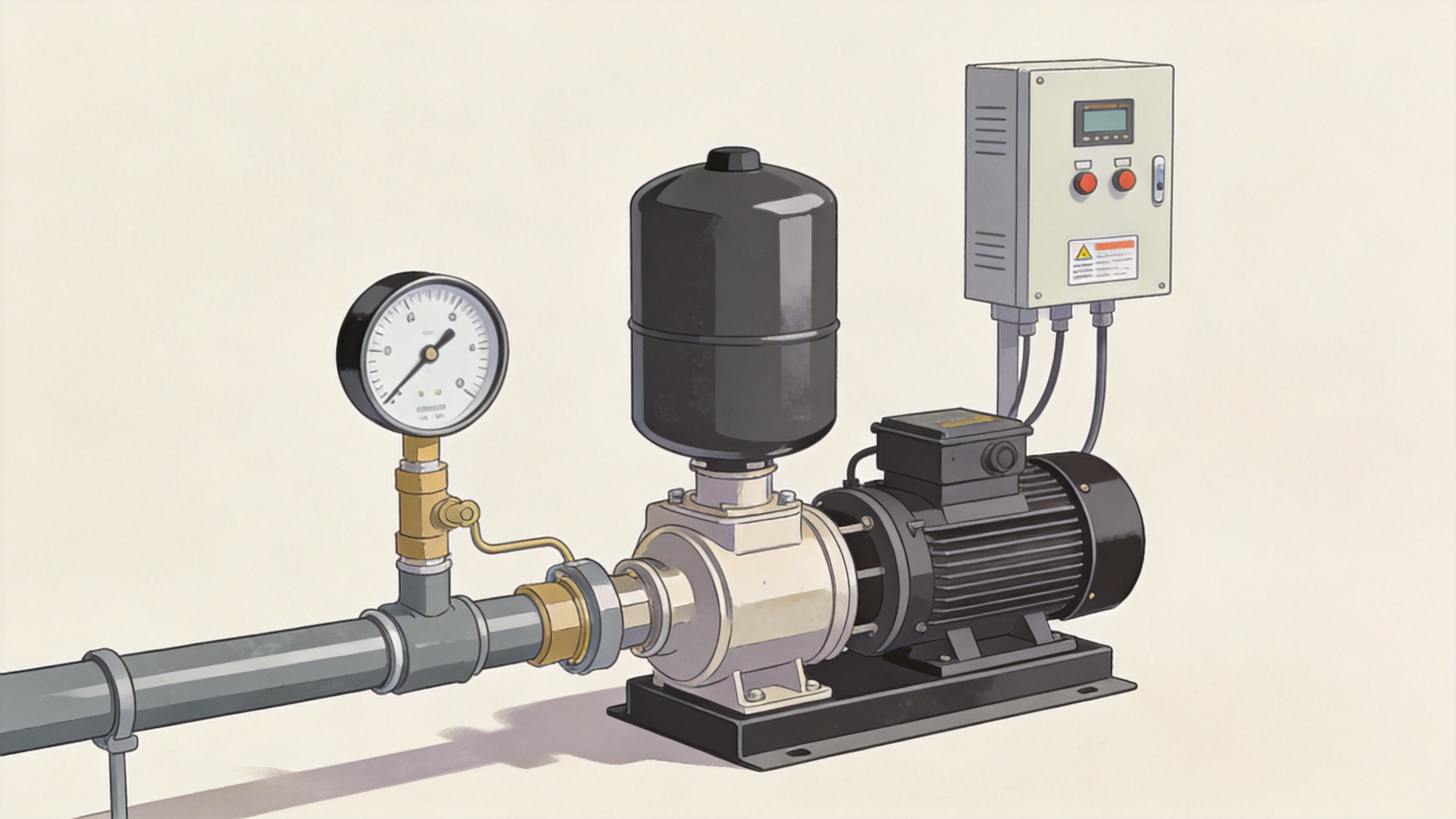
A water booster pump raises pressure or supports flow in a water-supply process. It may be used in a building, irrigation line, circulation loop, tank-transfer arrangement, or another system where the available supply pressure does not meet the demand at the point of use. The selected water booster pump must match the required flow, total head, liquid conditions, pipe losses, power supply, and control approach.
A jockey pump has a narrower role. In a fire-protection system, it is a small pressure-maintenance pump. Its purpose is to restore small pressure losses without causing the main fire pump to start. A fire pump jockey pump is not normally selected to supply the main fire-flow demand. The main fire pump and the system design must meet the applicable project codes, authority requirements, and approved fire-protection design.
Water booster pump vs. jockey pump: the core differences
| Selection point | Water booster pump | Jockey pump |
|---|---|---|
| Primary purpose | Increase usable pressure and/or flow for a water process | Maintain supervisory pressure in a fire-protection network |
| Typical trigger | Demand, pressure drop, tank level, or variable-speed logic | Small static leakage or pressure decay |
| Duty sizing | Based on operating flow and total dynamic head | Based on pressure maintenance, not main fire-pump flow |
| Control priority | Stable service pressure, efficient operation, and process protection | Prevent unnecessary main fire-pump starts while preserving required pressure |
| Compliance context | Application and local electrical/plumbing requirements | Fire-system design, approvals, and local code requirements |
The distinction matters because an oversized water booster pump can create pressure cycling, noise, excess energy use, or component stress. Conversely, treating a jockey pump as a general water booster pump can lead to an unsuitable duty point and an inappropriate control arrangement.
How to size a water booster pump correctly
For a standard water booster pump application, confirm the duty point before comparing motor ratings. Start with the required flow at the critical outlet or process point. Then calculate total dynamic head: elevation, desired residual pressure, friction loss through pipework and fittings, and any equipment losses. A search result may list 32 L/min and 20 m head for a compact unit; these values illustrate why flow and head should be read as a pair, not as isolated headline specifications.
Next, check the suction condition. A water booster pump cannot correct a poor inlet arrangement by itself. Confirm supply stability, tank level range, inlet pipe size, filtration, liquid temperature, and the risk of air entrainment. Where pressure varies widely, a pressure tank, pressure switch, variable-speed drive, or staged arrangement may be more appropriate than a fixed-speed pump alone.
Questions for the buyer or installer
- What flow is required at peak demand and at normal demand?
- What pressure is needed at the farthest or highest outlet?
- Is the source a municipal line, storage tank, well, or recirculating loop?
- What are the voltage, frequency, phase, and enclosure requirements?
- Will the water booster pump run intermittently, continuously, or under variable demand?
When a fire pump jockey pump is the right category
Choose a fire pump jockey pump only when the pump is part of a properly engineered fire-protection arrangement. Its capacity must be sufficient to make up expected small losses, but it should not be selected so large that it masks a meaningful leak or takes over the role intended for the main fire pump. Pressure settings also need coordination with the main pump start setting and the wider control sequence.
Because fire systems are safety-critical, do not use a generic water booster pump selection worksheet as the only basis for a jockey-pump decision. Ask the project engineer to confirm the governing standard, required approvals, controller requirements, test arrangement, and commissioning procedure. The product data sheet is one input; the system design is the deciding context.
Choose controls and materials around the real operating conditions
After the pump category is clear, compare the controls, construction, and service needs. A domestic or light commercial water booster pump may prioritize quiet operation and automatic cut-in/cut-out control. An industrial circulation or high-building application may require different materials, a different motor protection class, and a more robust control panel. Select wetted materials for the actual water quality, temperature, and corrosion risk rather than assuming one construction fits every project.
For buyers evaluating available options, review the confirmed product page for a high-building pressurized jockey water pump for water circulation or an inline hot water booster pump and jockey pump as a starting point for product-category comparison. Confirm the final model against the project duty and system documentation.
A practical selection checklist
- Define whether the project needs service pressure/flow or fire-system pressure maintenance.
- Record the required flow, total dynamic head, inlet condition, and operating schedule.
- Confirm the control sequence and whether a pressure vessel, VFD, or controller is required.
- For a fire pump jockey pump, obtain the fire-system design criteria and approval requirements before choosing a model.
- Compare the pump curve at the required duty point, not only maximum head or motor power.
- Plan installation clearances, isolation valves, check valves, instrumentation, and commissioning checks.
Make the selection with the system in view
A suitable water booster pump delivers the required pressure and flow at its intended duty point with suitable controls and a reliable inlet condition. A suitable jockey pump supports the fire-protection design without replacing the main fire pump's function. By separating these two jobs early, buyers can request clearer quotations, compare like-for-like options, and reduce rework during installation.
For a project involving a water booster pump, provide the supplier with the system flow, pressure target, elevation, pipe information, water source, power supply, and operating conditions. For a fire application, add the approved system requirements and coordinate selection with the responsible fire-protection professional.