 EN
What Is a BLDC Submersible Pump and Why It Matters in Solar Systems
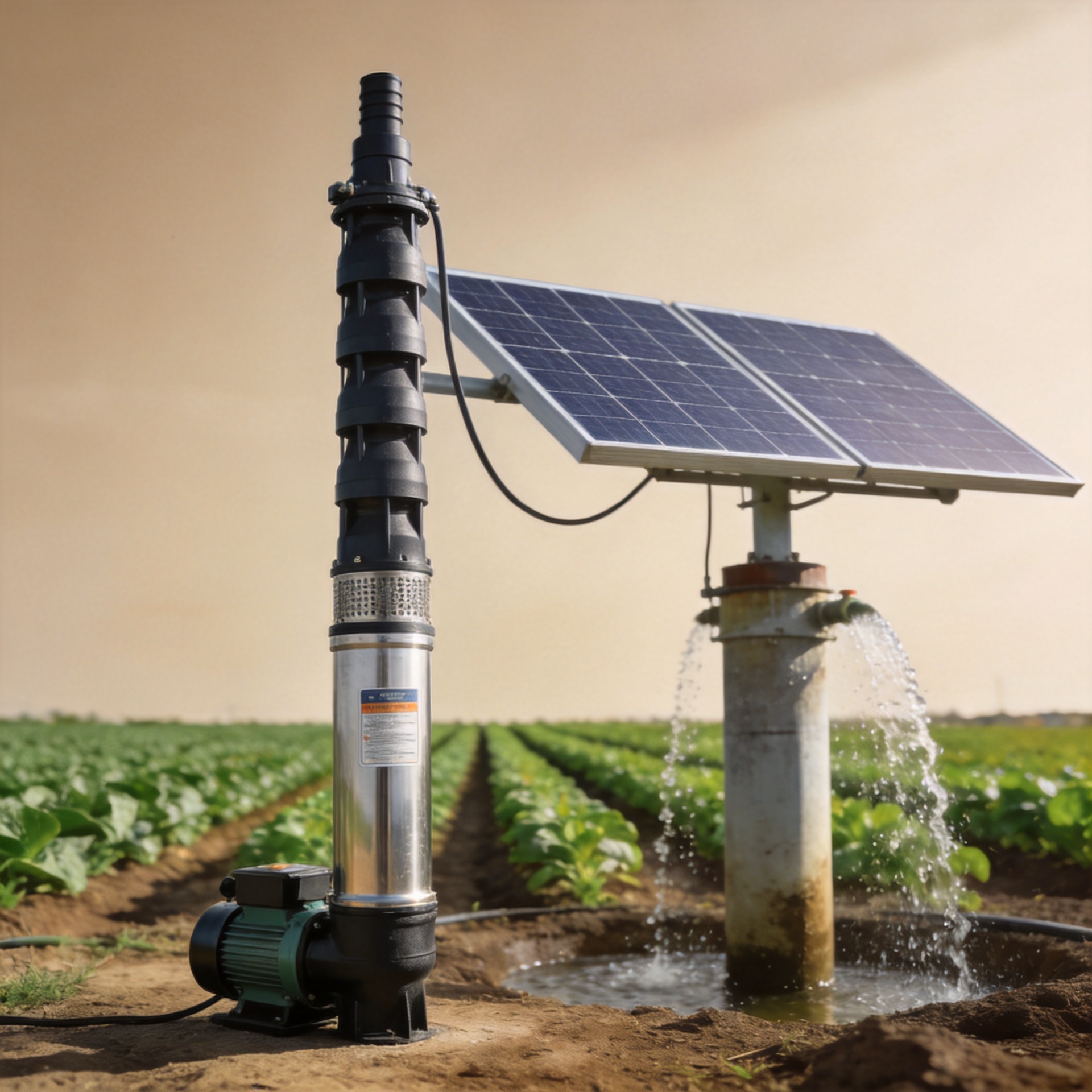
A BLDC submersible pump is a water pump designed to work below the water surface and driven by a brushless DC (BLDC) motor. In a solar pumping project, that motor choice matters because solar panels do not deliver one perfectly steady power level all day. A well-matched BLDC submersible pump can turn changing sunlight into useful water delivery with fewer mechanical wear parts than a brushed-motor design.
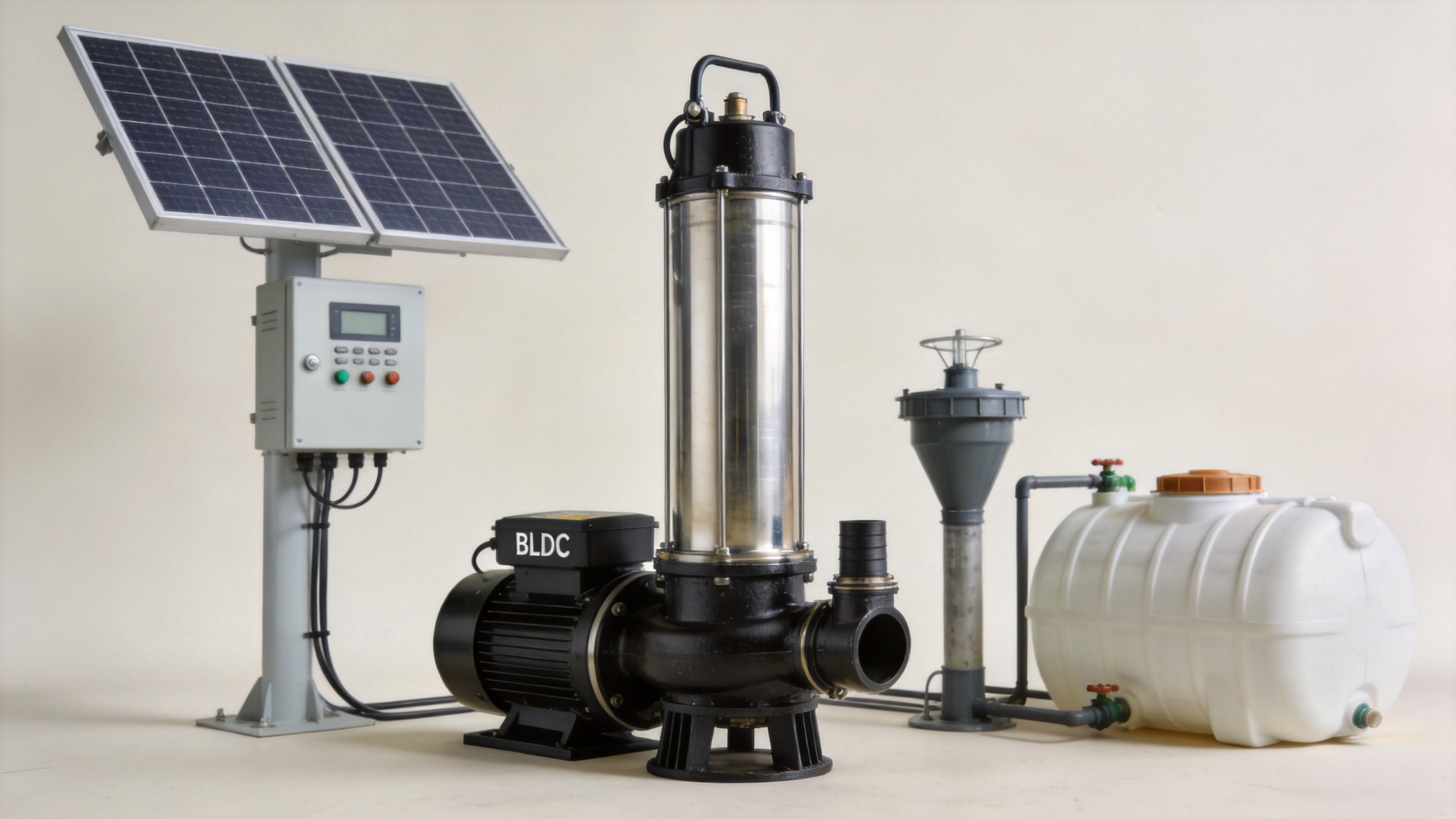
For overseas wholesalers and project buyers serving farms, villages, livestock sites, or remote properties, it is helpful to see the pump as part of a system rather than as a motor label on a carton. The right BLDC submersible pump must fit the water source, lift requirement, pipework, controller, solar array, and daily water demand together.
What does BLDC mean in a submersible pump?
BLDC stands for brushless direct current. Instead of physical brushes rubbing against a commutator to switch current, a BLDC motor uses electronic control to manage the motor’s magnetic field. In a BLDC submersible pump, the sealed motor and hydraulic section are built for operation in a borehole, well, tank, or other submerged water source.
The practical distinction is not only technical terminology. With no brushes to wear in normal operation, a BLDC submersible pump can reduce one common maintenance point. Electronic control also gives the system a way to respond to available DC input. That is particularly relevant where sunlight, cable length, water level, and pumping head change over the day.
It is worth keeping the claim in proportion: a brushless motor does not automatically make every installation more productive. The pump curve, controller logic, pipe losses, panel sizing, and actual total dynamic head still determine how much water reaches the outlet.
Why a BLDC submersible pump fits solar water systems
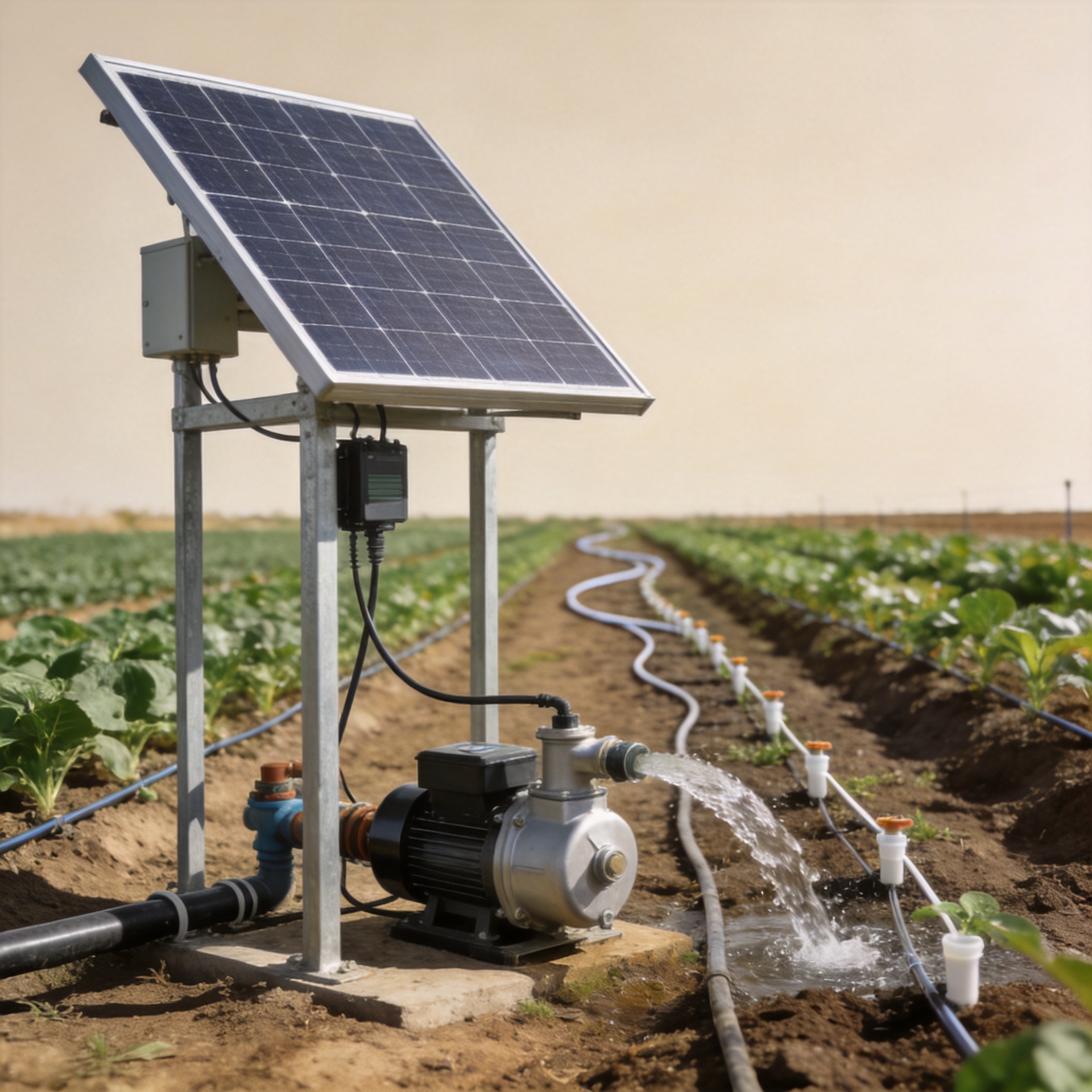
Solar modules naturally produce DC electricity, so a BLDC submersible pump can be a sensible match for a solar-first water system. Depending on the product architecture, the controller may condition the panel output and manage the motor without requiring the same AC conversion path used by a conventional AC-pump arrangement. This is useful in off-grid water supply, where every conversion stage and every maintenance item deserves attention.
Research results also explain why buyers often ask about BLDC technology. One published solar-pump design study reported 62% motor efficiency, 52% positive-displacement-pump efficiency, and 32% electric-to-hydraulic efficiency for its studied configuration. A separate IEEE-listed 5 HP BLDC motor study reported about 92% motor efficiency at rated condition for that design. These figures are not universal ratings for a BLDC submersible pump; they show why motor efficiency and whole-system efficiency must be discussed separately.
That is where the discussion becomes more practical. When solar input is limited, a BLDC submersible pump that is correctly selected may help a system use available energy more effectively. But a high-efficiency motor cannot compensate for an undersized solar array, a deep water level that was not measured, or pipe friction that was ignored.
BLDC submersible pump versus a conventional DC motor submersible pump
The phrase dc motor submersible pump is broad: it can describe several motor and control arrangements. A BLDC submersible pump is one type of DC motor submersible pump, specifically one with electronic commutation and no mechanical brushes. A conventional brushed DC motor can be simpler in concept, but its brushes are wear components. AC submersible pumps can also be appropriate, especially where grid power or a proven AC drive setup is already available.
| Decision point | Why it matters |
|---|---|
| Water source | A BLDC submersible pump must suit the bore diameter, water level, water quality, and expected drawdown. |
| Total dynamic head | Vertical lift, pipe length, fittings, and outlet pressure determine the duty point—not only the motor power. |
| Solar input | Panel capacity, seasonal irradiance, orientation, and shading influence daily pumping hours. |
| Control and protection | Dry-run protection, over-voltage protection, and low-water protection should be confirmed for the selected system. |
How changing sunlight affects pump selection
Solar pumping is rarely a fixed-speed, fixed-input problem. In the morning and late afternoon, available panel power is lower than at midday. A BLDC submersible pump and its controller need an operating range that remains stable as input changes. Ask suppliers for the permitted DC voltage range, recommended PV configuration, start-up behavior, and protection functions rather than comparing only horsepower.
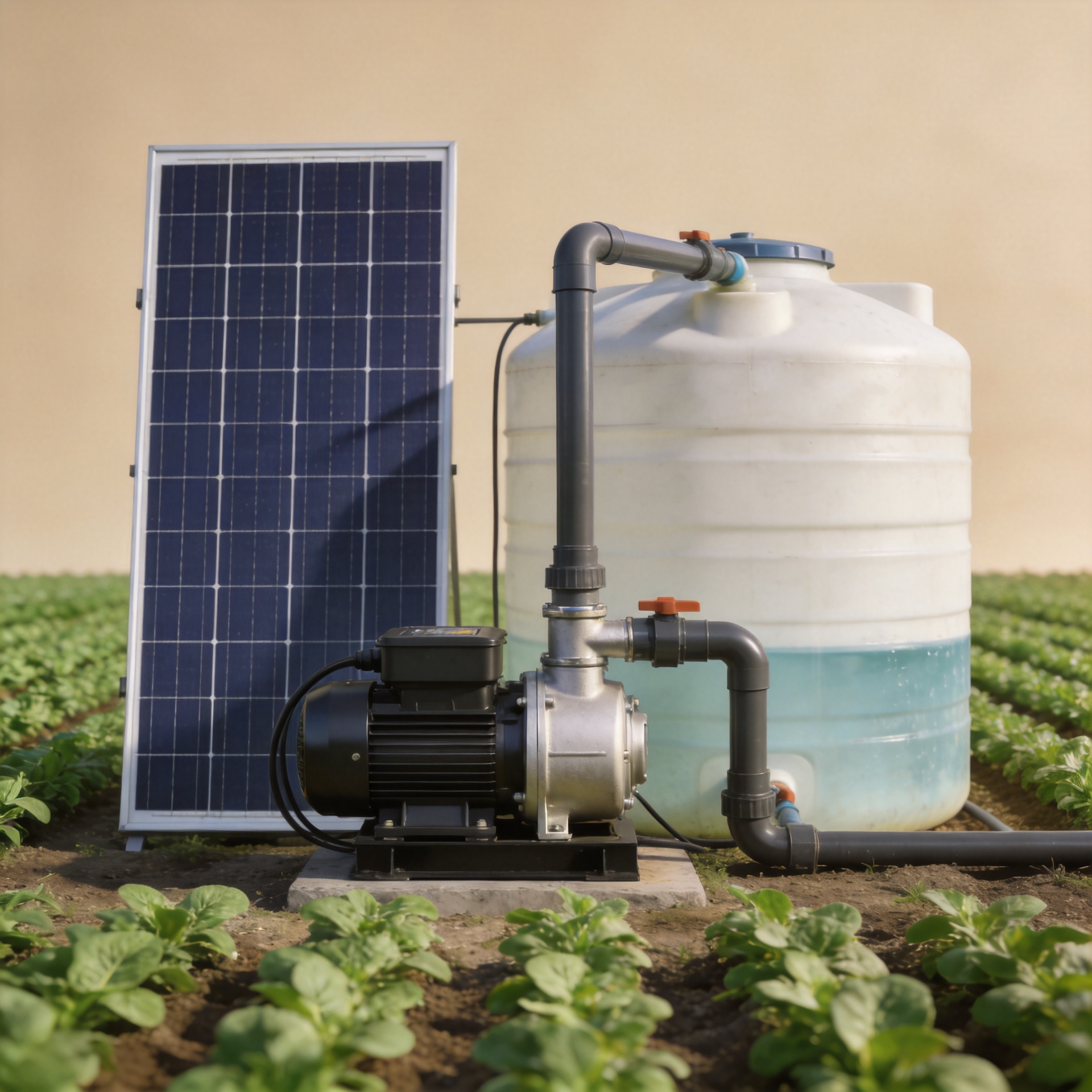
For irrigation, the question is usually daily water volume, not simply instantaneous flow. A BLDC submersible pump with a lower peak flow may still be the better system fit if it works reliably with the available solar resource and fills storage during usable sunlight. Storage can separate the pumping schedule from the irrigation schedule, reducing the need to judge the system by a single noon-time flow reading.
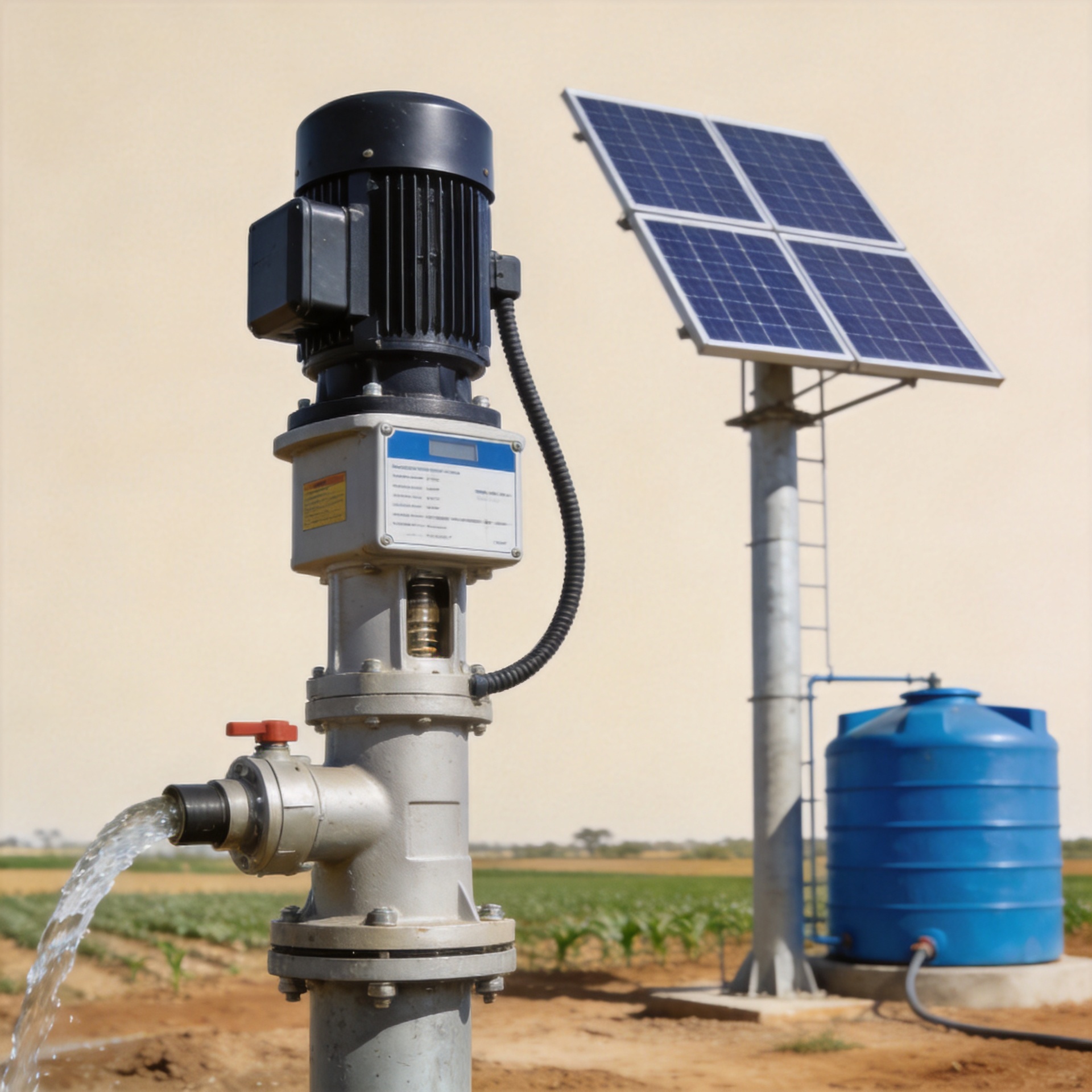
For deep-well projects, confirm the static water level, pumping water level, planned discharge point, and pipe diameter before final selection. In planning conversations, this is often the point worth checking twice: a BLDC submersible pump should be selected at its real duty point, not at a catalog flow figure measured under different conditions.
A practical buyer checklist for a BLDC submersible pump
- Define the water source: bore diameter, static water level, pumping water level, and water quality.
- Calculate total dynamic head, including elevation, pipe loss, fittings, and required outlet pressure.
- Set a daily water target for irrigation, livestock, household supply, or storage.
- Review local solar conditions and specify the proposed PV array, cable route, and controller input range.
- Confirm required protection features and the service process for the BLDC submersible pump.
- Request a performance curve that connects head, flow, input conditions, and the proposed model.
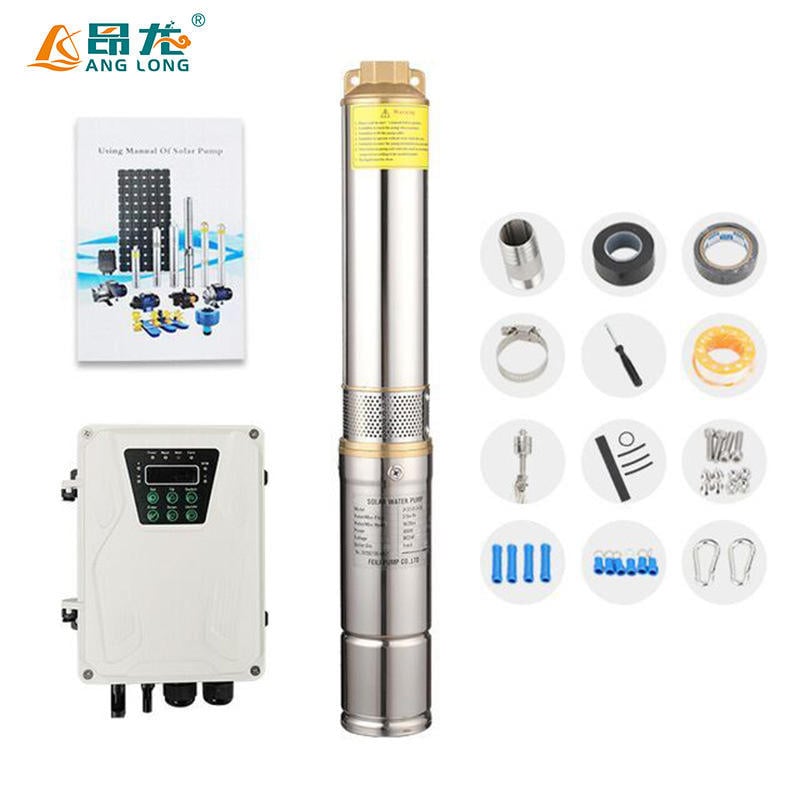
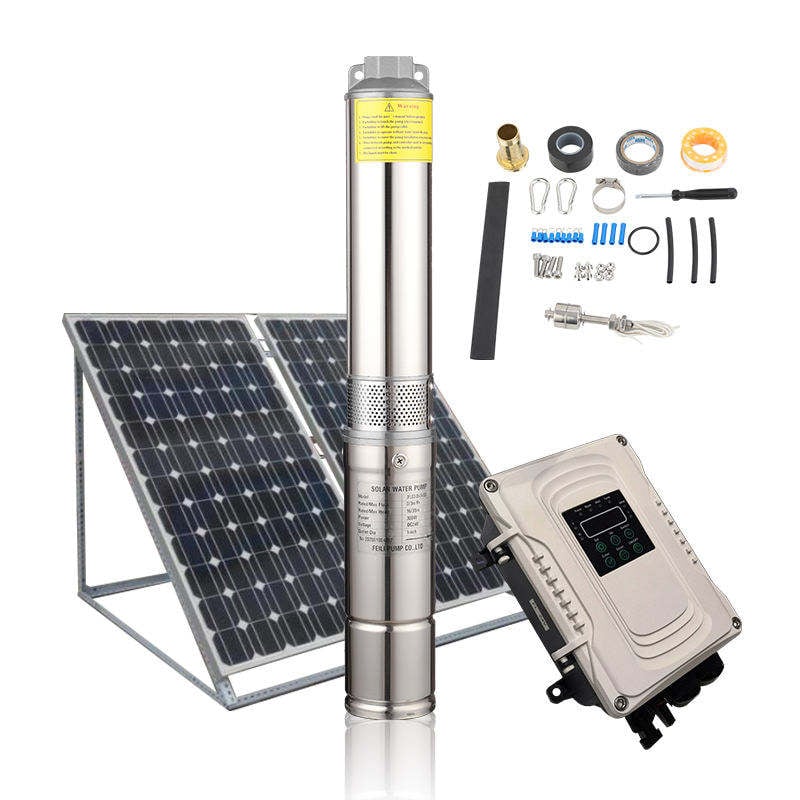
For a product-category starting point, buyers can review Angdong Pump’s solar submersible pump for agricultural irrigation and deep-well applications. Final suitability should still be confirmed against the project’s verified head, flow, and solar conditions.
When is a BLDC submersible pump the right choice?
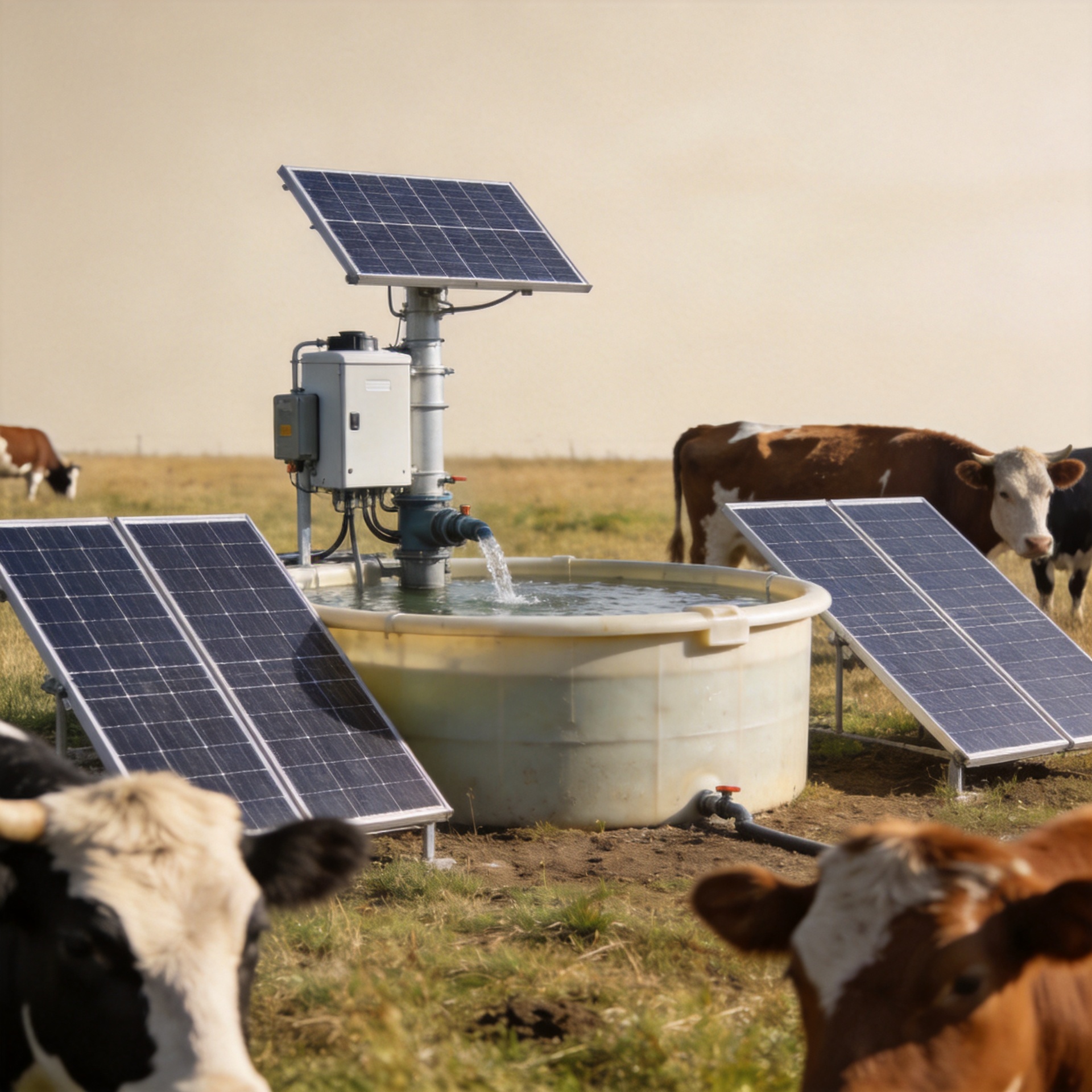
A BLDC submersible pump is often worth evaluating when the project relies on solar power, operates away from a dependable grid, and needs a low-maintenance water-lifting solution. Typical examples include agricultural irrigation, livestock watering, remote community supply, and deep-well water transfer. It is not only a pump-capacity question; more accurately, it is a system-fit question.
Start with the site data, then compare the controller, motor, hydraulics, and solar array as one package. When those pieces are matched, a BLDC submersible pump can provide a practical foundation for reliable solar water delivery without making promises that the site conditions cannot support.